![Paul Newman: The Man Who Turned Fame into Money and Donated All His Profits to Charity [Men's Biographies]](https://otokomaeken.com/wp-content/uploads/2026/08/2071d8b3d6b46d67221ad9d050c85da8-750x396.png)
Even just a photo of him in a white T-shirt and jeans continues to captivate men half a century later. Paul Newman is one of the 20th century’s greatest stars—an actor who won an Academy Award for Best Actor and a race car driver who finished second overall in the 24 Hours of Le Mans.However, what speaks most eloquently to this man’s character is neither the screen nor the racetrack, but rather the salad dressings lined up on supermarket shelves. He used his own face to promote the products and donated all after-tax profits to charity. Eventually, he established a camp where children with serious illnesses could stay for free, and even left behind a system ensuring that donations would continue after his death.Rather than attributing his fame to himself as a personal legacy of glory, he used it entirely for the benefit of others. This is the story of a dashing actor who knew how to make the most of his good fortune.
Sponsored by
The Starting PointIt All Began with a Washtub in the Basement
December 1980, Westport, Connecticut. With Christmas just a week away, Newman invited his close friend, the writer A.E. Hotchner, to his home.The setting was a basement with bare earth floors. The space, which had once been a stable, still carried the scent of horses, and cobwebs hung from the beams overhead. What the two men set out to do there was not a business meeting, but making salad dressing.
Newman disliked the sweeteners, artificial colors, and preservatives found in store-bought products, so even at restaurants he would ask for olive oil, mustard, and red wine vinegar to create his own flavors. He would mix large batches of this homemade dressing in a container about the size of a laundry tub and pour it into empty wine bottles.They added corks and handmade labels, planning to distribute them to neighbors on Christmas Eve.
Even after filling the required number of bottles, there was still dressing left in the tub. That’s when they came up with the idea of selling the leftover dressing at a local grocery store to earn a little money to go fishing.The venture, which would later generate $600 million in donations, began not with grand ambitions, but as a bit of fun for the two of them. [1]
The DecisionUsing Fame for Business. But Not Keeping the Profits
Commercializing the product was no easy task.In 1982, when the two consulted a major marketing firm, they were told that market research would cost $300,000 to $400,000, and advertising for the first year of sales would require about $1 million.There had been many failures in the past with celebrity-branded foods, and they were also told that just because movie audiences liked Newman didn’t mean they would buy his dressing. Nevertheless, Newman put up $40,000 in seed money and proceeded on the two men’s terms.
They conducted more than 30 test runs with the manufacturer over the course of six months.Even when asked to add preservatives to extend shelf life, he refused to compromise, successfully translating the taste of his homemade recipe into a mass-produced product. In the kitchen of his neighbor, Martha Stewart, they conducted a blind taste test that included store-bought products. Nearly everyone ranked Newman’s dressing first, proving the product’s inherent quality.
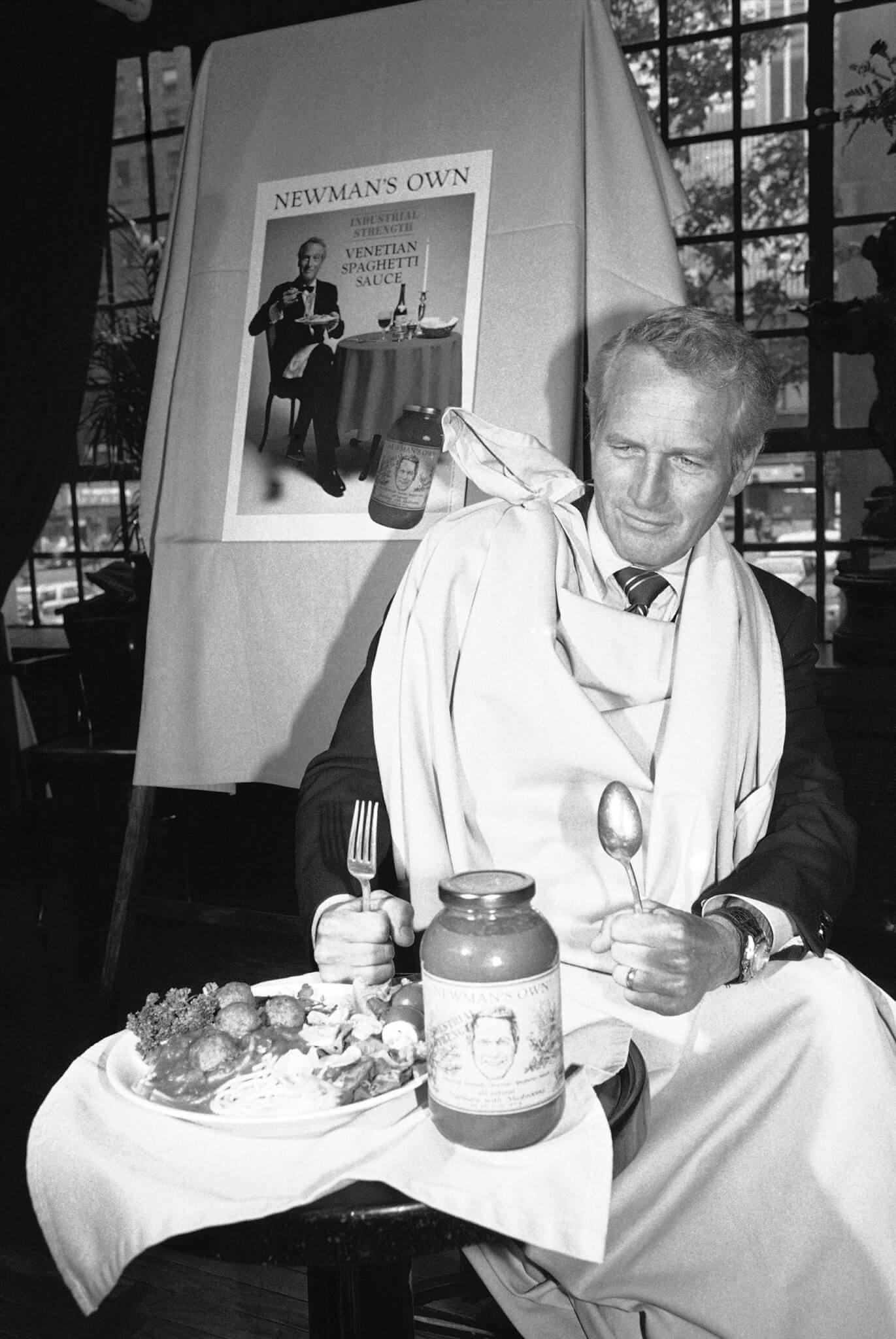
The final hurdle was the label. Stew Leonard, the owner of a local supermarket, demanded a photo of Newman as a condition for stocking the product. He argued that customers wouldn’t recognize it as a product by a Hollywood star if it were labeled only by his name. Newman refused, saying, “Putting my face on a dressing bottle? No way.”
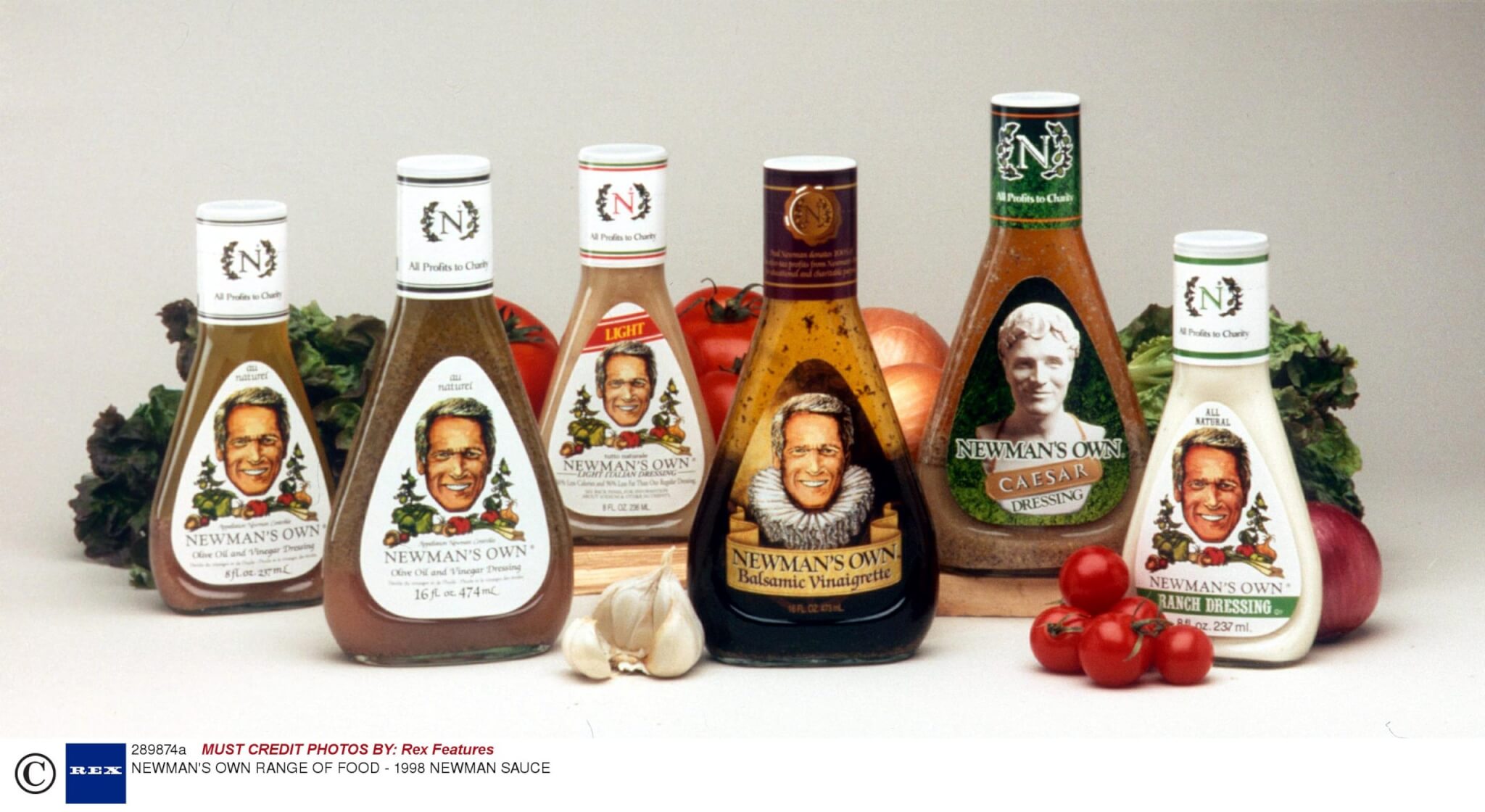
However, his mind changed while he was on a fishing boat. He realized that using his face to line his own pockets would be tacky. But if it was to further a charitable cause, there was value in leveraging the sales power of a star’s image. With that in mind, he agreed to have his photo featured on the bottle, on the condition that all profits be donated to charity.He did not shun fame out of a sense of integrity. Rather, he acknowledged its value and simply redirected where the profits went. [2]
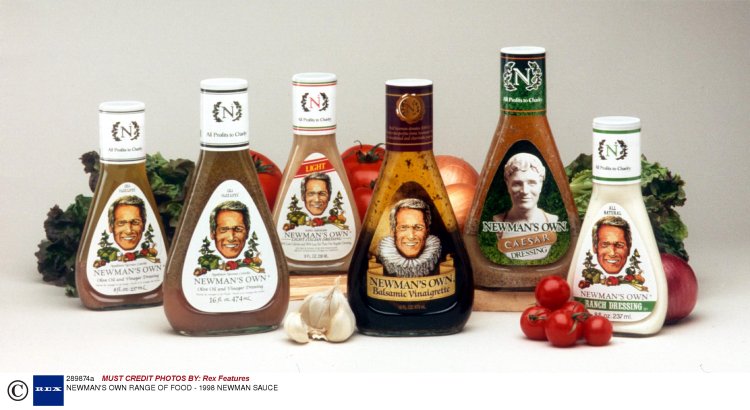

Execution10,000 bottles in two weeks. Profits were earmarked for charity from the very beginning
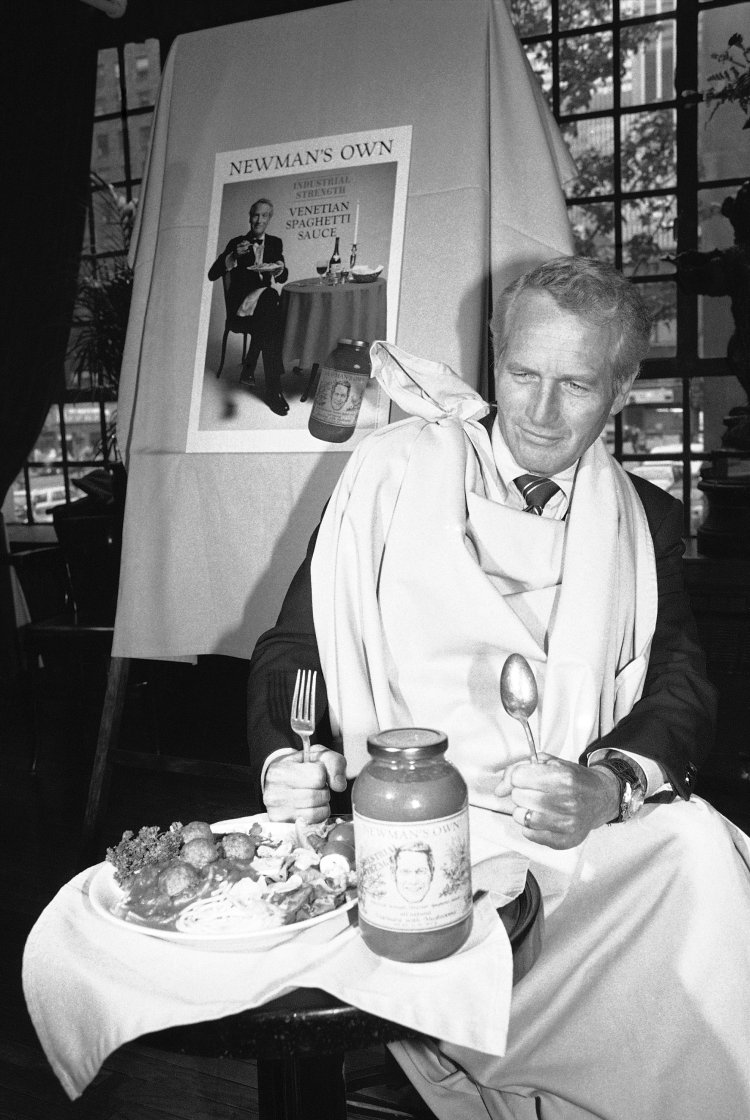
When the product was launched, a large sign announcing Newman’s visit was displayed at Stu Leonard’s store.Hundreds of customers flocked to the store, crowding it to the point where it was hard to move. Newman’s Own dressing sold 10,000 bottles in just two weeks.
They didn’t start donating a portion of the profits only after achieving success.From the very start of the business, Newman and Hotchner had decided not to keep any of the after-tax profits for themselves, but to donate it all to charity. In 1983, their first full year of operation, they recorded sales of $3,204,335 and after-tax profits of $397,000, all of which was distributed to dozens of charitable organizations.Even as their product line expanded to include pasta sauce, popcorn, and lemonade, this principle remained unchanged. In other words, charitable giving was not merely a use of profits—it was the very purpose of the business. [1]
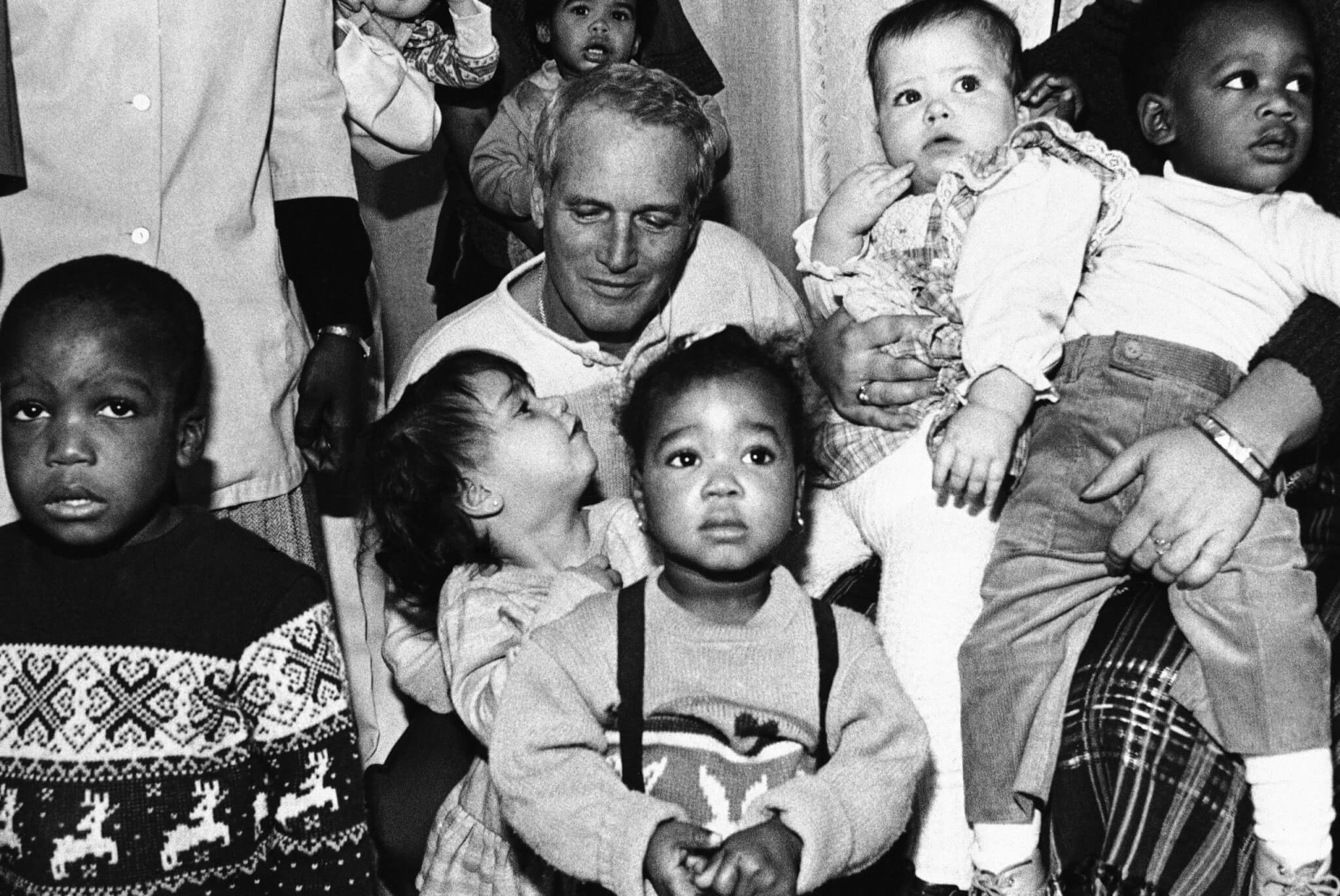
They did not leave the selection of beneficiaries to others either.According to Hotchner’s recollection, every December the two men would set aside time to choose the organizations they would support, while enjoying pastrami sandwiches, root beer, and licorice candy. These unpretentious meetings reportedly continued for 24 years. Although the company was born out of a joke, they did not treat the responsibility that came with it as a joke.
FoundingGiving Children with Serious Illnesses a Summer Free from Being Patients
In the 1980s, Newman and his wife, Joanne Woodward, visited a local hospital where a friend was undergoing cancer treatment.In the same hallway, they saw children undergoing treatment and their families. According to his daughter Claire, the stories of families whose children could not attend school and were separated from their friends deeply moved her father. However, there was no single incident that led to his decision to found the camp.His awareness of how fortunate he had been gradually became intertwined with the reality of children having their childhoods stolen by illness. [3]
What Newman envisioned was not a convalescent facility.It was a place where children could enjoy swimming, horseback riding, fishing, and campfires—and where they could occasionally let loose a little. The name “The Hole in the Wall Gang Camp” was taken from the outlaw gang featured in the film *Butch Cassidy and the Sundance Kid*, in which he starred.On the approximately 300-acre site, a Wild West-themed town was built for the children. Behind the scenes, a 24-hour medical team and state-of-the-art medical facilities were in place, ready for emergency transport. The concept was not to bring play closer to the hospital, but to bring medical care to the place of play.The medical journal ‘The Lancet Oncology’ also documented the camp as a place where children could play, make friends, and laugh again while receiving the medical care they needed. [4]
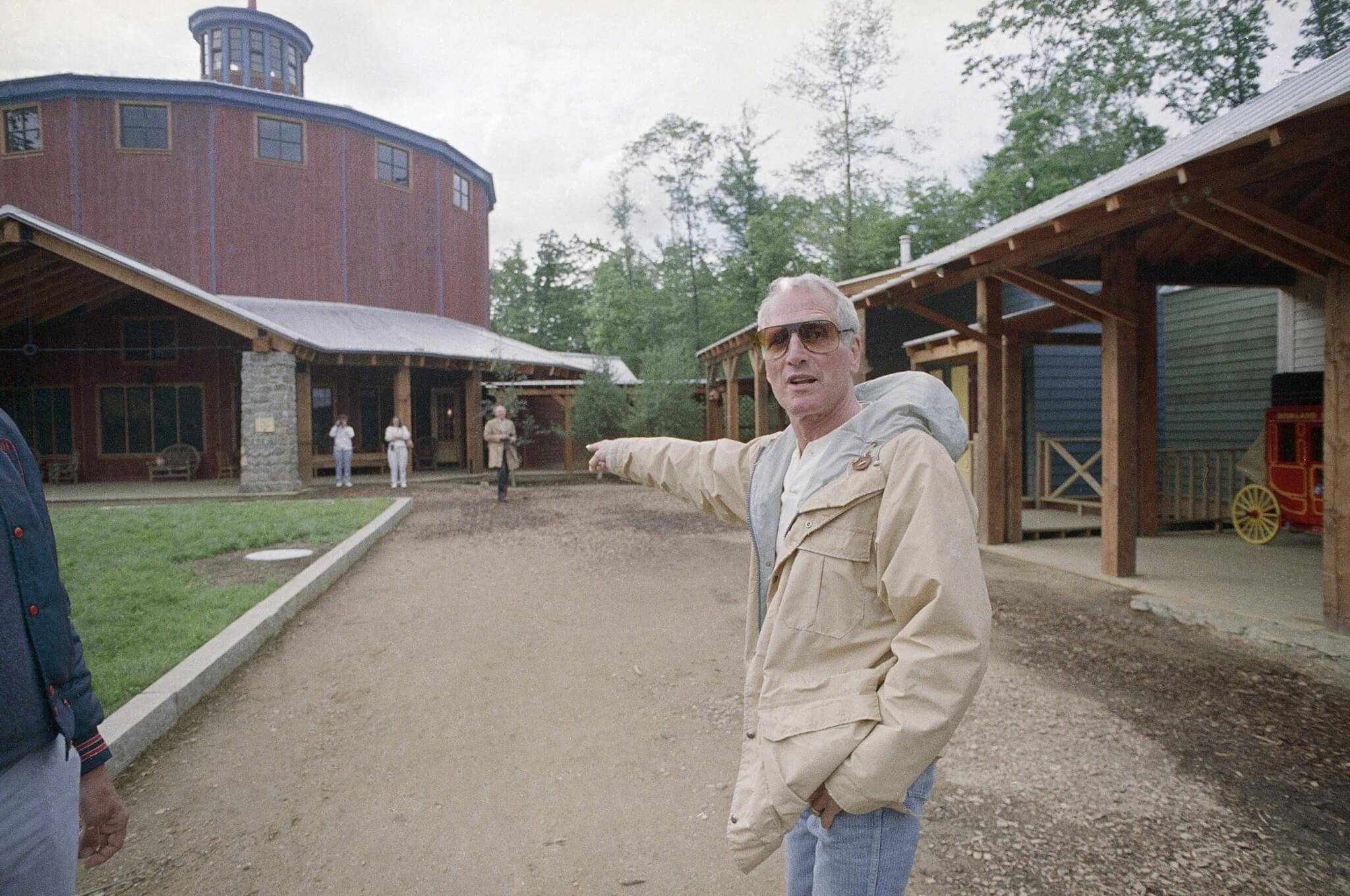
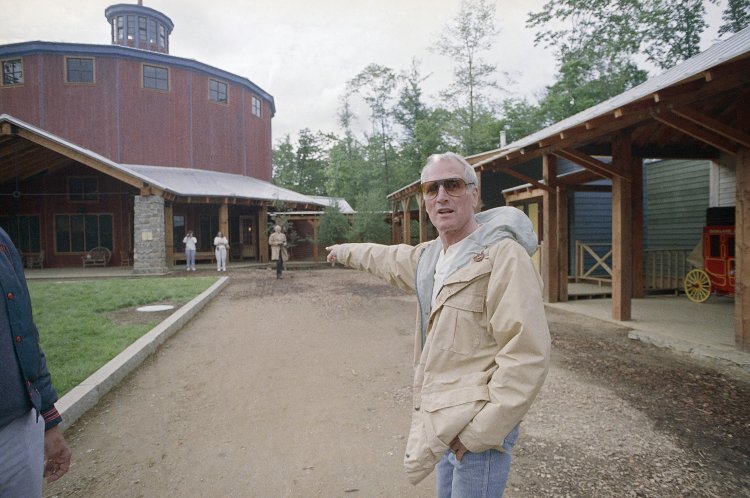
The camp opened in June 1988, and 288 children participated free of charge during its first summer. Newman built a cabin on the opposite shore of the lake and visited frequently, but he never used the children as publicity for his charitable work. He strictly limited visits and photography by the media to preserve an environment where play—not illness—took center stage.It is recorded that years later, when a girl who used a wheelchair told him, “I made my first friends here,” Newman had tears in his eyes. [2]
SuccessionHe left the company itself behind to ensure donations would continue even after his death
If he had simply donated a large sum of money, it would have ended with his death. Newman established a foundation in 2005 and gradually transferred ownership of the food company to it.The total appraised value of the shares he donated between 2005 and 2006 was $120 million. Even after Newman’s death in 2008, the foundation retained ownership of the company, maintaining a structure in which 100% of the profits from product sales are used for charitable purposes. [5][6]
According to figures reported by the Associated Press (AP) in 2025, Newman’s Own announced that it had donated a cumulative total of $600 million by 2022.The SeriousFun Children’s Network, which evolved from the camps, had expanded to 30 camps and programs by 2025 and provided more than 2 million free camp experiences to children with serious illnesses and their families.Both of these figures represent achievements that continued to grow even after Newman’s death in 2008. [3][6]
Newman repeatedly expressed his awareness that he was fortunate.His good looks, the opportunities that came his way as an actor, and the length of his life. He never sought to use the fame he gained as an actor—or the wealth that came with it—solely for his own benefit. [2] That is why he even used his blue eyes on product labels, channeling the proceeds to children facing illnesses they did not choose.
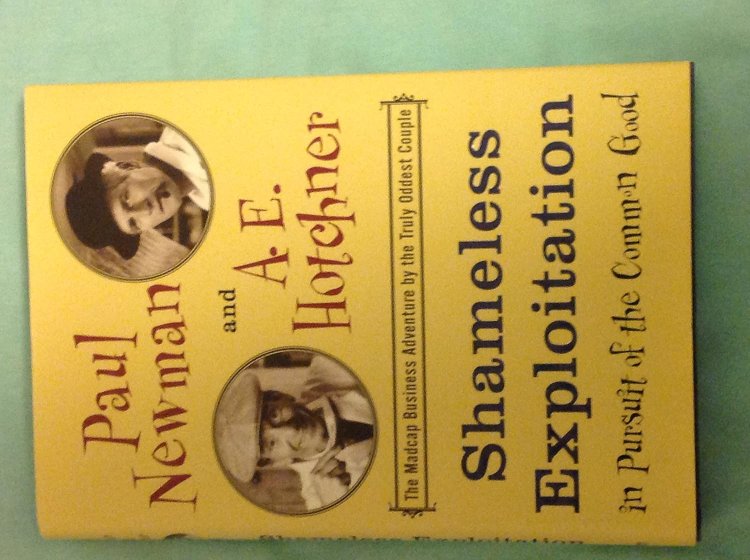
A Book to Get to Know This Man Better, (1)‘Shameless Exploitation in Pursuit of the Common Good’
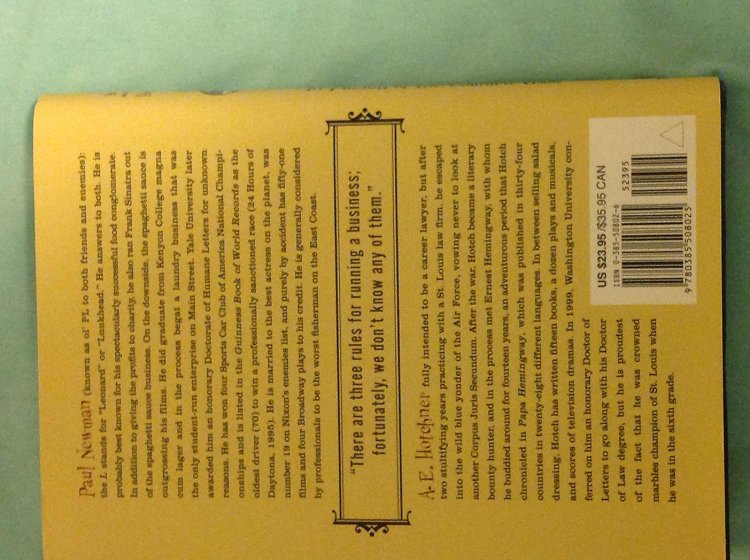
A co-authored book published in 2003 by Paul Newman and A.E. Hotchner.From making the dressing, finding manufacturers, and unconventional marketing to selecting charitable recipients and building camps, this book traces these anecdotes from the protagonists’ perspective. The two authors’ writing style, which turns business failures into humor, is lighthearted. Although it’s only available in English, this is the first book you’ll want to pick up if you want to delve deeply into this story.

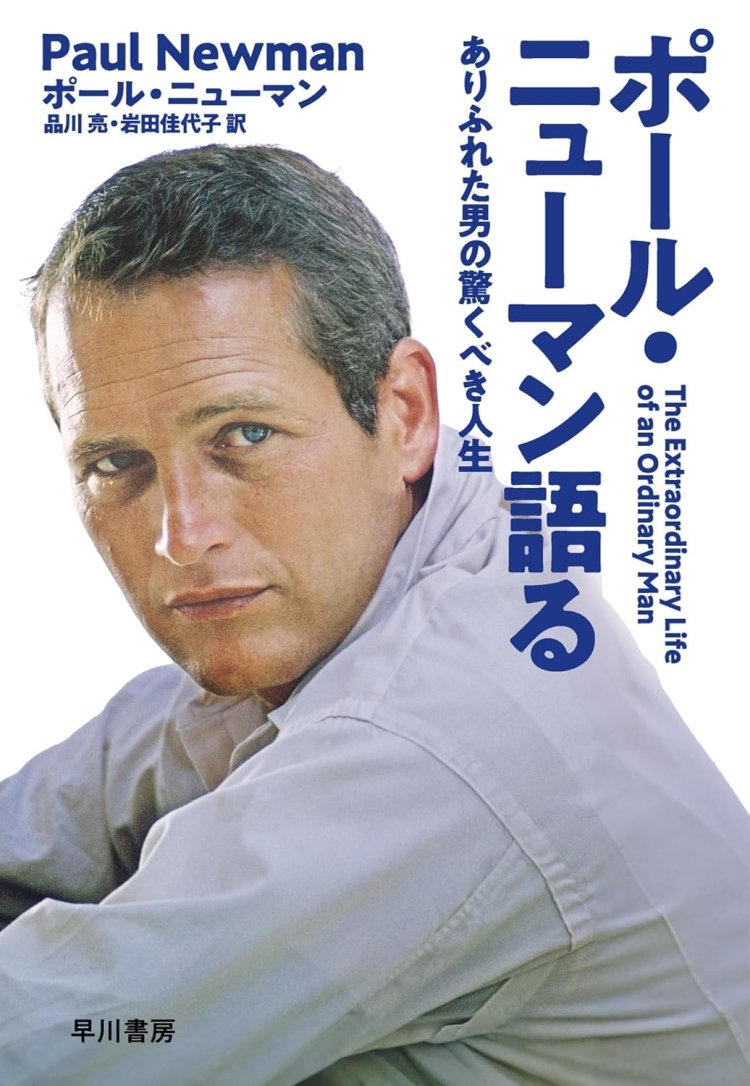
Paul Newman: The Surprising Life of an Ordinary Man
An autobiography reconstructed from interviews conducted over approximately five years starting in 1986 and discovered after his death. He speaks candidly about his feelings of inferiority, alcoholism, the breakdown of his first marriage, and even the death of his son, rejecting the image of a flawless saint.While this book does not directly explain the story behind this project, it offers the deepest insight into Newman’s inner world in Japanese, revealing why he did not attribute his success solely to his own efforts.
References
-
TIME “Book Excerpt: Newman’s Own Story” (November 10, 2003)
-
Vanity Fair “The Newman Chronicles” (July 30, 2008)
-
Adrian Burton, “Paul Newman, sick children, and a hole in the wall,” The Lancet Oncology, Vol. 9, Issue 11 (November 2008)

![Ernest Shackleton. He failed to cross Antarctica and lost his ship. Yet he brought 27 men home alive. [Men’s Biographies]](https://otokomaeken.com/wp-content/uploads/2026/08/7966bae78213db11914ad7af893f8431-2-630x331.png)
![Jackie Chan: The Man Who Turned His Back on the Path to Becoming Bruce Lee’s Successor and Changed the World with Comedy and Action [Men’s Biographies]](https://otokomaeken.com/wp-content/uploads/2026/10/7966bae78213db11914ad7af893f8431-630x331.png)
![Steve McQueen: A Man Who Lived Freely and Never Compromised on Duty or Principle [Men’s Biographies]](https://otokomaeken.com/wp-content/uploads/2026/09/7966bae78213db11914ad7af893f8431-4-630x331.png)
![George Foreman: From World Champion to Pastor—The Boxer Who, After a 10-Year Hiatus, Knocked Out an Undefeated Champion at Age 45 [Men’s Biographies]](https://otokomaeken.com/wp-content/uploads/2026/09/7966bae78213db11914ad7af893f8431-2-630x331.png)
![Jon Bon Jovi: The Man Behind “Livin’ on a Prayer” Runs a “Priceless Restaurant” That’s Been Going Strong for 15 Years [Men in the Spotlight]](https://otokomaeken.com/wp-content/uploads/2026/09/7966bae78213db11914ad7af893f8431-1-630x331.png)
![Michael J. Fox: The “Back to the Future” Star and the Future He Truly Sought to Change [Men’s Profiles]](https://otokomaeken.com/wp-content/uploads/2026/09/7966bae78213db11914ad7af893f8431-630x331.png)
![Keanu Reeves: The Man Who Turned Down a $12 Million Sequel and Didn’t Cling to His Star Privileges [Men’s Profiles]](https://otokomaeken.com/wp-content/uploads/2026/08/aflo_177021114-630x331.jpg)




![Steve McQueen: A Man Who Lived Freely and Never Compromised on Duty or Principle [Men's Biographies]](https://otokomaeken.com/wp-content/uploads/2026/09/7966bae78213db11914ad7af893f8431-4-750x396.png)
![Jackie Chan: The Man Who Turned His Back on the Path to Becoming Bruce Lee’s Successor and Changed the World with Comedy and Action [Men’s Biographies]](https://otokomaeken.com/wp-content/uploads/2026/10/7966bae78213db11914ad7af893f8431-750x396.png)


![George Foreman: From World Champion to Pastor—The Boxer Who, After a 10-Year Hiatus, Knocked Out an Undefeated Champion at Age 45 [Men's Biographies]](https://otokomaeken.com/wp-content/uploads/2026/09/7966bae78213db11914ad7af893f8431-2-750x396.png)