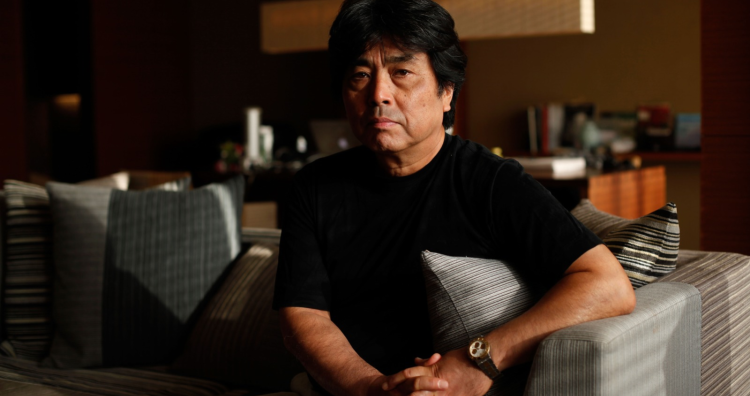
“All Men Are Disposable.” In 1984, at the age of 32, a writer began a series of essays with this provocative title and spent the next 34 years questioning the way men live their lives. That writer was Ryu Murakami.He won the Akutagawa Prize at age 24 and went on to make a name for himself as a film director and interviewer on economic programs. He questioned conventional wisdom and spoke candidly about talent and desire. Murakami passed away on October 17, 2026, at the age of 74, but his appeal lay in more than just his radical words.His dedication to his work, his approach to interacting with others, and the unexpected side of his personality that emerged as he grew older—tracing his life makes one realize that this writer, who never stopped discussing how a man should live, had actually provided an answer himself. [1][2]
Sponsored by
A Manly Philosophy Learned from Ryu Murakami’s Way of Life 1Don’t Cling to a Path That Won’t Feed You. Find Your Own Weapon
After his father’s death, Ryu Murakami received a parenting diary.His father, an art teacher and painter, had filled it to the brim with blue ink from a fountain pen. Inside was a somewhat shocking confession to his son: he had initially thought it would be better not to have a child, as it might interfere with his art studies and would be a financial burden. However, his father’s feelings eventually changed, and he came to eagerly await his son’s birth.He had neither the means to leave savings nor a place to plant a commemorative tree. What this father wished above all for his son to acquire was “originality.” [3] Like his father, the son also aspired to a career in art and enrolled at Musashino Art University. For Murakami, who believed he was unsuited for corporate life, a career as a painter was one option. However, as he studied painting in college, he realized he wouldn’t be able to make a living with his skills. Furthermore, when he reached his senior year, his father told him he would stop sending him financial support.It wasn’t that he had any particular aspiration to become a novelist. As he himself explains, he began writing novels out of necessity, after considering how he could earn a living. [4] Over the course of six days starting on November 24, 1975, the 23-year-old Murakami completed the manuscript for ‘A Nearly Transparent Blue’ for submission.The work, which depicted the raw, everyday lives of young people drowning in drugs and sex in a town with a U.S. military base, won the Gunzo New Writers’ Prize the following year, in 1976, and subsequently the Akutagawa Prize. The 24-year-old suddenly became the darling of the literary world. [5] Then, when his first substantial royalty payment was deposited, he withdrew 1 million yen in cash from the bank, stuffed an envelope filled with wads of bills into the pocket of his cotton pants, and headed to Akihabara. His goal was the stereo system he’d long desired.He told the salesperson his budget was 1 million yen and chose speakers, an amplifier, a record player, and other items to his heart’s content. At that moment, Murakami reportedly felt a strong sense of his newfound freedom. [5] The young man, who had been looking forward to eating katsudon when his monthly allowance arrived, was now able to buy what he wanted with money he had earned on his own.This is not so much the story of a man who achieved success after relentlessly pursuing his dreams, but rather the story of a man who did not run away from his reality and instead carved out a path for himself. Long before he even read his father’s diary, the son had already turned the originality his father had hoped for into a means of earning his own living.
A Manly Philosophy Learned from Ryu Murakami’s Way of Life 2Don’t Wait for Someone Else to Say ‘It’s Okay.’ If You Want to Do It, Do It Yourself
After winning the Akutagawa Prize, Ryu Murakami decided he wanted to direct a movie next. That’s when an unexpected opportunity arose.Through an acquaintance, he was invited to dinner with Francis Ford Coppola, who was filming ‘Apocalypse Now’ in the Philippines at the time. Sitting across from this world-renowned director, Murakami confided that he, too, wanted to become a film director. Coppola replied, essentially saying that being a film director is the easiest job in the world and that anyone can do it.For the young Akutagawa Prize-winning author, those words must have come as a surprise. Years later, Murakami reflected on this exchange, acknowledging that it was a form of naivety on his part—he simply wanted someone to tell him it would be all right, so he could feel reassured. [4] Even a man who had shocked the world by writing such a bold work still harbored a desire to have his talent validated by others. However, just as Coppola had taught him, if he wanted to make a movie, he had no choice but to make one. In 1979, Murakami adapted ‘A Blue Almost Transparent’ into a film, writing the screenplay and directing it himself. [6] The actor chosen to play the lead role was Kunihiko Mitamura, who was still a trainee with a theater troupe at the time. In fact, an incident on the set of this film also speaks volumes about Murakami’s character.It is said that Mitamura committed numerous acts of disrespect toward the director at the time. Even so, Murakami responded calmly, and when Mitamura apologized for his past rudeness upon their reunion ten years later, Murakami reportedly replied, “That’s not like you, so you don’t have to apologize. Don’t worry about it.” [7] While Murakami believed one should not wait for anyone’s permission regarding one’s own life, he was tolerant of others’ mistakes. In October 2026, Mitamura completed a novel he had been writing for three years and four months; he posted on social media to share the news and express his desire to show the finished work to Murakami. [8] Nearly half a century had passed since they first met on a movie set. Murakami, who had once taken his first steps as a film director, remained someone to whom, even as he grew older, an actor would still want to show his work. Just as the young Murakami once sought out Coppola, the desire to have someone see one’s work may remain within people no matter how old they get.
3 Cool Philosophies to Learn from Ryu Murakami’s Way of LifeDon’t Rest on Your Talents. Use Every Ounce of Your Ability
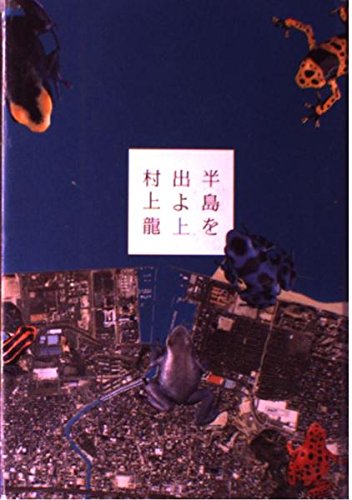
Ryu Murakami’s writings contain many fascinating insights on how men should live their lives.“Total Mobilization of Abilities,” a concept he introduced in *All Men Are Consumables: Vol. 2*’ is one such example. Using Formula 1 racing as an analogy, Murakami found a kind of masculine romance in setting one’s goals at the limits of one’s ability and competing by mobilizing every ounce of one’s potential. [9] So, where did he himself pour his abilities? Above all, into his novels. His 2005 novel *Leave the Peninsula* is a massive work—approximately 1,650 manuscript pages—depicting the occupation of Fukuoka by a North Korean armed group.He consulted 205 books and 38 video sources while writing it. He also interviewed North Korean defectors and experts, spending about 10 years from the initial concept to refining the story. [10] He reportedly spent 40 days holed up in his vacation home in Hakone, writing the final 300 sheets. There’s even a slightly amusing anecdote from that time.Once, wearing a Gucci cashmere sweater he had purchased in Perugia, Italy, Murakami went to a supermarket in Hakone to buy groceries. So absorbed was he in his writing that his stubble had grown out and the sweater had developed a hole. He was even followed by a store clerk who mistook him for a suspicious character. [5] Even while wearing a sweater from a world-renowned brand, he was likely too preoccupied to care about his appearance. This genius author, who made a stunning literary debut, was still grappling with vast amounts of research material even in his 50s, so deeply immersed in his writing that he had no time to spare for his appearance. Moreover, his thoroughness in his work was not limited to novels.Even on the economic program ‘Cambria Palace’, where he served as an interviewer for 20 years, he was reportedly never satisfied with just the guest background materials prepared by the staff; he would pore over related books and articles himself, rewriting nearly 80 percent of his question drafts every time. This surprising behind-the-scenes detail was revealed by the show’s chief producer. [11] Despite being active in so many different fields, the most important thing for Murakami was the time he spent writing novels. He himself views time as a limited resource and says he allocates the largest portion of it to his novels. [12] In another interview, he also mentioned that whenever an idea for his next novel came to him, he felt it would allow him to survive for a while longer. [13] Even though he had achieved both fame and fortune at a young age, this author continued to write new works. For Murakami, writing novels was, even before it was a means of proving his talent, a job essential to his very survival.

4 Cool Philosophies to Learn from Ryu Murakami’s Way of LifeStay True to Yourself, but Recognize Others’ Talents
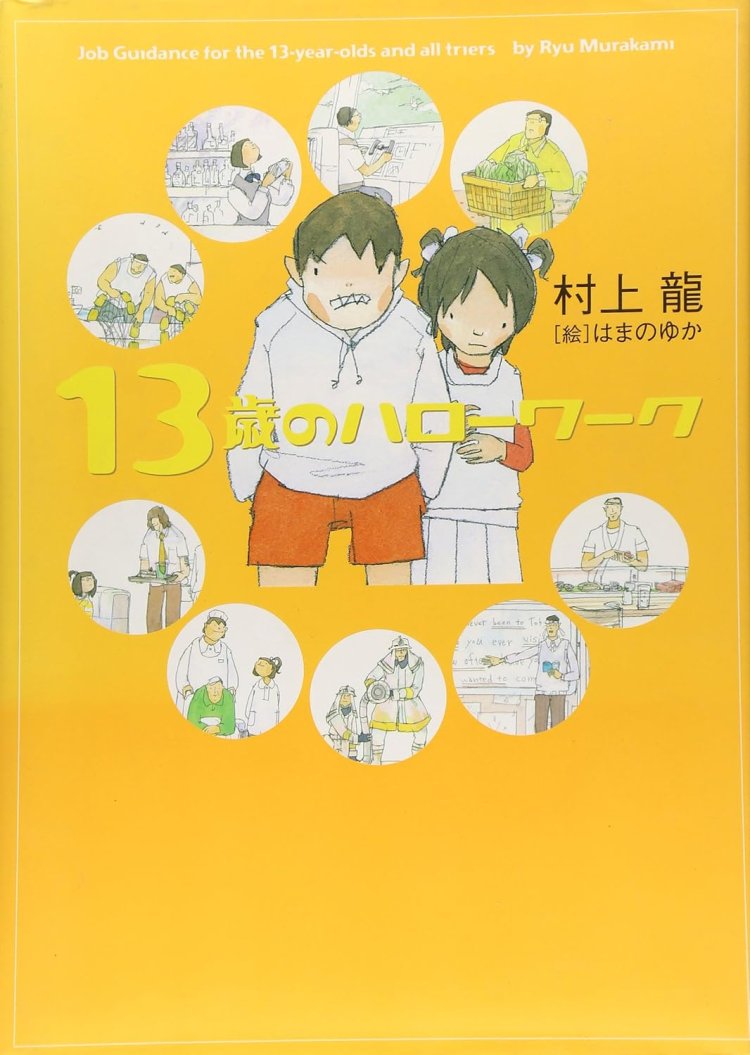
In 2003, Ryu Murakami published *13-Year-Old’s Hello Work*].It’s a book that introduces a variety of jobs and encourages children to think about careers based on what they enjoy and what they’re good at. What he wanted to convey through this book wasn’t simply that doing a job you love will make you happy. He challenged the notion that following the orders of adults or organizations guarantees safety, and argued that you must choose your own way of life. [14] Precisely because he was a man who had once started writing novels to make a living, his words carried a sense of reality. What is interesting is that Murakami himself was not a stubborn, unyielding person who refused to accept others’ opinions.In 2016, at a press conference marking the 10th anniversary of the TV show ‘Cambrian Palace’, Murakami spoke about Eiko Koike, his long-time co-host, noting that although she was younger than him, she had extensive television experience and was someone who would tell him, “That won’t work.” He even revealed that he actually relied on her.Koike also responded that whenever a guest’s remarks were too difficult for her to understand, she would turn to Murakami, and he would immediately come to her aid. [15] They recognized each other’s areas of expertise and helped one another without hesitation when necessary. That was the kind of relationship Murakami had built on the job. Furthermore, there are people who have drawn courage from Murakami’s words.One such person is Akio Toyoda of Toyota Motor Corporation. In 2014, when Toyoda appeared on ‘Cambrian Palace’, Murakami offered him the words, “People who love cars make good cars.”Twelve years later, Toyoda reflected on the program that, for someone like himself who had long been criticized for being a car enthusiast, Murakami’s words had become an unshakable guiding principle thereafter. [16] A single remark from a novelist had given a boost to one of Japan’s leading business executives.Don’t entrust your life to the judgment of others. This does not mean pushing others away or living without anyone’s help. It is precisely because you have your own thoughts that you can respect the abilities and passion of others. The man who preached “mobilizing all abilities” in his youth also kept his eye on others’ ability to demonstrate their own capabilities.
5 Cool Philosophies to Learn from Ryu Murakami’s Way of LifeEnjoy your own life.Don’t Let Go of the Hands of Those You Cherish
Since his youth, Ryu Murakami has spoken his mind without reservation about work, romance, talent, and society, but as he has grown older, a different side has begun to emerge in his writing.In his 2015 book ‘Living Without Fashion’, he argues that there’s no need to forcefully pursue happiness or success, and he speaks to the importance of trust. You can live without happiness, but without trust, life becomes a struggle. And he believes that trust cannot be bought with money. [17] The man who, at age 24, withdrew 1 million yen from a bank and headed to Akihabara, exhilarated by the freedom he had earned through his own efforts, was now, in his sixties, contemplating values that money cannot buy. His relationships were also somewhat unique. Take, for example, Ryuichi Sakamoto, who had been his friend for about 40 years.Sakamoto reportedly felt, when he first read Murakami’s debut novel ‘A Nearly Transparent Blue’, as if the inner workings of their generation had been laid bare to the public, and he even felt a sense of resentment. However, after reading ‘Coin Locker Babies’, he was struck by Murakami’s talent and ended up visiting Murakami’s home to conduct an interview.Surprisingly, that was the only time Sakamoto visited Murakami’s home in their 40-year friendship. They would meet once every few years, have a meal, catch up on each other’s lives, and then part ways. It was a friendship characterized by that kind of distance. In 2020, when Murakami sent a message to Sakamoto’s radio show, he expressed concern for his busy friend’s health. [18] Even though they didn’t meet frequently, their relationship—one built on mutual respect and concern—continued. And there is one more thing: a quiet anecdote that conveys what Murakami was like in his later years. In 2020, Murakami wrote about his daily life with his mother on Shinchosha’s official website.At the time, Murakami was living with his mother, and they reportedly went out for a walk with their dogs together every morning. Murakami walked a German Shepherd, while his mother walked a Shih Tzu. Since they walked at different paces, they rarely walked side by side, and they hardly spoke. However, there was a steep slope along their walking route. There, Murakami would take his mother’s hand to prevent her from slipping.When he was young, his mother used to hold his hand. Now the roles had reversed. Murakami felt a special significance in that everyday gesture. [19] Here was a man who, in his youth, had hurled sharp criticism at society, traveled the world, and written a vast body of work—and now, as he grew older, was taking his aging mother’s hand and walking up the same hill every morning.Come to think of it, in the afterword to his 1987 coming-of-age novel ‘69 sixty nine’, Murakami wrote that the greatest revenge against the teachers who had hurt him in high school was to live a happier life than they did. And he added that living happily requires energy—and that it is a struggle. [5] Those words are brimming with the rebellious spirit of his youth. However, as he grew older, what Murakami cherished was not merely defeating others or flaunting his success. He threw himself into work he loved, surrounded himself with friends who respected one another, and spent quiet moments with his beloved family. Those days, too, were part of the life he had chosen for himself.His father couldn’t afford to save money for his son, but he hoped his son would at least develop a sense of originality. That son blazed his own trail through fiction, threw himself into the work he loved, and, as he grew older, came to hold his mother’s hand. What kind of work to pursue, and what to value in life—Ryū Murakami never left the answers to those questions up to others.
A Book to Get to Know This Man Better, (1)’All Men Are Disposable’
A collection of essays in which Ryu Murakami develops his unique philosophy on masculinity, drawing on themes such as romance, women, art, talent, and society. Underlying his provocative words are questions about what it means for a man to be independent and where he should channel his abilities.While it includes assertions that may divide opinion by today’s standards, this book is indispensable for understanding the values of the young Ryu Murakami and the spirit of the times.
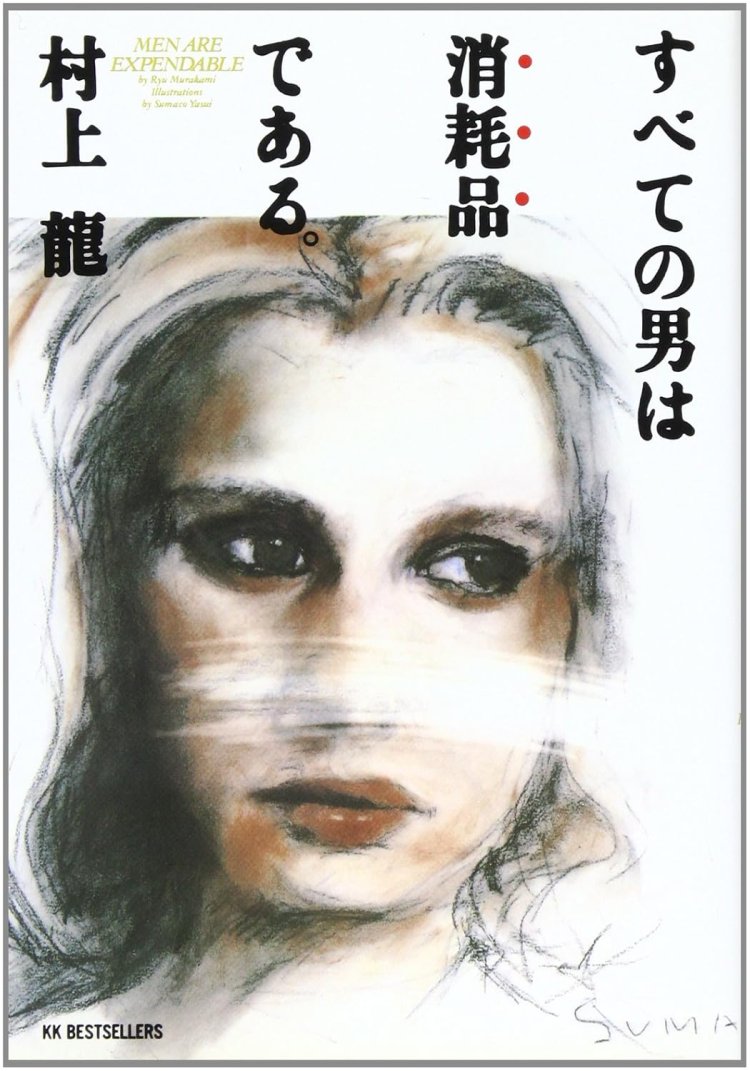

View ‘All Men Are Disposable’ on Amazon
A Book to Get to Know This Man Better (2)’69 sixty nine’
Set in Sasebo City, Nagasaki Prefecture, in 1969, this coming-of-age novel follows high school students as they rebel against their school and adults while pursuing freedom and fun.Based on Ryu Murakami’s own high school days, the story is brimming with the passion and rebellious spirit of youth through episodes involving barricades, music, movies, and romance. Murakami’s philosophy—that enjoying life requires energy—shines through in this story filled with humor and a sense of urgency.
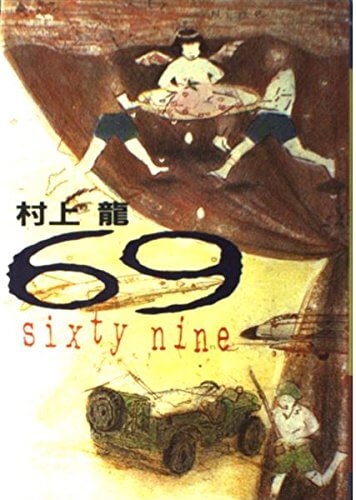
View *69 sixty nine* on Amazon
A Book to Get to Know This Man Better (3)’Leave the Peninsula’
A full-length novel depicting a scenario in which an armed North Korean group seizes control of Fukuoka. Through thorough research and meticulous descriptions, it brings to life the national crisis, social chaos, and the struggles of people trying to survive amidst it all.This masterpiece embodies Ryu Murakami’s relentless dedication to his craft—he consulted no fewer than 205 books and devoted an enormous amount of time to its creation. It is a work that allows readers to truly experience, through the medium of fiction, the “total mobilization of abilities” he espoused.
View Volume 1 of *LeavethePeninsula* on Amazon
View Volume 2 of *Leave the Peninsula* on Amazon
*13-Year-Old’s Career Guide*
An encyclopedia of careers that introduces 514 different professions, using various fields that interest children—such as animals, music, sports, and cooking—as entry points.It challenges the traditional mindset that “graduating from a good school and joining a good company guarantees security,” and emphasizes the importance of choosing a career based on one’s own interests and aptitudes. This book embodies Ryu Murakami’s philosophy of not leaving one’s life in the hands of others, serving as a message to the next generation.
View *13-Year-Old’s Job Hunting Guide* on Amazon
A Book to Get to Know This Man Better (5)’Living Without Fashion’
A collection of essays in which an aging Ryu Murakami reexamines life and society through themes such as the obsession with success and happiness, work, family, and trust.Even within his gentle writing style—a departure from the provocative views on masculinity he expressed in his youth—his attitude of questioning conventional wisdom and thinking for himself remains alive and well. In particular, his reflections on the value of trust—something money cannot buy—are sure to resonate with men contemplating how to live the second half of their lives.
View ‘Living Without Fashion’ on Amazon
References
[1] Gentosha, “Notice of the Passing of Ryu Murakami” (October 23, 2026)
[2] Gentosha, *All Men Are Disposable.Volume 5: Hope Is Right Around the Corner,” Book Information
[3] JBpress, Ryu Murakami, “My Father’s Wish and a One-of-a-Kind Analog Watch” (February 1, 2018)
[5] Shinchosha, “The Thinker,” Yasutaka Nakamizo, “10 Books to Understand ‘Ryū Murakami’s Golden Age’” ( October 28, 2026)
[6] Eiga.com, “A Blue Almost Transparent” Movie Information
[7] Sports Hochi : “Kunihiko Mitamura Pays Tribute to Ryu Murakami: ‘He Responded Calmly to Countless Acts of Rudeness and Disrespect ’” (October 23, 2026)
[8] Nikkan Sports: “‘A Blue Almost Transparent’ Lead Actor Kunihiko Mitamura on the News of Ryu Murakami’s Passing:‘I don’t know… I feel so lonely ’” ( October 24, 2026)
[9] KADOKAWA “All Men Are Disposable 2” Book Information
[10] ITmedia Business Online “What Do Readers Gain? A ‘Class Society’ Is Coming to Japan” December 2, 2015)
[11] Bunshun Online, “The ‘Pride of a Writer’ Demonstrated by Ryu Murakami: A ‘Cambrian Palace’ Producer Reveals Behind-the-Scenes Stories from the Recording” (October 29, 2026)
[13] Bungeishunju“Where Does This Country’s Hope Lie? Ryu Murakami × Noritoshi Furuichi”
[15] Mynavi News “Eiko Koike: ‘I Might Have Run for Governor of Tokyo’—Recalls Turning Down Ichiro Ozawa’s Invitation” (July 16, 2016)
[16] TV Tokyo Plus “Akio Toyoda, Tadashi Yanai, Masayoshi Son: Charismatic Executives’ ‘Reasons for Success’” (April 2, 2026)
[17] Gentosha, “Living a Life Unconnected to Fashion” Book Information
[18] J-WAVE NEWS “Ryuichi Sakamoto Talks About His Relationship with Ryu Murakami.“Why He Resented *A Blue Almost Transparent*” ( May 7, 2020)
[19] Shinchosha “MISSING: What Is Lost” Special Website: Ryu Murakami, “A Short ‘Afterword’—But a Serialized One,” Part 6 (April 28, 2020)