![Ernest Shackleton. He failed to cross Antarctica and lost his ship. Yet he brought 27 men home alive. [Men’s Biographies]](https://otokomaeken.com/wp-content/uploads/2026/08/7966bae78213db11914ad7af893f8431-2-750x396.png)
August 30, 1916, off Elephant Island in the Southern Ocean. Ernest Shackleton counted the figures appearing through his binoculars and shouted, “Everyone’s here. Everyone’s safe.”Of the 28 members of the Endurance expedition, 22—excluding Shackleton and the five others who had left the island in search of rescue—were waiting, not a single one missing. It had been 128 days since they parted ways. After three failed rescue attempts, he had finally returned to bring his comrades home. [1][2]
Born in British-ruled Ireland and raised in London, Shackleton became a leading figure of the “golden age of Antarctic exploration.” However, the expedition that secured his place in history was not a success story in which the original objective was achieved.After his plan fell apart, what did this commander give up—and what, above all, did he refuse to abandon? The answer speaks more eloquently to the man’s character than the success or failure of the Antarctic crossing itself. [3][10]
Sponsored by
The Starting Point180 km from the South Pole. He abandoned the attempt to reach it and chose the return of the four men
In the early 20th century, no one had yet reached the South Pole. The first person to set foot there would etch their name into the history of exploration and bear the prestige of their nation on their shoulders.On January 9, 1909, the four members of the Nimrod Expedition led by Shackleton reached 88°23′ south latitude, setting a new record for the southernmost point reached by humankind. They were 97 geographical miles (approximately 180 km) from the South Pole.The four men could have continued south, but their food rations had already been cut back, and their physical strength was depleted. For every day they advanced, the food and stamina available for the return journey diminished. Shackleton concluded that reaching the South Pole and ensuring the safe return of all four men were mutually exclusive, so he turned north.
Even after deciding to retreat, they were not yet out of danger. On the return journey, their food supplies were nearly exhausted, and Eric Marshall fell ill with dysentery. Shackleton and Frank Wild went ahead to seek help, while Jameson Adams remained with Marshall.The Nimrod returned to pick up the two men, bringing the total number of members of the South Pole expedition back to four. Although they did not reach the South Pole, all four men returned alive, without a single casualty. [12][13]
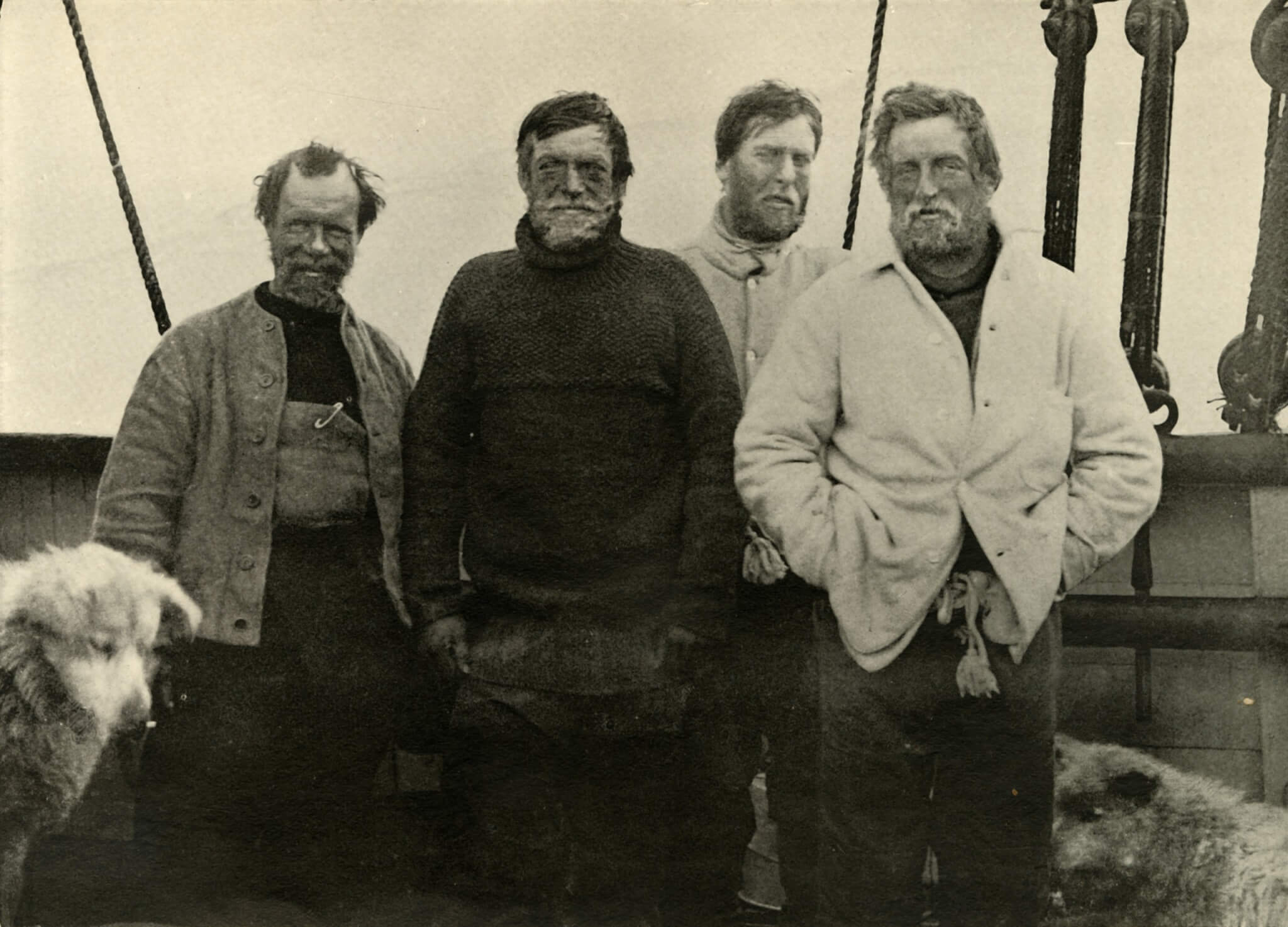
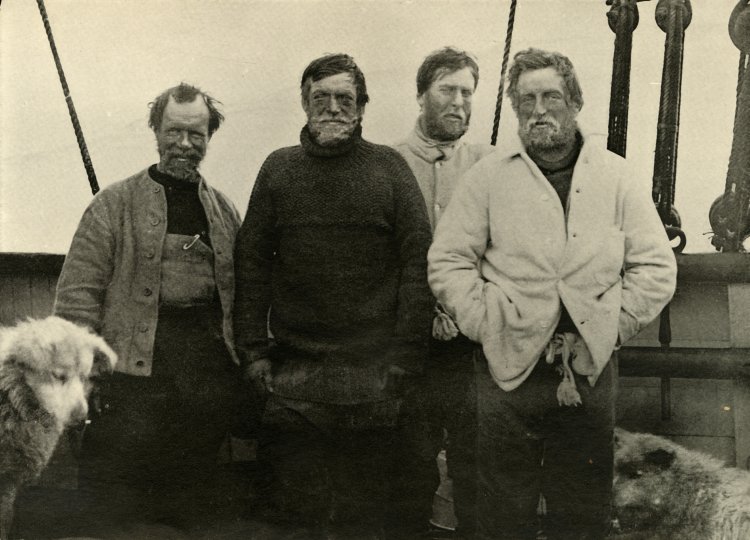
It would be wrong to romanticize this decision as a measured retreat based on an early recognition of the danger.The four men pushed south nearly to their limits, and on the return journey, their very survival was in jeopardy. Even so, Shackleton himself confirmed that they had not reached the South Pole at a stage when there was still room to press forward. It was not that he was indifferent to honor.Even after being knighted upon his return, his ambition for the Antarctic did not fade; his next goal was to cross the continent. It is precisely because this man did not pursue glory at the cost of the lives of himself and the other three that the significance of his retreat is all the greater. Seven years later, Wild, one of the four, would go on to lead the 22 men left behind on Elephant Island.
A MisstepEntering the Ice-Covered Sea While Still Worried About the Ship’s Structural Integrity
In December 1911, Roald Amundsen became the first person to reach the South Pole.Robert Falcon Scott followed suit the next month but lost his life on the return journey. Once the race to the South Pole was over, Shackleton announced his plan for the world’s first transcontinental crossing—from the Weddell Sea through the South Pole to the Ross Sea—as his “final great undertaking.”He left Britain in August 1914, as World War I was breaking out in Europe, and on December 5 of that year, set sail from South Georgia aboard the *Endurance*. However, on January 18, 1915, before reaching their intended landing site, they became trapped in sea ice and began drifting northward along with the ship. [5]
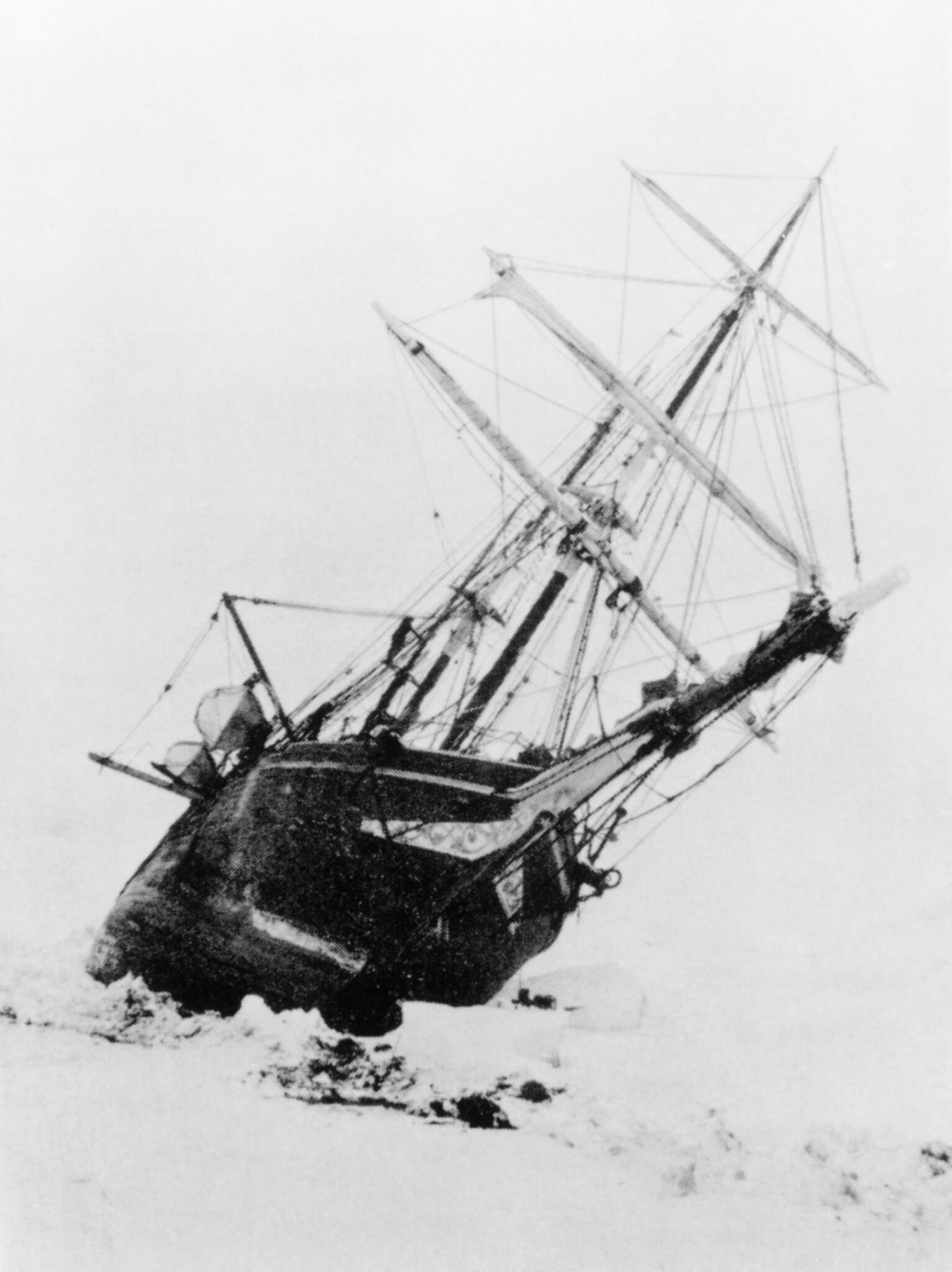
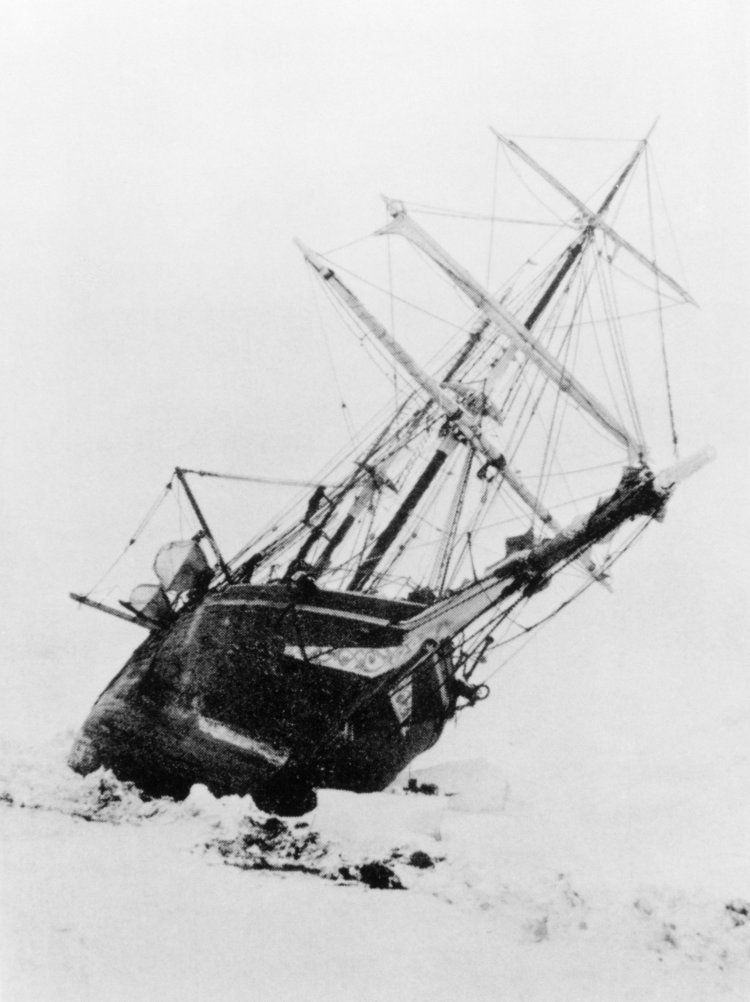
In 2025, a study of the ship’s structure published in the academic journal *Polar Record* changed the perspective on the shipwreck.The Endurance, originally named Polaris, was a ship built for summer tourism and hunting in the Arctic. While the hull was thick enough to withstand collisions with individual ice floes, it was not designed to withstand being squeezed from both sides by moving sea ice.The area around the engine room, which accounted for 22% of the ship’s total length, had insufficient internal bracing and lacked the diagonal reinforcements needed to prevent hull deformation. [4]
Shackleton did not foresee the ship’s sinking. In a letter sent to his wife before departure, he wrote that he believed they would be able to navigate through the ice. However, in the same letter, he also noted that the Endurance was structurally weaker than the Nimrod.Furthermore, in 1911, he had advised that the *Deutschland*, which was heading for the same Weddell Sea, be fitted with diagonal beams, and he was aware that that ship had withstood eight months adrift in the ice. The records do not provide an answer as to why he did not apply the same reinforcement to his own ship.He did not set out unaware of the dangers; rather, he assessed that he could overcome them despite knowing the risks. That judgment proved to be wrong. [4]
On October 27, after more than nine months adrift, damage to the hull reached its limit, and Shackleton ordered the entire crew to abandon ship. On November 21, the ship sank. The 28 men were stranded on the pack ice without ever setting foot on the Antarctic continent.
At this point, I would like to correct the commonly held statement that “everyone on the Shackleton expedition survived.” The Imperial Trans-Antarctic Expedition consisted of the Weddell Sea Detachment, led by Shackleton, and the Ross Sea Detachment, which was tasked with establishing a supply depot on the opposite side of the continent. It was the 28 members of the former who all survived.Unaware of the Endurance’s fate, the Ross Sea Detachment continued to build a supply depot for the main crossing party that was expected to arrive, and three members died. Shackleton was the overall leader of the expedition, and these three cannot be excluded from the heroic narrative. [9][5]

The ShiftAbandoning the Transcontinental Crossing and Making ‘Returning with the 28’ the Mission
After abandoning ship, Shackleton is said to have conveyed to his men a message to the effect of, “We’ve lost the ship and our supplies. So let’s go home.”He did not overcome the collapse through optimism. He terminated the order to cross the continent and set the return of the 28 men as the new mission. All they had on the pack ice were three lifeboats and limited food supplies. They had no means of signaling for help to the outside world, and the route home was not in sight. [6]
Here lies a shift in strategy that would be difficult for an ordinary leader to make.Prolonging a failed plan might make one appear faithful to the original goal. However, the people on the ground are exposed to danger for the sake of appearances. Shackleton did not lower his goal; rather, he shifted the evaluation criteria itself from “Did we cross the continent?” to “Did the 28 of us make it back?”There are many organizations that cling to their original KPIs even when faced with a crisis. When the underlying assumptions collapse, the more they insist on maintaining those same metrics, the greater the losses become. His shift in approach remains relevant today.
Their attempt to tow a lifeboat toward land was blocked by soft ice and made almost no progress.The crew set up camp on the drift ice and carried over into their life adrift the meal times, duty rotations, exercise, games, and singing they had maintained aboard the ship. Rather than trying to quell anxiety with words of encouragement alone, they established a wake-up time and defined the tasks to be accomplished each day.For a group facing an uncertain future, a daily routine was not merely a way to pass the time, but a framework for maintaining discipline and sound judgment. [6]
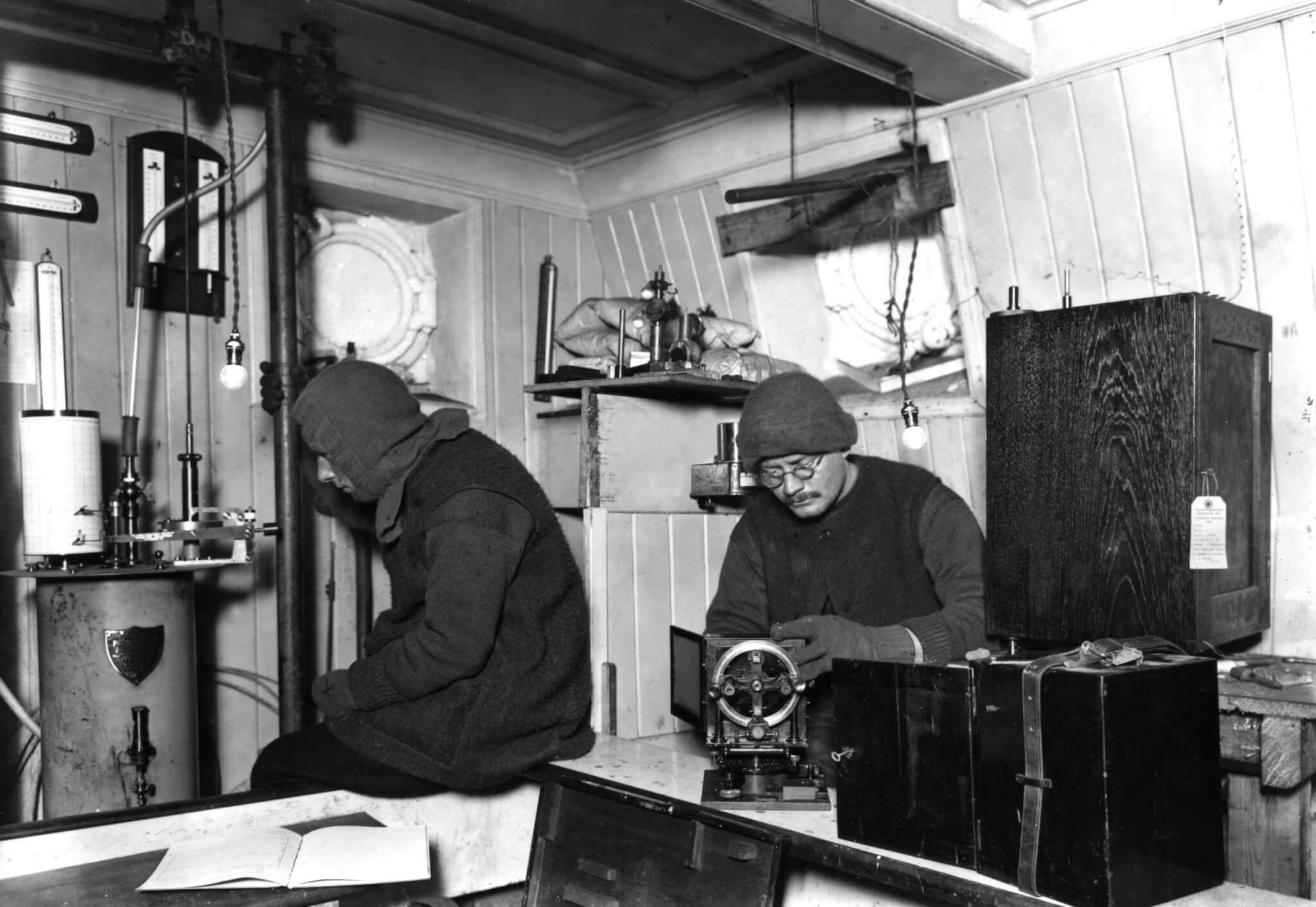
Checking equipment
When the entire crew abandoned ship, personal belongings were limited to 2 lb (approx. 0.9 kg) per person.The exception was meteorologist Leonard Hussey’s 12-pound (approx. 5.4 kg) banjo. Shackleton viewed music as a tool for maintaining morale and never parted with it until the very end.The banjo made the journey to Elephant Island and was played at weekly Saturday concerts. He reportedly wrote lyrics based on the crew members, and if anyone complained, he would respond with an even more scathing song the following week. This was a decision not to dismiss entertainment as a luxury in an emergency, but to give it the same weight as survival gear. [7]
It is easy to simply order people to “stay positive” in a crisis. Only by providing daily routines, roles, and moments of laughter that allow people to look forward can morale truly be managed. Shackleton’s strength lay not in speaking of hope himself, but in creating an environment where hope was difficult to lose.
On April 9, 1916, as the pack ice began to break up, the 28 men boarded three lifeboats. They navigated the rough seas for six days and landed on Elephant Island on April 15. It was their first time setting foot on solid ground in 497 days.However, the island was uninhabited and lay off the usual shipping routes; no one outside the island knew their location or that they were still alive. The nearest inhabited land, South Georgia, was about 1,500 km away. Waiting there was not so much waiting for rescue as it was waiting for their food to run out without ever being discovered. [5][3]
BreakthroughSetting Their Sights on an Island 1,500 km Away in a 6.9-meter Lifeboat
On April 24, Shackleton set out for South Georgia Island with five people aboard the 6.9-meter-long lifeboat James Caird.Given the ocean currents and winds, the chances of reaching any other inhabited land were even slimmer. Moreover, if they missed the island to the east, there would be no land ahead where they could make port. What was needed was not the courage to travel 1,500 km, but the skill to steer the boat precisely from the rough Southern Ocean to that small island. [8]
This voyage could not have been accomplished by Shackleton’s abilities alone. Shipwright Harry McNish raised the lifeboat’s sides and added a makeshift deck, modifying it to withstand open-ocean navigation.Worsley used a sextant, a mechanical chronometer, and a nautical chart that had begun to disintegrate from seawater to determine their position during brief clear spells. When later research teams deciphered the mathematical formulas in the logbook and recreated the calculations, they found not a single calculation error at sea; the only numerical error occurred in observations made after landing. [8]
On May 7, Worthley reported that he could not determine their current position with an accuracy of within 10 miles.Shackleton rejected the risky option of rounding the island’s northwestern tip and instead chose a course that would reliably bring them to the west coast. Leaving matters to the experts did not mean simply passing the responsibility on without clarification. He acknowledged the margin of error indicated by Worthley, used that uncertainty as part of his decision-making process, and determined the course that minimized the risk of missing the island. [8]
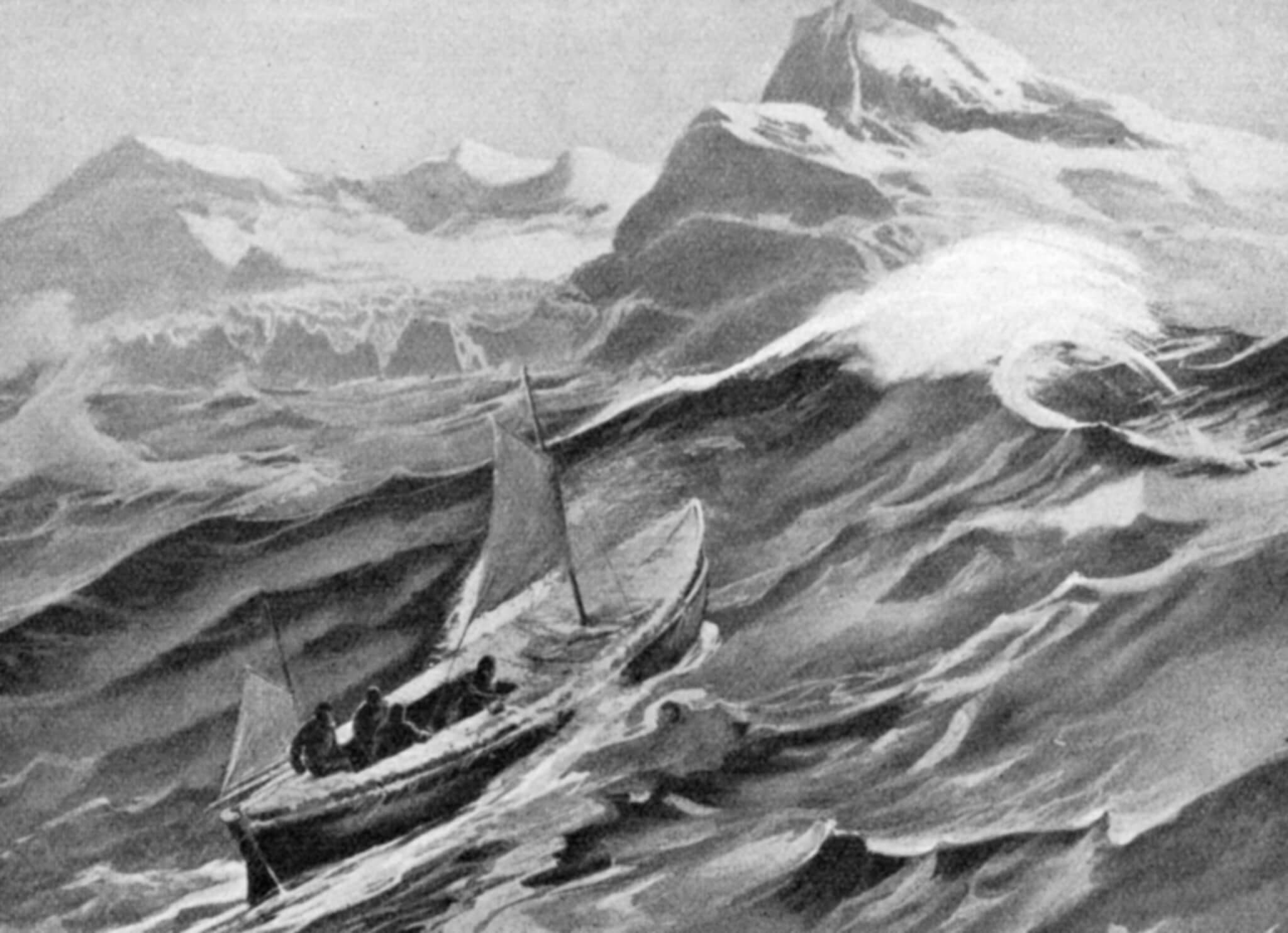
The six men reached South Georgia on May 10. However, their landing site was on the opposite side of the whaling station.Judging it too dangerous to circumnavigate the island in their damaged dinghy, Shackleton set out with Worsley and Tom Crean into the uncharted mountainous terrain. They trekked for about 36 hours with almost no rest and reached the Stromness whaling station on May 20.The six men had reached a place where they could call for help, but their mission was not over. Twenty-two men remained on Elephant Island. [2]
A 2026 study on leadership points out that later portrayals of Shackleton tend to attribute the success of the survival to a single leader, while underestimating the skills of his subordinates and the role of chance. [11] That is exactly right. There would have been no survival had McNeill not repaired the boat, Worthley not charted the course, and Wild not rallied the 22 men. Shackleton’s greatness lay not in doing everything himself, but in entrusting decisions to those with greater skills than his own while never relinquishing responsibility for the outcome.
RescueAfter Turning Back Three Times, He Returned to the 22 on the Fourth Ship
On May 23, three days after arriving in Stromness, Shackleton set out for Elephant Island aboard the whaling ship Southern Sky. However, sea ice blocked his path, and the first rescue attempt ended in failure.In June, the Uruguayan government’s trawler Instituto de Pesca No. 1 approached within sight of the island but was forced to turn back due to ice and a shortage of coal. In July, the schooner Emma was also thwarted by rough weather and engine failure.During World War I, ships available for polar expeditions were scarce, and Shackleton was informed that the British Navy’s *Discovery* would not arrive until mid-September. [2][1]
In the meantime, he had received a telegram from the King of England congratulating him on his safe return.If one considered Shackleton alone, he was already at the stage where he could be treated as a returnee. However, there was no guarantee that the food supplies for the 22 men would last until September. Even though he was advised to wait about six weeks, he refused and sought out the next available ship. The moment he was safe, he did not shift the crisis on the ground onto his subordinates.
The fourth vessel they secured was the Yelcho, a small Chilean Navy ship. It lacked an ice-strengthened hull, and Shackleton himself acknowledged that it was not suited for polar conditions. Nevertheless, under the command of Luis Pardo, it set sail on August 25 and, navigating around the sea ice, approached the island on the 30th. [2]
The 22 people on the island lived in a low hut with two lifeboats turned upside down to serve as a roof. They wore the same clothes for over half a year; soiled by seal blubber and smoke, one crew member suffered frostbite and had five toes amputated.As food supplies dwindled, they even put shellfish and seaweed attached to rocks into their pots. Even so, Wild, who had been entrusted with command, would roll up his sleeping bag every morning and have the crew prepare to set out, saying, “The boss might come today.” He transformed their hope—which had been limited to waiting—into a daily morning routine. [2]
Just before noon on August 30, a crew member gathering shellfish on the beach spotted a ship in the fog. Upon hearing the news, the 22 men rushed to the hut’s narrow entrance and carried their comrades who could not walk out into the open. The flag was frozen solid and would not move.Instead, they tied a sweater to a pole and burned gloves and socks with their remaining fuel to send a signal. The pot containing clams and seaweed for lunch was kicked over in the commotion, but no one lamented its loss. [1]
After counting the 22 people from the Yelcho, Shackleton headed for shore in a small boat. The first thing he asked Wild was whether everyone was safe. The reply was, “Everyone is safe.” In less than an hour, the 22 men boarded the ship and left Elephant Island.One hundred and two days after Shackleton’s solitary return, the return of the 28 men he had led was finally secured. [1][2]
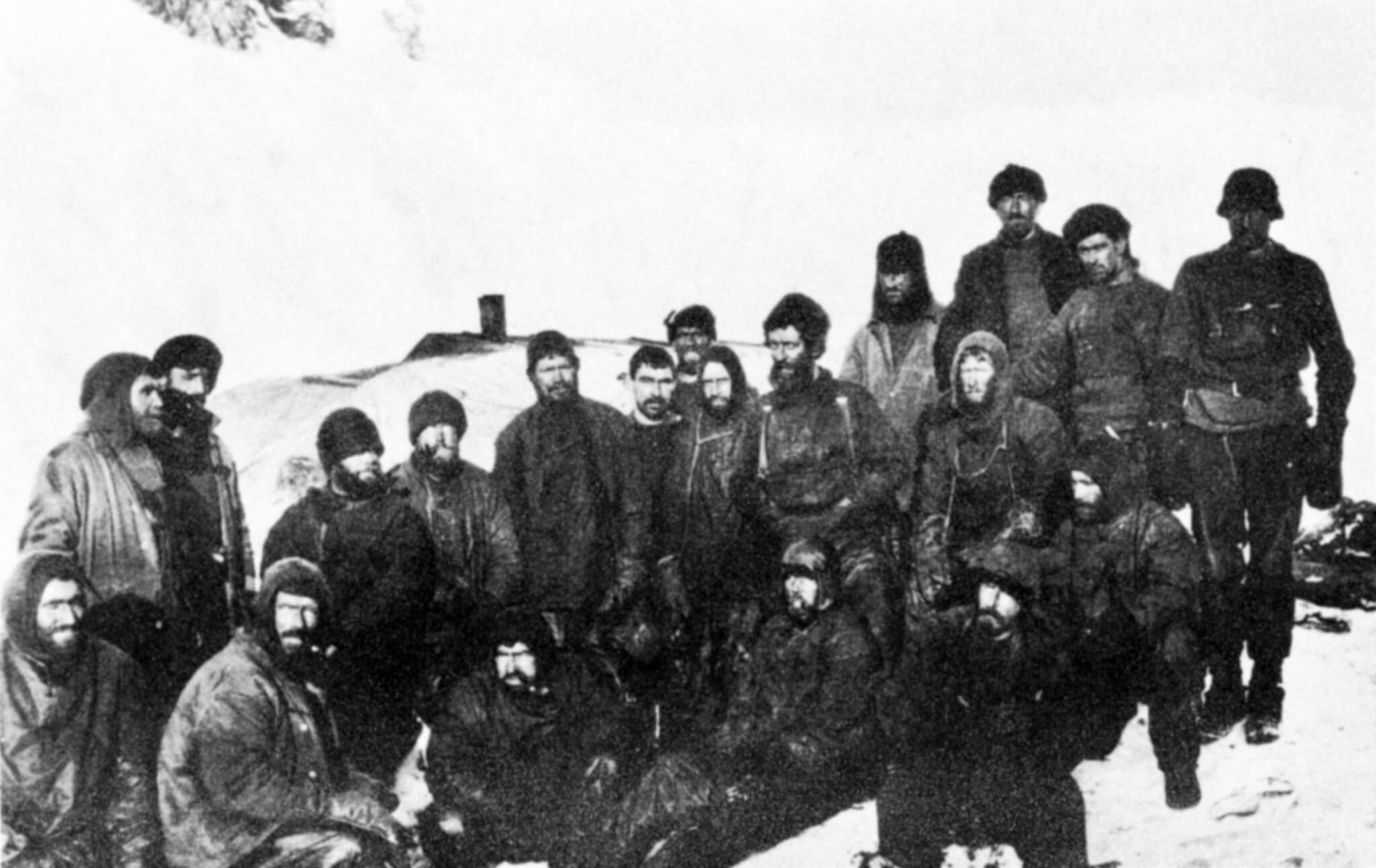
Work on the expedition as a whole remained to be done.In December 1916, Shackleton joined the rescue mission for the Ross Sea Detachment aboard the Aurora, and the Aurora picked up the survivors on January 10 of the following year.The lives of the three who died could not be recovered. Even so, he did not consider the expedition over simply because he had saved the sub-expedition he led. [9][5]
What we in the modern world should learn from Shackleton is not a philosophy of “never giving up.” He gave up on reaching the South Pole and on crossing the continent. What he did not let go of was his responsibility to bring home the 27 men he had brought to Antarctica.Rather than clinging to old goals, he identified what needed to be protected and abandoned the goals themselves. He was a man who never made a mistake about what to give up.
Reading His Own Account*The Endurance: A Story of Survival, Hope, and Resilience*
The Japanese edition of Shackleton’s own expedition account, *South*.From the ship’s departure to its loss, life on the ice, the voyage aboard the James Caird, and the rescue of the 22 survivors, readers can trace what the commander witnessed and how he made his decisions through his own writings.While it is necessary to discern self-justification and the heroization by later generations, this is a primary source that even reveals his intention to regard the banjo as a “tool for maintaining his sanity.”

Translators: Yoshimasa Kimura, Yoshiya Taniguchi
Publisher: Chuo Koron Shinsha
Publication Year: 2003
ISBN: 9784122042254
Traced Through the Testimonies of His Companions’Endurance: The Story of the Shackleton Expedition’
A nonfiction book written by Alfred Lansing in 1959, based on the crew members’ diaries, letters, and interviews with survivors.Rather than focusing solely on Shackleton’s perspective, it depicts the cold, hunger, boredom, and even friction among the crew members.If you want to read a compelling narrative explaining why this group of 28 people didn’t fall apart, this Japanese paperback edition is the top choice.
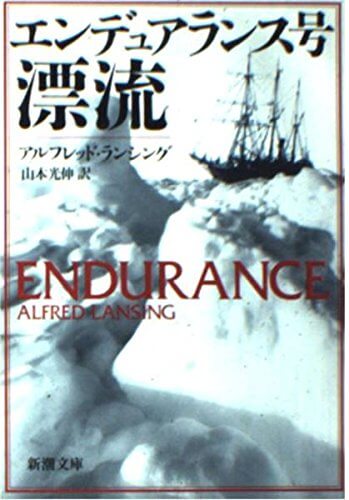
Translator: Mitsunobu Yamamoto
Publisher: Shinchosha
Publication Year: 2001
ISBN: 9784102222218
ReferencesSources Cited in This Article
- American Public Media, “Walking Out of History: They’re All Safe!”
- Royal Scottish Geographical Society, “Shackleton and the Men on Elephant Island: A Brotherhood of the Sea” (March 16, 2023)
- Royal Museums Greenwich, “Sir Ernest Shackleton”
- Jukka Tuhkuri, “Why Did the Endurance Sink?”, Polar Record, Vol. 61, e23 (2025)
- Royal Geographical Society, “Shackleton’s Endurance Expedition: Timeline”
- National Geographic, “How Polar Explorers Survived Months of Isolation Without Cracking” (May 26, 2020)
- Royal Museums Greenwich, “A Windsor ‘Popular’ Model 5 Zither Banjo Belonging to Dr. Leonard Hussey”
- Lars Bergman, George Huxtable, Bradley R. Morris, Robin G. Stuart, “Navigation of the James Caird on the Shackleton Expedition,” Records of the Canterbury Museum, Vol. 32, pp. 23–66 (2018)
- David L. Harrowfield, “’For the sake of science and country’: the Ross Sea party 1914–1917,” Polar Record, Vol. 51, Issue 4, pp. 343–365 (2015)
- The Guardian, “Wreck of Shackleton’s ship Quest found, last link to ‘heroic age of Antarctic exploration’” (June 12, 2024)
- Carl Lee Tolbert, “Beyond the Romance of Leadership: Shackleton, Self-Inflicted Crisis, and the Values of Recovery,” The Journal of Values-Based Leadership, Vol. 19, Issue 2, Article 16 (2026)

![Paul Newman: The Man Who Turned Fame into Money and Donated All His Profits to Charity [Men’s Biographies]](https://otokomaeken.com/wp-content/uploads/2026/08/2071d8b3d6b46d67221ad9d050c85da8-630x331.png)
![Jackie Chan: The Man Who Turned His Back on the Path to Becoming Bruce Lee’s Successor and Changed the World with Comedy and Action [Men’s Biographies]](https://otokomaeken.com/wp-content/uploads/2026/10/7966bae78213db11914ad7af893f8431-630x331.png)
![Steve McQueen: A Man Who Lived Freely and Never Compromised on Duty or Principle [Men’s Biographies]](https://otokomaeken.com/wp-content/uploads/2026/09/7966bae78213db11914ad7af893f8431-4-630x331.png)
![George Foreman: From World Champion to Pastor—The Boxer Who, After a 10-Year Hiatus, Knocked Out an Undefeated Champion at Age 45 [Men’s Biographies]](https://otokomaeken.com/wp-content/uploads/2026/09/7966bae78213db11914ad7af893f8431-2-630x331.png)
![Jon Bon Jovi: The Man Behind “Livin’ on a Prayer” Runs a “Priceless Restaurant” That’s Been Going Strong for 15 Years [Men in the Spotlight]](https://otokomaeken.com/wp-content/uploads/2026/09/7966bae78213db11914ad7af893f8431-1-630x331.png)
![Michael J. Fox: The “Back to the Future” Star and the Future He Truly Sought to Change [Men’s Profiles]](https://otokomaeken.com/wp-content/uploads/2026/09/7966bae78213db11914ad7af893f8431-630x331.png)
![Keanu Reeves: The Man Who Turned Down a $12 Million Sequel and Didn’t Cling to His Star Privileges [Men’s Profiles]](https://otokomaeken.com/wp-content/uploads/2026/08/aflo_177021114-630x331.jpg)








![Steve McQueen: A Man Who Lived Freely and Never Compromised on Duty or Principle [Men's Biographies]](https://otokomaeken.com/wp-content/uploads/2026/09/7966bae78213db11914ad7af893f8431-4-750x396.png)



![Jackie Chan: The Man Who Turned His Back on the Path to Becoming Bruce Lee’s Successor and Changed the World with Comedy and Action [Men’s Biographies]](https://otokomaeken.com/wp-content/uploads/2026/10/7966bae78213db11914ad7af893f8431-750x396.png)
![George Foreman: From World Champion to Pastor—The Boxer Who, After a 10-Year Hiatus, Knocked Out an Undefeated Champion at Age 45 [Men's Biographies]](https://otokomaeken.com/wp-content/uploads/2026/09/7966bae78213db11914ad7af893f8431-2-750x396.png)
![Paul Newman: The Man Who Turned Fame into Money and Donated All His Profits to Charity [Men's Biographies]](https://otokomaeken.com/wp-content/uploads/2026/08/2071d8b3d6b46d67221ad9d050c85da8-750x396.png)