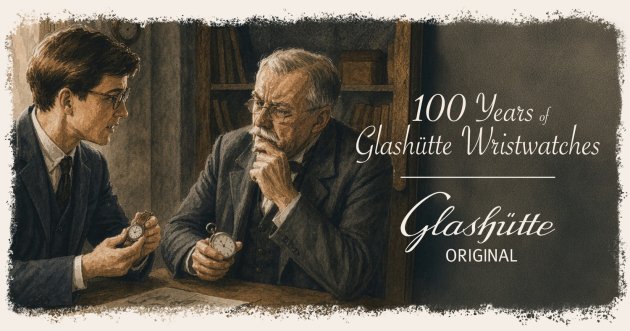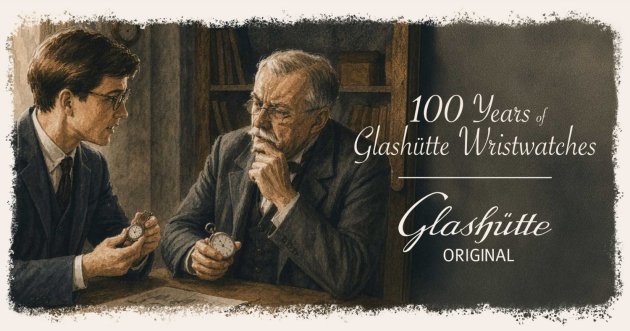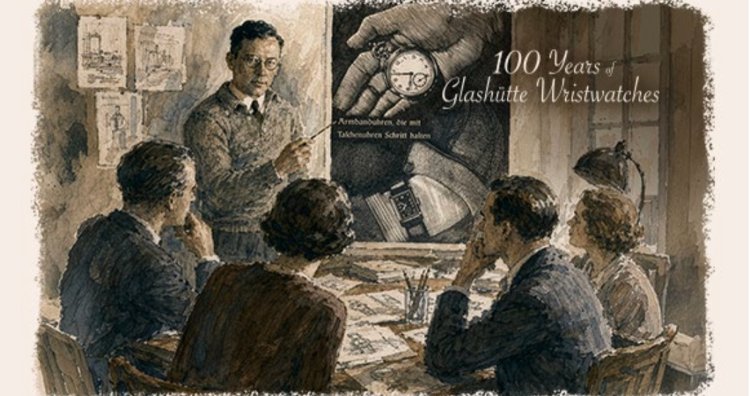
Last year, Glashütte Original celebrated the 180th anniversary of watchmaking in Glashütte. This year marks the 100th anniversary of the start of full-scale production of wristwatch movements in the town.To mark this milestone, we’re launching a series that explores the 100-year history of watchmaking in Glashütte through the stories of the pioneers who opened a new chapter in the watch industry. In this second installment, we present the story of a young lawyer who led Glashütte watches to commercial success.Also, be sure to check out the information at the end of the article about the 100th-anniversary exhibition taking place from Saturday, August 8, to Tuesday, August 11!
Click here for the first installment↓
Sponsored by
Glashütte’s Hero, Whose Story Is Still Told TodayIt Wasn’t a Watchmaker, but a Lawyer Who Saved Glashütte’s Watch Industry!
As mentioned in the previous article, unprecedented hyperinflation struck Germany in the 1920s.In the wake of that economic crisis, Glashütte had few options left to maintain its status as the center of German watchmaking.For UROFA and UFAG—two sister companies established in 1926 using the remaining assets of the Glashütte German Precision Watch Factory, which had filed for bankruptcy—success depended on whether they could establish a firm foothold in the rapidly expanding wristwatch market.
The task of managing the companies fell to Dr. Ernst Kurz, who was 38 years old at the time. Kurz, a lawyer rather than a watchmaker, quickly recognized that the biggest challenge was a lack of brand awareness.At the time, wristwatches were widely perceived as inferior to pocket watches in terms of accuracy and reliability. Furthermore, Glashütte was a latecomer to this emerging market and first had to establish a reputation as a place that produced exceptional wristwatches.
To achieve this goal, Kurz formulated a clear and consistent marketing strategy—an initiative that today would be called “rebranding.” The tagline “Wristwatches on par with pocket watches” served as the guiding principle for Glashütte’s first-ever modern marketing campaign in the history of its watchmaking industry.
He also understood the power of strong branding. The UROFA Caliber 58, introduced in 1935, appeared in advertisements and posters under the name “Raumnutzwerk” (a movement with excellent space efficiency).This striking name highlighted the innovative design that skillfully adapted the engineering principles—already proven in traditional pocket watch movements—to the much smaller calibers of wristwatches.This strategy proved a great success, and Caliber 58 achieved greater commercial success than any other watch produced in Glashütte up to that point.
Furthermore, Kurz introduced a quality assurance label called “Tutima” for UROFA’s top-of-the-line movements. Derived from Latin, this name is a coined term meaning “reliable.”Its distinctive symbol, featuring the Greek letter “τ” (tau), quickly became a widely recognized emblem and was depicted on the dials of many watches assembled by UFAG.
Dr. Ernst Kurz led both companies to success until 1945, when he fled to West Germany ahead of the Soviet invasion.After the end of World War II, UROFA and UFAG were absorbed into the state-owned VEB Glashütter Uhrenbetriebe, consolidating the brands and affiliated companies into a single entity.Although Kurz never returned to Glashütte, he is still highly regarded today as a visionary strategist who guided Glashütte’s watch industry into the modern era.
【次回予告】
In the next installment of this series, “100 Years of Wristwatch History in Glashütte,” we’ll introduce one of UROFA’s greatest technical achievements. We’ll delve into the innovative technology that set an entirely new standard for watchmaking at the time.
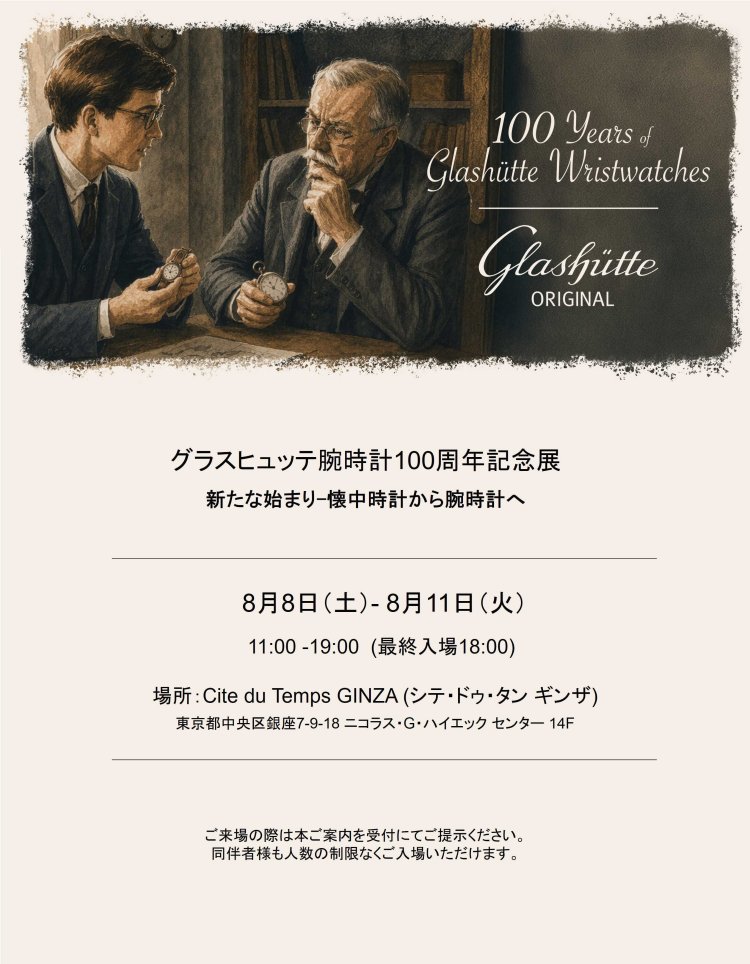
A New Beginning—From Pocket Watches to WristwatchesCommemorative Exhibition Celebrating 100 Years of Watchmaking in Glashütte. Gifts for OTOKOMAE Readers, Too!
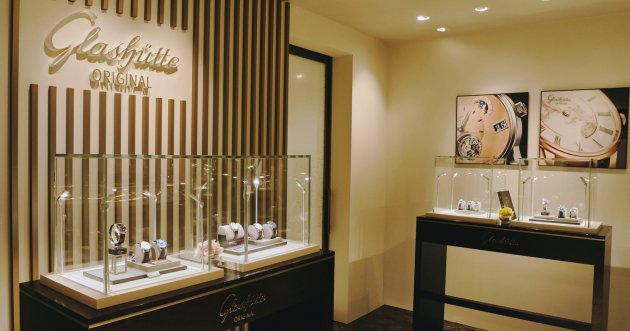
To commemorate this 100th anniversary, a Glashütte Original commemorative exhibition will be held from Saturday, August 8, 2026, to Tuesday, August 11, 2026, at the event space on the 14th floor of the Nicolas G. Hayek Center in Ginza, Cité du Temps Ginza, located on the 14th floor of the Nicolas G. Hayek Center in Ginza .On the day of the event, visitors who show this OTOKOMAE article at the reception desk will receive an original gift*! This is a rare opportunity to catch a glimpse of the essence of German watchmaking, so be sure to stop by.
* Available on a first-come, first-served basis; quantities are limited.
Glashütte Original Official Website
If you’d like to learn more about the history of the watchmaking industry in Glashütte, check out these articles↓
If you’d like to learn more about Glashütte Original, including the brand’s history and appeal, check out these articles↓