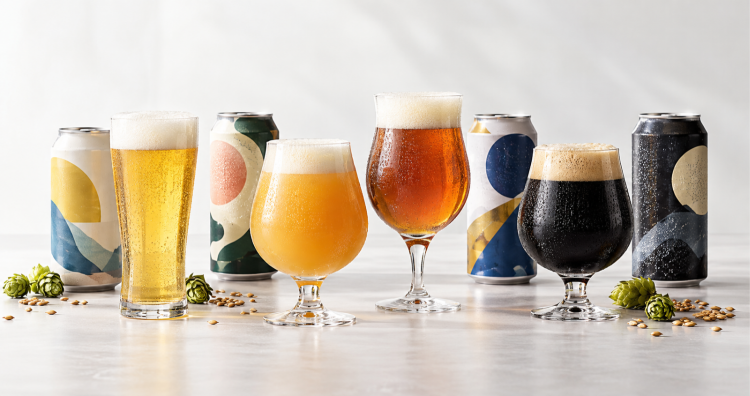
Craft beer has become such a familiar presence that convenience store shelves are now lined with a wide variety of unique brands. From the taste and aroma to the eye-catching can designs that make you want to pick them up, there are countless ways to enjoy it. What’s more, the appeal of craft beer goes far beyond just its taste and aroma.If you trace its history, you’ll discover surprising figures and events, and there are stories that will leave you amazed by the brewers’ creativity. Knowing this background will surely make that next glass taste even better. In this article, we’ll share some fun facts about craft beer that you’ll want to share with others.
Sponsored by
Fun Facts About Craft Beer #1The Turning Point for Japan’s Craft Beer Culture Was 1994: Triggered by an Amendment to the Liquor Tax Act
The year 1994 marked a major turning point in the history of craft beer in Japan.Deregulation of the Liquor Tax Act lowered the minimum annual production volume required for a beer manufacturing license from 2,000 kiloliters to 60 kiloliters. This allowed small breweries to enter the beer-making industry, which had previously been impractical without large-scale facilities.Over the three years following the amendment, more than 300 breweries were established, sparking a “craft beer” boom across the country. Behind the sudden blossoming of Japan’s craft beer culture—which continues to this day—lay not only advancements in flavor and technique but also changes in the regulatory framework. [1]
Craft Beer Trivia 2President Jimmy Carter Helped Fuel the U.S. Craft Beer Revolution
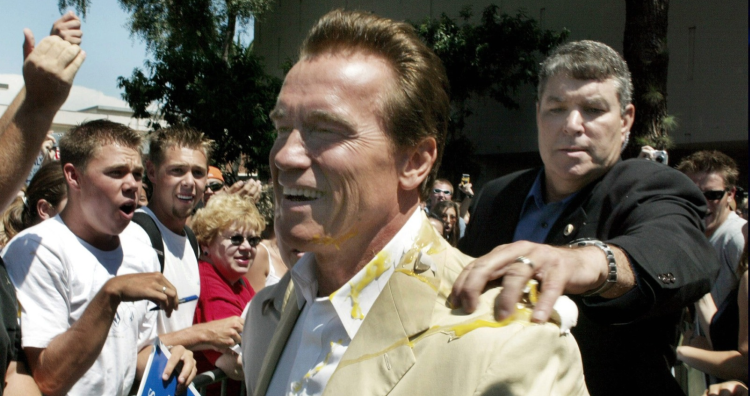
One of the key figures in the history of American craft beer culture is, surprisingly, the 39th President, Jimmy Carter.Even after Prohibition was repealed, federal regulations still restricted homebrewing. In 1978, Carter signed a bill into law, paving the way at the federal level for people to brew beer at home for personal consumption.Since then, the community of homebrewers has expanded, and many have gone on to become professional brewers. This became one of the foundations supporting the modern American craft beer revolution. [2]
Fun Facts About Craft Beer 3Prohibition Was a Root Cause of the Birth of Craft Beer.Born as a reaction against a homogenized market
The U.S. Prohibition, which began in 1920, dealt a severe blow to the domestic beer industry and forced many breweries out of business.Although hundreds of breweries reopened after Prohibition was repealed in 1933, consolidation by major companies proceeded thereafter, and by the late 1970s, the market had consolidated to the point where 42 companies owned 89 breweries. The beers produced also became increasingly dominated by light lagers.Enthusiasts who found this homogenized market unsatisfying began brewing a variety of beer styles at home, which eventually evolved into small-scale breweries. In other words, while Prohibition did not directly give rise to craft beer, the backlash against the beer market that emerged afterward led to the birth of modern craft beer culture. [3]
Craft Beer Trivia 4The Pioneer of the U.S. Craft Beer Revolution Was the Heir to a Washing Machine Manufacturer
Fritz Maytag is the great-grandson of the founder of the appliance manufacturer Maytag.In 1965, he acquired a 51% stake in the Anchor Brewing Company, which was on the verge of closing down, and later became its sole owner. Although he had no brewing experience, he studied old brewing manuals, visited European breweries, and thoroughly immersed himself in the art of beer making.Not only did he turn Anchor around, but he also introduced a series of beer styles that were rare in the United States at the time, such as porters, barley wines, and Liberty Ale—a beer that made bold use of hops. He is a pioneer of modern craft beer who demonstrated to a market dominated by mass-produced lagers that “small breweries can create unique flavors.” [4]
Craft Beer Trivia #5There’s a Craft Beer Inspired by a Toy Football Game
In 1999, Sam Calagione, founder of Dogfish Head, saw a chef on a cooking show continuously sprinkling pepper in small amounts and wondered if hops could be added continuously as well. So, he modified an electric American football game he found at a thrift store.He created a mechanism that used vibrations to continuously drop small amounts of hops into the boiling kettle. The signature beer born from this technique, known as “continual hopping,” is the “60 Minute IPA,” which has hops added continuously for 60 minutes. The actual game machine used is now part of the collection at the Smithsonian’s National Museum of American History. [5]
Craft Beer Trivia 6IPA is a beer style that evolved as it was exported from Britain to colonial India
IPA is a style that evolved from pale ale. Both are ale-style beers that allow you to enjoy the aroma and bitterness of hops, but IPA offers a more pronounced aroma and bitterness.While the names alone might suggest they belong to different categories, their lineages are actually quite close.Furthermore, the famous explanation “IPA was invented by adding large amounts of hops to prevent the beer from spoiling during the journey to India” is a significant oversimplification of actual history. It is closer to the truth to consider that, among the pale ales exported to India at the time, the types with a strong hop character gradually came to be recognized as IPA. [6]
Craft Beer Trivia #7Beer Ingredients in Space!? Beer Made from Yeast That Traveled by Rocket Actually Exists
In 2014, the American Ninkasi Brewing Company sent six types of brewing yeast into space aboard a private rocket. The Imperial Stout “Ground Control” was brewed on Earth using the yeast that returned safely.This unique creation, which also features hazelnuts, star anise, and cacao nibs, effectively extends the experimental spirit characteristic of craft beer all the way to space. To be precise, it is not a “beer brewed in space,” but rather a “beer made from yeast that traveled through space.” [7]
Craft Beer Trivia #8President Obama Brewed His Own Beer at the White House
During the Barack Obama administration, beer brewing began inside the White House in 2011.The initiative was spearheaded by then-Senior Policy Advisor Sam Kass and others, and Obama himself purchased a brewing kit.Starting with the first “White House Honey Brown Ale,” they also brewed Honey Blonde and Honey Porter. What makes this even more unique is that they used honey harvested from beehives in the White House South Lawn. According to the Smithsonian, Obama is believed to be the first president confirmed to have brewed beer on the White House grounds. [8]
Craft Beer Trivia #9Archaeology and Craft Brewing Revived 'King Midas’s Wine' from About 2,700 Years Ago
Dogfish Head has partnered with archaeologist Patrick McGovern to develop the “Ancient Ales” series, which brings ancient beverages back to life. A prime example of this is “Midas Touch.”By chemically analyzing beverage residues discovered in a tomb dating to around 700 BCE—believed to be the tomb of King Midas—they reconstructed the beverage using a combination of barley, honey, Muscat grapes, and saffron.Strictly speaking, it’s a beverage that straddles the boundaries between modern beer, wine, and mead, but the concept of using science and craft brewing to bring a flavor from approximately 2,700 years ago into the present is truly impressive. [9]
10 Fun Facts About Craft BeerStronger than tequila or vodka!? A ‘Beer’ with 55% Alcohol Actually Exists
In 2010, Scotland’s BrewDog released “The End of History,” which boasted an astonishing 55% alcohol content.Based on a Belgian-style blond ale, the alcohol content was pushed to the absolute limit through freeze-concentration. It also incorporated Scottish nettles and juniper berries, and the limited-edition bottles were housed inside taxidermied ermine and gray squirrels.It even sparked a debate over whether a 55% ABV beer produced through freeze-concentration could still be called “beer,” but that was precisely BrewDog’s aim: to challenge conventional wisdom about “what beer is.” It can be said that this beer embodies the freedom of craft beer in an extreme form. [10]
References
[1] The Japan Times “Japan’s craft beer scene: 25 years in the making” (October 6, 2018)
[2] Smithsonian Magazine, “The Schoolteacher Who Sparked America’s Craft Brew Revolution”
[3] Smithsonian Magazine, “Here’s What’s Brewing in the New Smithsonian Beer Collections” (September 16, 2019)
[4] Craft Beer & Brewing / The Oxford Companion to Beer “Maytag, Fritz”
[5] Smithsonian Magazine “Here’s What’s Brewing in the New Smithsonian Beer Collections” (September 16, 2019)
[6] Smithsonian Magazine “How the India Pale Ale Got Its Name” (April 7, 2015)
[7] Smithsonian Magazine “How Do You Make Beer in Space?”
[8] Smithsonian Magazine “How Barack Obama Became the First President to Brew Beer at the White House” (July 12, 2017)
[9] Smithsonian Magazine, “The Beer Archaeologist”
[10] Eater, “BrewDog Unveils the World’s Strongest, Squirreliest Beer Ever” (July 22, 2010)



![[ Okayama Denim Fair ] Three days of sales in Shinbashi of domestically produced jeans, which are hard to find in Tokyo.](https://otokomaeken.com/wp-content/uploads/2015/12/2b01617ae69731585e276ce17e6d78fd-630x331.jpg)




![Jackie Chan: The Man Who Turned His Back on the Path to Becoming Bruce Lee’s Successor and Changed the World with Comedy and Action [Men’s Biographies]](https://otokomaeken.com/wp-content/uploads/2026/10/7966bae78213db11914ad7af893f8431-750x396.png)
![Steve McQueen: A Man Who Lived Freely and Never Compromised on Duty or Principle [Men's Biographies]](https://otokomaeken.com/wp-content/uploads/2026/09/7966bae78213db11914ad7af893f8431-4-750x396.png)