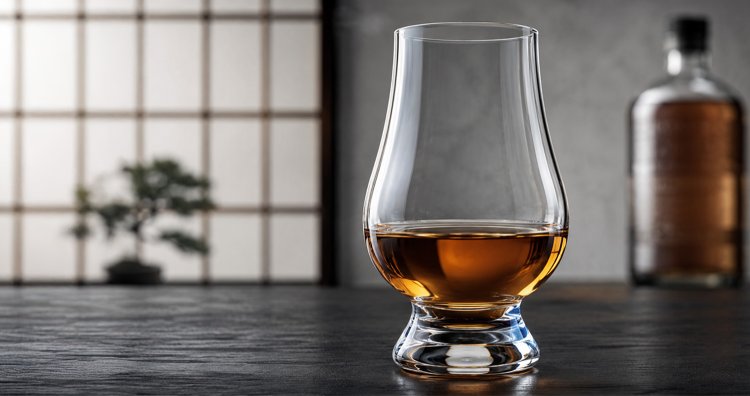
Japanese whiskey is now highly regarded around the world. Can you explain its definition, history, background of price hikes, and points of appreciation? In this issue, we will organize the basic knowledge you should keep in mind when learning about Japanese whiskey in a Q&A format.
Sponsored by
Q1. What is the definition of Japanese whiskey?A: Whisky that meets the standards of the Japan Western Whisky Brewers Association. The term does not refer to all Japanese products.
Currently, Japanese whiskey refers to products that meet the “Japanese Whiskey Labeling Standards for Whiskey ” set forth by the Japan Western Whiskey Brewers Association, which became effective on April 1, 2021. The main points of the standard are as follows Malt, grains, and water from Japan must be used as ingredients,” “Malt must be used,” “Saccharification, fermentation, and distillation must take place in a distillery in Japan,” “Alcohol content must be less than 95% when distilled,” “5. As can be seen from the above points, whisky sold in Japan, whisky produced in Japan, and whisky with Japanese-sounding names are not necessarily Japanese whisky. Whiskey sold in Japan, whiskey produced in Japan, whiskey with a Japanese sounding name, etc. are not necessarily Japanese whiskey. Products blended with foreign original whisky or products that do not meet the requirements for saccharification, fermentation, distillation, and maturation, even if bottled in Japan, are distinguished from Japanese whisky under the labeling standards, regardless of the superiority of the quality.
Q2. What are the typical Japanese whiskeys?A: The first thing to keep in mind is Japanese whiskey developed by major manufacturers.
If you want to know the typical Japanese whiskeys, you want to start with the brands of the major manufacturers. For Suntory, in addition to Yamazaki, Hakushu, Hibiki, and Chita, Royal, Special Reserve, Toki, Old, and Kakubin can be mentioned. Nikka Whisky offers Yoichi, Miyagikyo, Taketsuru, and Cafe Grain, while Kirin offers Fuji. Premium brands such as Yamazaki, Hakushu, and Hibiki, even the most accessible ones, are priced in the 6,000 to 8,000 yen range for a 700 ml bottle, while some brands such as Suntory’s Old and Kakubin have a suggested retail price of around 2,000 yen.
Q3: Is Japanese whiskey being developed by other than major manufacturers?A: Expanding. In recent years, Japanese whiskey from up-and-coming brands called craft whiskey is increasing.
In recent years, with the growing popularity of Japanese whiskey, craft whiskey produced by small distilleries has also been gaining attention. Craft whiskey refers to whiskey that strongly reflects the philosophy and characteristics of the distiller, such as small-lot production, regional characteristics, and experimental production. Rather than competing with the stock of original whisky accumulated over many years by major manufacturers, craft whisky is characterized by the differences in local climate, water, maturation environment, use of barrels, yeast, and distillers, all of which contribute to its individuality. Among craft whiskeys, brands known as Japanese whiskey include “Kanosuke Single Malt” from the Kanosuke Distillery, “Single Malt Shizuoka” from the Gaia Flow Shizuoka Distillery, and “Single Malt Eigashima” from the Eigashima Distillery. While there were 10-15 whiskey distilleries existing in Japan until about 10 years ago, the number will increase to about 120 by 2026. In addition to following the masterpieces of major distillers, checking out these up-and-coming brands is now an indispensable perspective for enjoying Japanese whiskey.
Q4. What types of Japanese whiskey are there?A: There are four main categories: single malt, pure malt, grain, and blended.
Japanese whiskey can be divided into several types depending on the raw materials, manufacturing process, and the way the original whiskey is combined. First, there are four types to keep in mind: single malt, pure malt, grain, and blended. Single malt is a whiskey made exclusively from malt malt from a single distillery. Generally, malt whisky is distilled in a single distiller, and each distillery tends to have its own unique characteristics. Yamazaki, Hakushu, Yoichi, and Miyagikyo are well-known examples. Pure malt, on the other hand, is the same as single malt in that it consists only of malt base alcohol, but sometimes malt base alcohol from multiple distilleries is combined. Takezuru Pure Malt is a typical example. And grain is a whiskey that uses grains such as corn and wheat in addition to malt. It is generally made using continuous distillation and tends to be lighter and cleaner than malt. Chita and Fuji single grain are well known. Blended is a whiskey that combines malt and grain whiskies. Hibiki, Royal, Special Reserve, Old, and Kakubin are examples.
Q5. Why has Japanese whiskey gained worldwide attention?A: Because it was evaluated in an international competition.
The reason why Japanese whiskey has come to the attention of the world is because of its reputation in international competitions. Symbolic of this is the ” Best of the Best ” award in 2001. Nikka Whisky’s “Single Cask Yoichi 10 Year Old” received the highest score, and Suntory’s “Hibiki 21 Year Old” also placed high, bringing Japanese whiskey to the attention of experts and connoisseurs overseas at once. In 2016, Kirin’s “Fuji Gotemba Distillery Single Grain Whiskey AGED 25 YEARS SMALL BATCH” won the WWA’s “World’s Best Grain Whiskey” award; in 2025, “Yamazaki 18 Year Old” won the ISC’s highest award in all categories, “Supreme Champion Spirit” award, the third consecutive year that the Yamazaki brand has won this award, following “Yamazaki 25 Year Old” in 2023 and “Yamazaki 12 Year Old” in 2024.
Q6. Why has the price of Japanese whiskey skyrocketed?A: Because it takes time to mature, but only demand swelled first.
The main reason why the price of Japanese whiskey has skyrocketed is because the supply of aged whiskey cannot quickly keep up with the rapid growth in demand. Whiskey is not a finished product immediately after distillation, but is commercialized after several years to a dozen years of aging in casks. The increased demand for whiskey does not allow for an immediate increase in the number of aged whiskeys such as Yamazaki 12year old or Hibiki 21year old. Furthermore, in the past, when domestic demand for whiskey was sluggish, it was difficult to stock large quantities of long-aged sake in anticipation of the global popularity that it enjoys today. Subsequently, international acclaim and expanding overseas demand increased attention, leading to a shortage of products, especially age-marked and limited edition products. In other words, the price hike is not just ” because of its high quality,” but is caused by a combination of the time required for maturation, the amount of sake brewed in the past, and the increase in global demand.
Q7. What is Japanese whiskey valued for?A: The balance of flavors and the precision of the production process are appreciated.
The reason why Japanese whiskey is highly regarded is because of its design ability to assemble flavors from a limited amount of raw materials. Scotch whisky, the foundation of Japanese whisky, has developed a culture of blending, buying and selling original whiskey from multiple distilleries and businesses. In Japan, on the other hand, the culture of buying and selling original whisky extensively among competing makers has not taken root, and even today there is a strong tendency for each company to blend mainly its own original whisky or that of distilleries in the same lineage. To compensate for this limitation, Japanese distilleries have developed the ingenuity to produce multiple types of sake. Peaty and smoky, light and delicate, floral and heavy, etc., are created through different fermentation, distillation, cask, and aging environments. In addition, Japanese brewers have not only followed traditional methods, but have also refined the quality of their sake by closely examining the equipment, fermentation time, distillation cut-off points, and use of barrels. They do not want to make any one of the aroma, sweetness, mouthfeel, or aftertaste stand out, but rather achieve an overall equilibrium. This ability to make precise adjustments has led to the reputation of Japanese whiskey.
Q8. What are the common characteristics of the taste of Japanese whiskey?A: Characterized by a light mouthfeel, a sweeter aroma, and a delicate oak-derived aftertaste.
Japanese whiskey making began with Scotch whiskey as a model, but the flavor has been uniquely adapted to Japanese drinking styles and tastes. Rather than pushing the smokiness of Scotch whisky, many brands emphasize a light mouthfeel and a delicate aftertaste, which go well with the culture of enjoying whisky with water, as a highball, or as a food drink. It is often described as ” Japanese whiskey is sweet,” but this does not mean that it is high in sugar, but rather that it has a sweet aroma. The components derived from the oak wood and ingredients dissolve during aging, producing aromas reminiscent of honey, vanilla, ripe fruit, and dried fruit. Mizunara oak barrels are particularly symbolic of this, with coconut notes in younger bottles and woody aromas reminiscent of kyara and sandalwood in older bottles.
Q9. When did whiskey first exist in Japan?A: Brought by Perry with his black ships in 1853, it gradually spread from the ports of opening.
It is said that whiskey was first brought to Japan during Perry’s arrival in the late Edo period, when it was served to magistrates and interpreters in Uraga in July 1853 when they were welcomed by the black ships. There is also a record that a barrel of American whiskey was presented to Tokugawa Iesada. Later, after the conclusion of the Treaty of Amity and Commerce between Japan and the U.S., treaty ports were opened from 1859, and foreign settlements were established in Japan. In Yokohama and other areas, whiskey was imported for the foreign residents, and whiskey was served at the bar of ” Yokohama Hotel,” Japan’s first Western-style hotel, which opened in 1860. Furthermore, in 1871, ” Nekojirushi Whiskey ” imported by the Carnot Trading Company of Yamashita-cho, Yokohama, is considered to be the first whiskey imported for the Japanese market.
Q10. When did authentic Japanese whiskey production begin?A: In 1924, the distillation of domestically produced whiskey began at the Yamazaki distillery.
Although domestically produced whiskey-like products were still available in Japan during the Meiji era, they were so-called imitation whiskey, which was a concoction of alcohol with added sugar and spices. At that time, alcoholic beverages were regarded as a kind of medicine, and pharmaceutical wholesalers and Western liquor dealers were involved in the production of such products. It was not until the Taisho period (1912-1926) that full-scale whiskey production began. Masataka Taketsuru, known as the “father of Japanese whiskey,” traveled to Scotland in 1918 and studied whiskey making there. After returning to Japan, he compiled his knowledge in the “Taketsuru Notebook,” which became an important foundation for the creation of authentic Japanese whiskey. Later, Shinjiro Torii of Kotobukiya (now Suntory) invited Masataka Taketsuru to build the Yamazaki Distillery as a base for domestic whiskey production, and distillation began in 1924, followed in 1929 by the release of “Hakufuda,” the first authentic Japanese whiskey. Masataka Taketsuru later became independent and established Dainippon Fruit Juice Co. This led to the current Nikka Whiskey.















![20 luxury down jackets [ from high brands to outdoor brands ] 2025-26 Latest](https://otokomaeken.com/wp-content/uploads/2025/11/cc5d606272a09a29b0f0289a9fb08d6b-750x397.jpg)