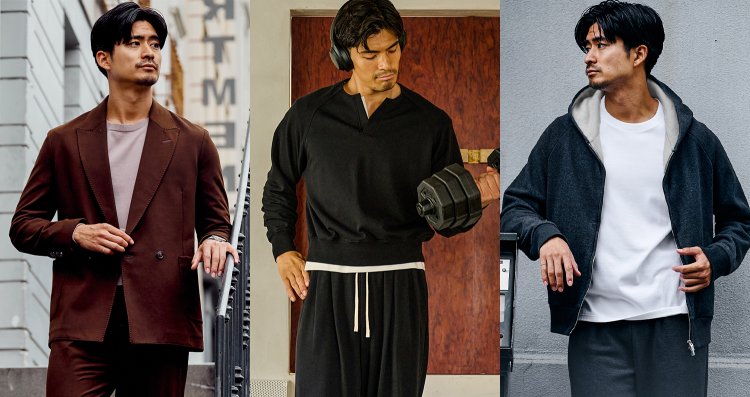
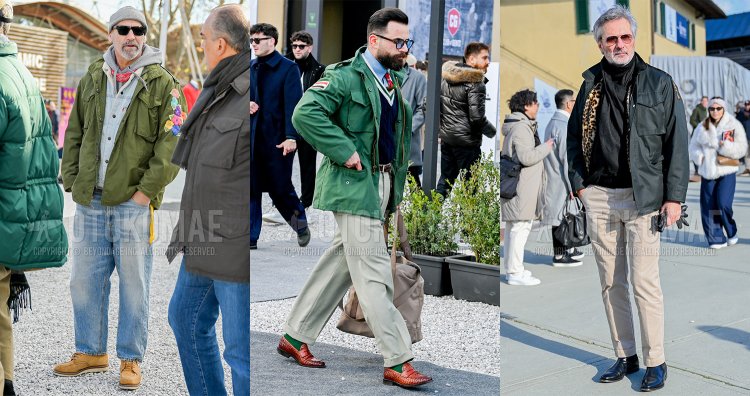
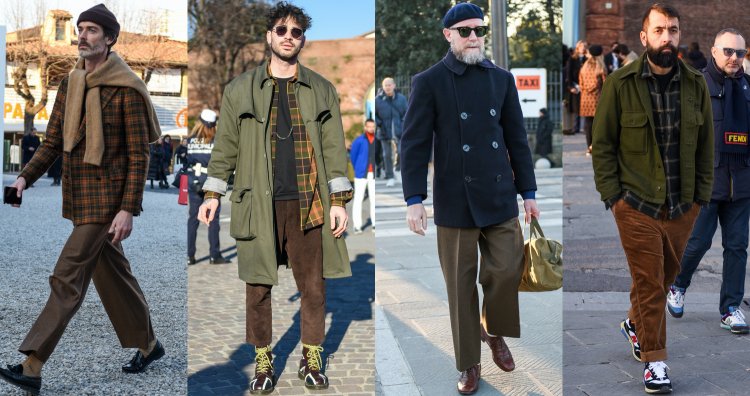
![How to wear gray sweatshirts in a mature way? [ Examples of coordination & recommended models along with history ].](https://otokomaeken.com/wp-content/uploads/2025/09/cdad1580d76be0fee3c2ecdf21d309fb-750x396.jpg)
Sponsored by
Fun trainer trivia to knowAddendum to deciphering colors, designations, and details
[Background of how gray became the royal color]
When sweatshirts first became popular in the 1920s as thick cotton for exercise, the representative color was gray. Later, heather (wooden) gray became established as the standard color for mass production, and “Sport Grey/mixed gray (around 90% cotton + 10% polyester)” is still in constant circulation as the standard color today. The fine speckles of heather make sweat and stains less noticeable, making it suitable for daily use in many situations. At a time when printing technology was in its infancy, the method of printing school or team names on a plain gray body spread. In short, it is said that gray became the standard color for sweatshirts due to a combination of the history of the initial color, mass production standards, resistance to stains, and ease of use.
References: https://d1l2kcmc130e06.cloudfront.net/1/specs/gildan-5000.pdf, https://www.russelljapan.co.jp/sweat/
[ Etymology of the word “trainer” ]
The word “trainer” is a Japanese-English word, which was named by Kensuke Ishizu, the founder of VAN Jacket. The name was derived from the fact that Mr. Ishizu, a boxing fan, saw sweatshirts worn by trainers coaching overseas athletes and launched a sweatshirt under the trade name “trainer” from his own manufacturer.
Reference: https://www.van.co.jp/info/items/content/7386
[ Function of the V-gusset (V-notch) ]
The small V-shaped part under the collar was originally a practical detail added to stop sweat and prevent stretching around the neck by employing a thick cotton applied fabric, and in many cases it remains as a design feature today. In the early days, ribbed inserts were sewn into the construction to help with elasticity when putting on and taking off the garment. Differences in specifications such as front V and double V are clues to distinguish the age of the sweatshirt.
Reference: https://www.russellathletic.com/learn/thev-notchexplained
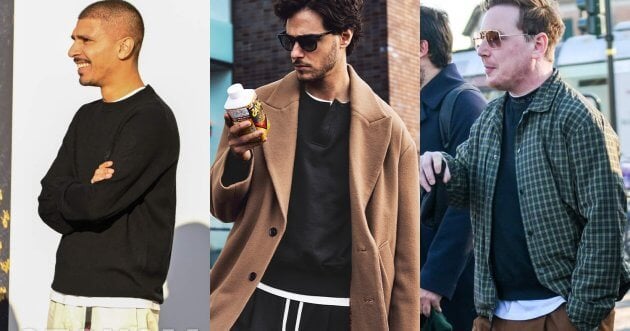
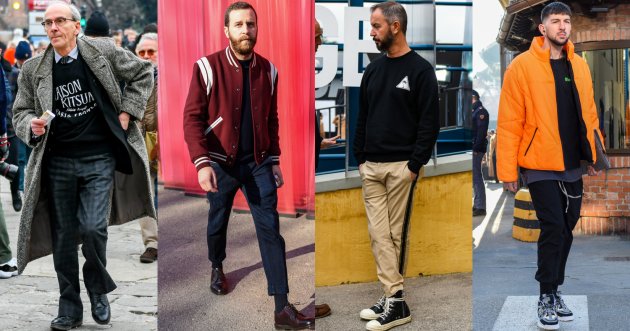
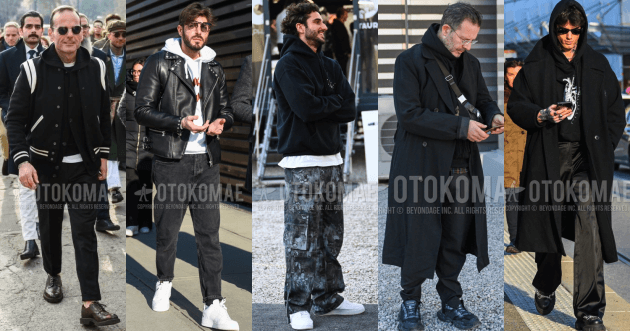
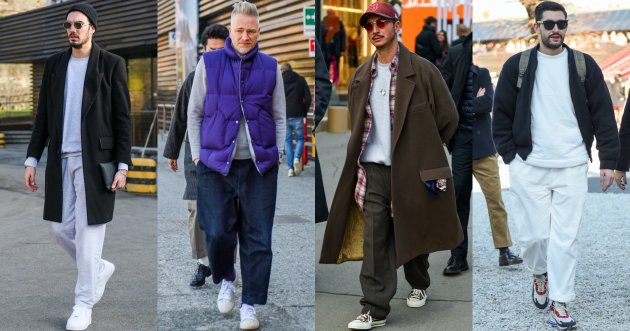
The following is a description of the gray trainer coordinates published in 2022.
4/4GO TO NEXT PAGE
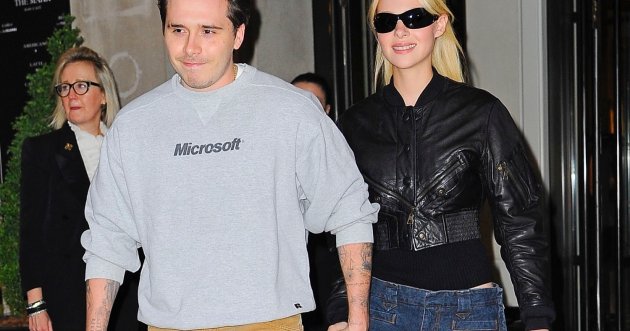
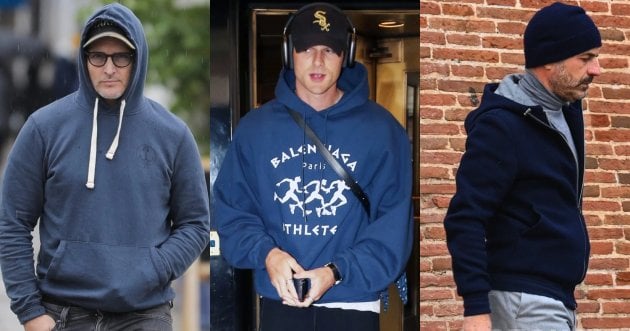


![What to Wear When the High Is 24 Degrees [3 Men’s Outfit Ideas Based on the Temperature Difference Between the High and Low]](https://otokomaeken.com/wp-content/uploads/2026/10/123ac7d53dbc900bab7d6703661e0cd1b47414a0a1a16c6347e3d09bfa184b6c-630x331.jpg)


!["Break Away from the Norm" Is the Keyword!? 3 Tips for Styling a Leather Jacket with a Modern Twist [Fall/Winter 2026 Edition]](https://otokomaeken.com/wp-content/uploads/2026/10/ef304036cec889dddaa64a607e22a781-5-750x396.png)
![What to Wear When the High Is 24 Degrees [3 Men's Outfit Ideas Based on the Temperature Difference Between the High and Low]](https://otokomaeken.com/wp-content/uploads/2026/10/123ac7d53dbc900bab7d6703661e0cd1b47414a0a1a16c6347e3d09bfa184b6c-750x396.jpg)