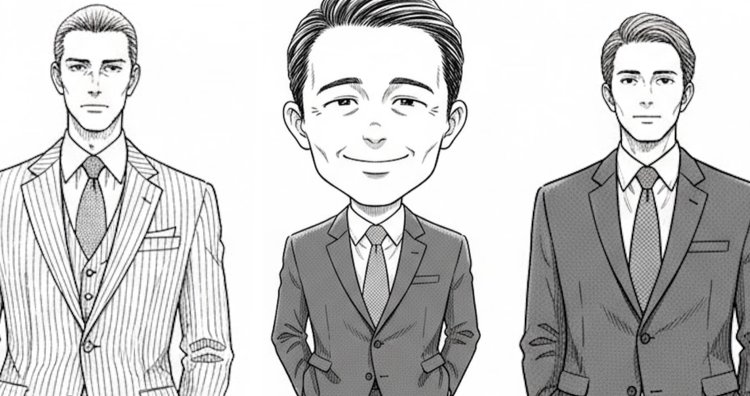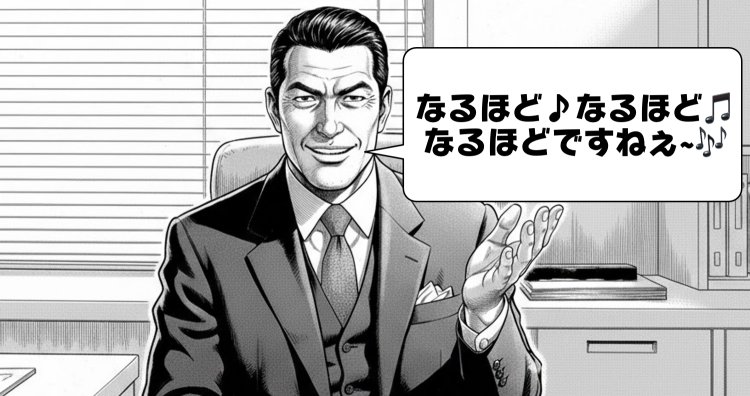
Many of us know that the phrase “I see” should not be used in a business setting, but can you explain exactly why? There is a subtle structure hidden in this word that many people use casually that affects respect and distance. In this issue, we will focus on “I see.” We will delve into all aspects of the word, from its etymology, reasons for rudeness, and paraphrased phrases, to answers to FAQs from the business world.
Sponsored by
When the subject of a word changes, the center of gravity of respect also changes.
Etymologically, “I see…” is written as “I see…” and is a phrase that expresses admiration, “Indeed, I see….”. Originally, it was one of the natural Japanese words to show sympathy and understanding of the other person’s story. However, the situation changes when it comes to business. When the listener is a superior, such as a boss or a business partner, “I see,” not only means “I understand,” but also “I have made a judgment” or “I give my assessment. It can be taken to mean “I understand,” but it can also mean “I have made a judgment” or “I give my assessment. The reason for the problem is that it sounds like an assertion of one’s own initiative or authority, rather than that of the other party, even in situations where the other party should definitely be respected. While “I see” itself is not a bad word, it is not an honorific expression and should not be used in business or other formal situations.
Alternative expressions that can be used in business
The phrase “I see” is used to indicate either “understanding,” “sympathy,” “admiration,” or “agreement.” The following is a list of paraphrases that can be used with superiors.
| Intent | Examples of paraphrases | Nuance |
|---|---|---|
| Indicates understanding | I understand. | Attitude of accepting objectively |
| Conveying empathy | You are absolutely right / You are absolutely right | Agree with the other person while standing up for him/her |
| Expressing learning | I now have a better understanding | Accept with an intelligent attitude |
| Acceptance/understanding | I understand/understand | Accept instructions politely |
For example, rather than saying, “I see,” to your boss, it is better to say, “As you say,” which conveys a clear respect. It is common sense and good manners for adults to choose a more appropriate “thesaurus” for situations in which “I see” should be avoided.
Practical answers to common questions
Q1. To a friendly senior who is not picky about etiquette and honorifics, is it okay to reply, “I see! Is it okay if I reply with “I see!
→ Even if the exchange is fine between the two parties, the question is how it will be received by those who are listening around you. In the workplace, language is a criterion of “common sense” and “dignity. If you respond with a light-hearted “I see! you run the risk of being branded as an insane person who cannot use honorifics. Even if you are on good terms with someone, it is a good idea to avoid using “I see” if you are slightly superior to him or her.
Q2: Is it acceptable to use “I see. Is it correct in the first place?
→Q3: Have you ever met a businessperson who uses “I see” a lot? Although we can understand the intention to make it a polite expression by adding ” I see,” it is a grammatical misuse of the word and is not acceptable to begin with. I see” is an exclamation, and it is not connected to “, isn’t it? If you want to express your understanding to the other person with a flat, polite nuance, “I see,” or “I understand what you say,” is appropriate.
Q3: How do you say “I see” in English?
→ There is no English word that exactly corresponds to the Japanese “I see. In English, there is a culture of clearly expressing an attitude of “I agree with your opinion” or “I agree with you” rather than “I understand. Therefore, “Exactly.” and “That makes sense.” are more appropriate than “I see. and “That makes sense.” can function as words that naturally shorten the distance between you and the person you are talking to.
| English Expressions | Nuance | Japanese words that are close to | Suitability for Business |
|---|---|---|---|
| I see. | Showing understanding ( neutral ) | I see. | Fat |
| That makes sense. | That makes sense. | That makes sense. | I understand your point. |
| I understand your point. | Polite and formal understanding | I understand your explanation | ◎◎ |
| Exactly. | Strong agreement/full agreement | Exactly. | Absolutely. |
| Absolutely. | Agreement with sympathy/conviction | Absolutely. | ◯ |
| Right on. | Casual empathy | Right on. | ( Only for frank occasions ) |
| Awesome. | Surprise/admiration | Awesome. | ×x (inappropriate in business situations) |
Q4. Is it OK to use ” I see” if it is on LINE with a client with whom I am on good terms?
→Some clients may prefer to communicate with you on LINE. If you have a close relationship with the client, there may be times when frank communication is exchanged on LINE. In such cases, “I see” should be avoided. As long as the person you are talking to is a client, you should try to communicate in a friendly manner while avoiding expressions that could be considered rude.
Q5. What should I do if I accidentally say “I see.
→Q5. What should I do if I accidentally say “I see” even though I know in my head that it is inappropriate? If you know how to deal with such situations, you can respond calmly to minimize the risk. Add the phrase, “I see, that’s a good learning experience,” or “I see, I didn’t realize that point of view. The phrases you add in the latter part of the sentence will help you recover by showing clear respect.
Q6. How do you respond when someone junior to you says, “I see.
→ It is not a good idea to react emotionally. In most cases, “I see” has no malicious intent, but simply means “I understand. If you feel that the person is being impolite or is clearly trying to belittle you, I recommend that you use a mounting response that clearly defines your rank, such as “You understand very quickly,” or “I am glad you finally understand. Of course, if it is a direct subordinate, you can instruct him or her not to use ” ‘I see’ in business, as it can sound a bit superior.” I would be very happy if you could share this article with your subordinates, saying something like, ” For more information, please read this article.





![Black Cargo Pants Cordage [ How to Wear Them to Their Full Potential and Recommendations ].](https://otokomaeken.com/wp-content/uploads/2026/05/688f923e61b678f9ee5da330722ad3c7-630x331.jpg)









![Jackie Chan: The Man Who Turned His Back on the Path to Becoming Bruce Lee’s Successor and Changed the World with Comedy and Action [Men’s Biographies]](https://otokomaeken.com/wp-content/uploads/2026/10/7966bae78213db11914ad7af893f8431-750x396.png)

![Steve McQueen: A Man Who Lived Freely and Never Compromised on Duty or Principle [Men's Biographies]](https://otokomaeken.com/wp-content/uploads/2026/09/7966bae78213db11914ad7af893f8431-4-750x396.png)




![What are the specific 5 changes that muscle training can bring to a man? ["The truth as experienced by practitioners."]](https://otokomaeken.com/wp-content/uploads/2023/12/3ecb709c1f1613850249ba743b4b1457-750x396.jpg)