
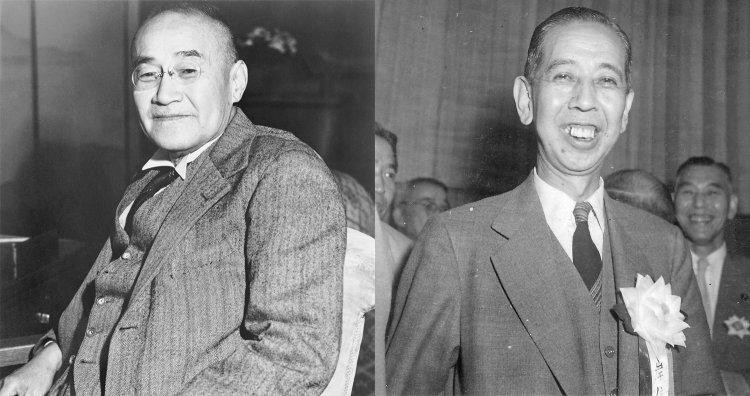
Whether it is crossing paths with friends and family or in the business aspect of life, there are moments when “being righteously angry” and “swallowing as an adult” collide. You want to protect your pride and you have to be realistic. I am sure that there are many people who have struggled between the two. When faced with such conflicts, history is a source of support. There is a saying, “Fools learn from experience, and wise men learn from history. In this article, I would like to discuss the “strength to fight” and “strength to swallow,” using the decisions made by Shigeru Yoshida and Nobusuke Kishi, the two politicians who took the helm of postwar Japan, as a starting point, as well as my own personal experience.
Sponsored by
Decisions made by Shigeru Yoshida and Nobusuke Kishi, who contributed to postwar reconstruction.
Do you think the decision to swallow hard and be patient when faced with something unreasonable is weakness? Japan had not yet emerged from the chaos of defeat and its sovereignty was still restricted. The document was signed at that meeting by then Prime Minister Shigeru Yoshida. While granting Japan complete independence, the treaty was accompanied by the continued stationing of U.S. troops in Japan under the name of the Japan-U.S. Security Treaty. Ostensibly, it restored Japan’s sovereignty. In reality, however, it was a semi-independence that left Japan militarily dependent on the United States. The tone of the newspapers at the time was divided, with some criticizing it as “a mere formality of independence,” while others supported the idea that “Japan should first rejoin the international community. Many people probably felt “Why didn’t they negotiate more forcefully?” and “Is independence independence a matter of swallowing humiliation?” Such criticism is both natural and emotionally justifiable. It was in the midst of such controversy that Yoshida signed the document and concluded the treaty. He decided that even though the terms were humiliating, he had to first stand up as a nation. He could have emotionally prodded them at the negotiating table. But he did not see it as a good idea. It was not about swallowing unreasonableness. It was a strategy of “swallow now for the sake of the future.”
Nine years after the signing of the treaty, Japan began its rapid economic growth. It is fair to say that it was Yoshida’s decision that laid the groundwork for this. This decision can be seen as an “offensive” move to protect the nation.
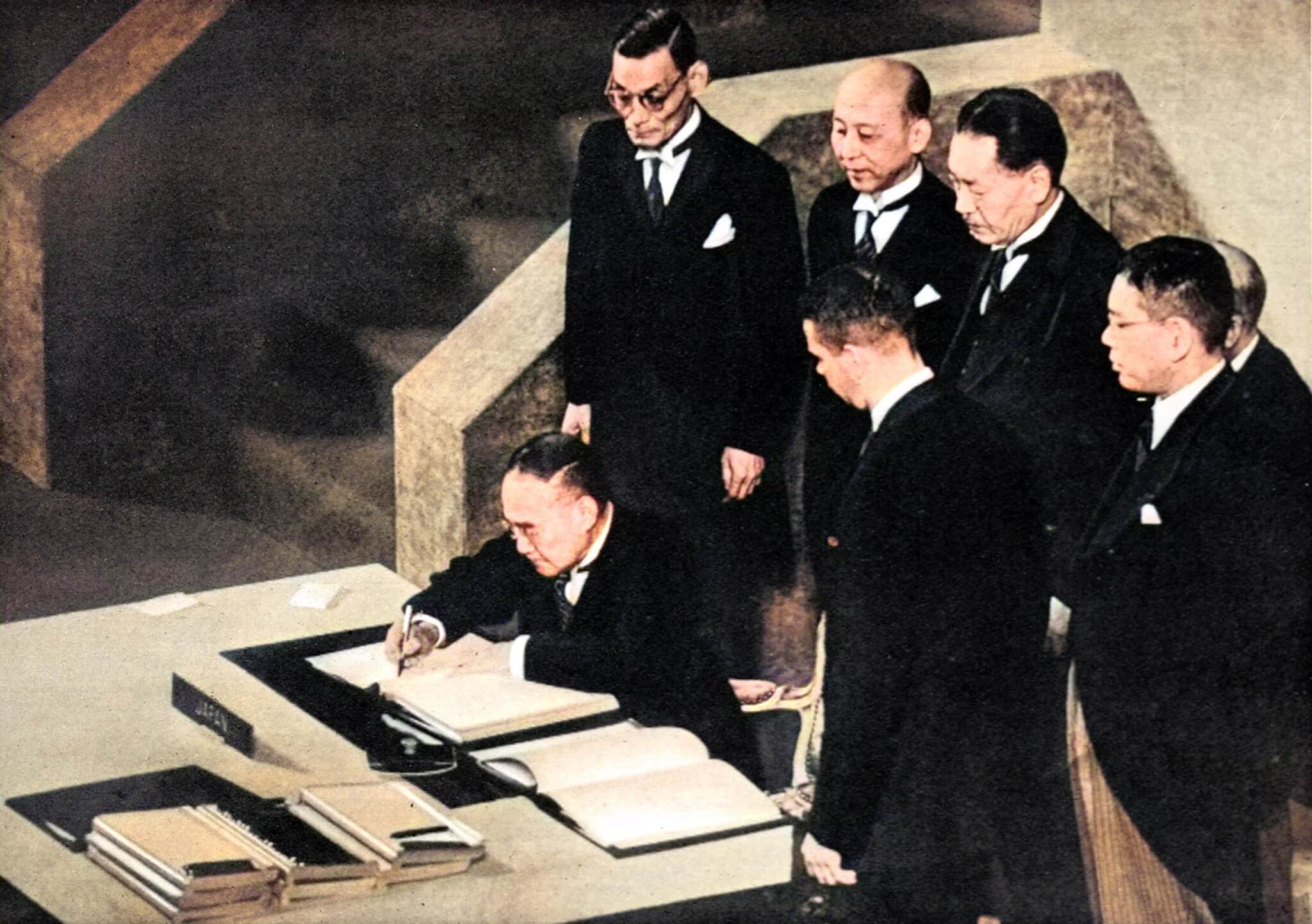
Shigeru Yoshida signs the San Francisco Peace Treaty at the signing ceremony Photo: Mary Evans Picture Library/Afro Photograph showing Shigeru Yoshida, the Japanese Premier, signing the Peace Treaty This treaty, signed by 48 other countries of the United Nations, returned Japan her sovereign status, six years Colourised version of: 10220015 Date: 1951
.On the other hand, a different choice was made by Nobusuke Kishi, who in 1960 revised the Japan-U.S. Security Treaty, a move that Yoshida called “a humiliation. If Yoshida “prioritized reconstruction even if it meant swallowing humiliation,” Kishi believed that “we should rebound from the humiliation and regain our pride. Aiming for an equal alliance with the U.S., he included bilateralism in the treaty. As a result, Kishi’s administration was met with massive opposition, and he would eventually step down, taking responsibility for the mess. His revisions, however, formally repositioned Japan from “a country only to be protected” to “a country that fights together. The strength to swallow the unreasonableness and take practical advantage, and the strength to fight through and regain pride without ever giving in. The choices of Shigeru Yoshida and Nobusuke Kishi may have been diametrically opposed, but in essence they were both “fighting to move Japan forward.
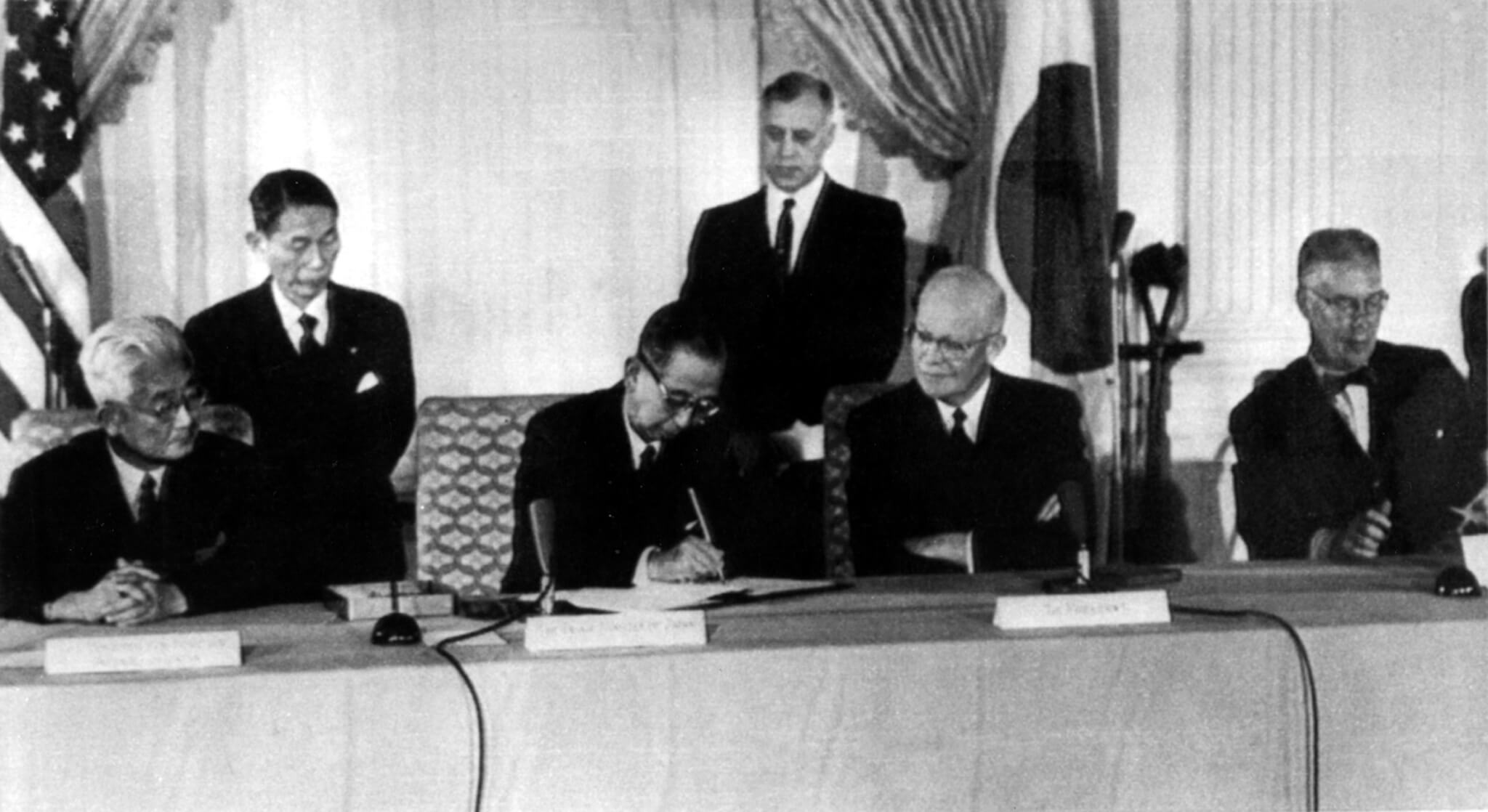
Prime Minister Nobusuke Kishi signs the U.S.-Japan mutual security treaty at the White House Photo: AP/Afro Prime Minister Nobusuke Kishi signs the U.S.-Japan mutual security treaty on Jan. 19, 1960 in Washington, D.C. Left to right: Foreign Minister Fujiyama, Nobusuke Kishi, President Dwight Eisenhower and Secretary of State Christian Archibald Herter.
I have believed in the strength to fight through without giving in, like Nobusuke KishiMy own experience of having to accept unreasonableness for the sake of what I must protect
I have long believed that the strength to fight through without giving in, like Nobusuke Kishi, is what is right. When I lived in London, I encountered many situations where I was looked down upon because of my race or nationality. Because of these experiences, my attitude of not holding back and being assertive when things are unreasonable has somehow become my basic stance. Recently, at a work site, a white external staff member made a comment that disrespected my position and background. It was a humiliation that instantly made my blood run cold to my core, as I was flooded with emotions like “why should I be treated like this?” and “why should I feel this way in Japan?” I wanted to protest on the spot, make them admit their mistake, and pretend that all work with them had never happened. I thought that was the right attitude.
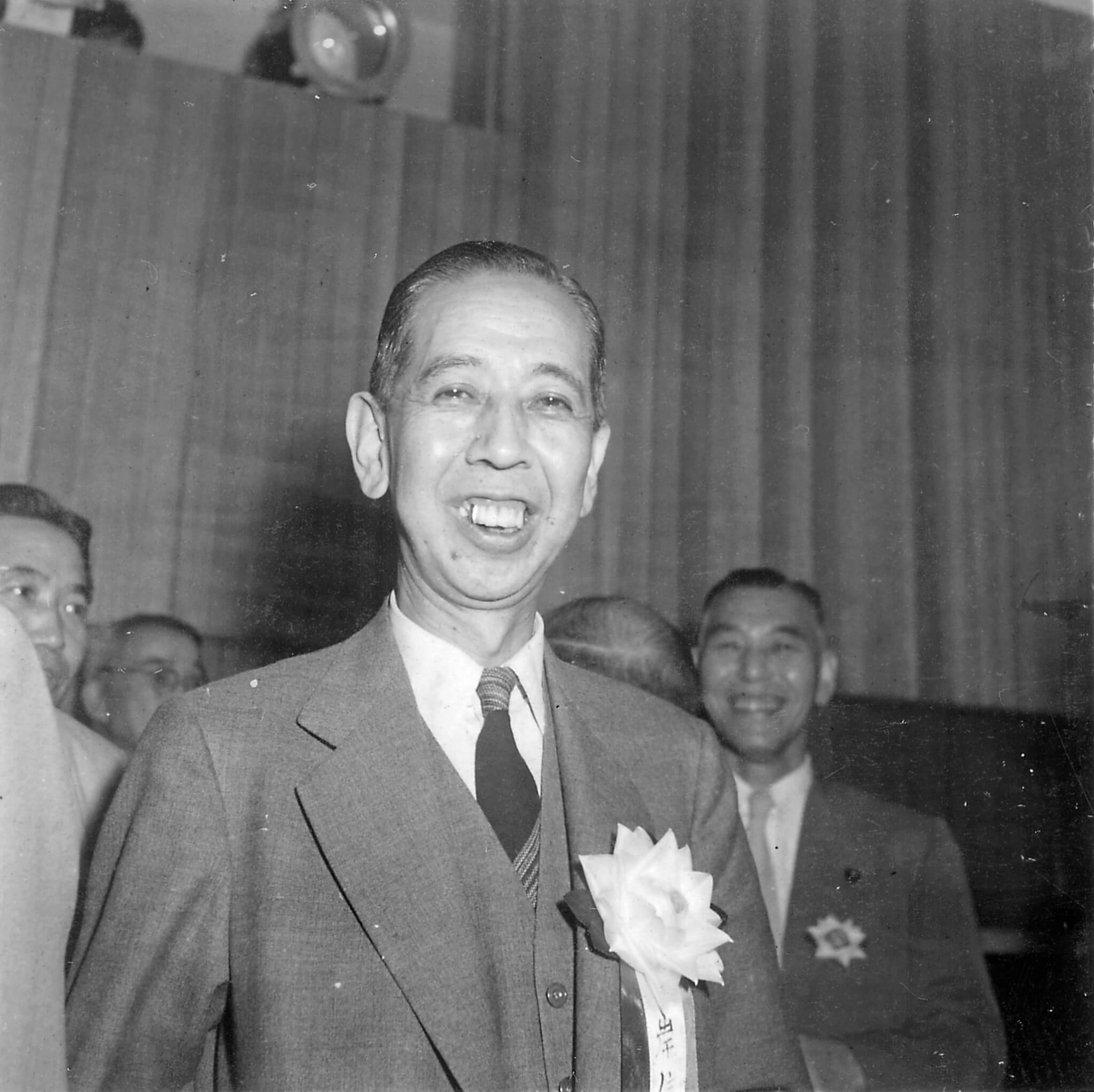
Photo: Modern PL/Afro B1954NB (Photo by Kingendai Photo Library/AFLO)
But my supervisor, who was there, listened carefully to my sentiments and said. I will protest, but we will get the job done. I was going to fight, and at first I was not convinced, but as time went on and I cooled down, I began to see what he was trying to do. He was not compromising; he was protecting my dignity while at the same time protecting the future of the team. In other words, that was not a decision to “just put up with the humiliation and swallow it,” but to “swallow the humiliation for the sake of what I had to protect.” At that moment, the story of Shigeru Yoshida’s San Francisco Peace Treaty, which a friend of mine who aspired to be a politician had told me in the past, suddenly came back to me. He rebuilt Japan even after swallowing the humiliation. At the time, those words didn’t ring true for me, but now I understand the feeling.
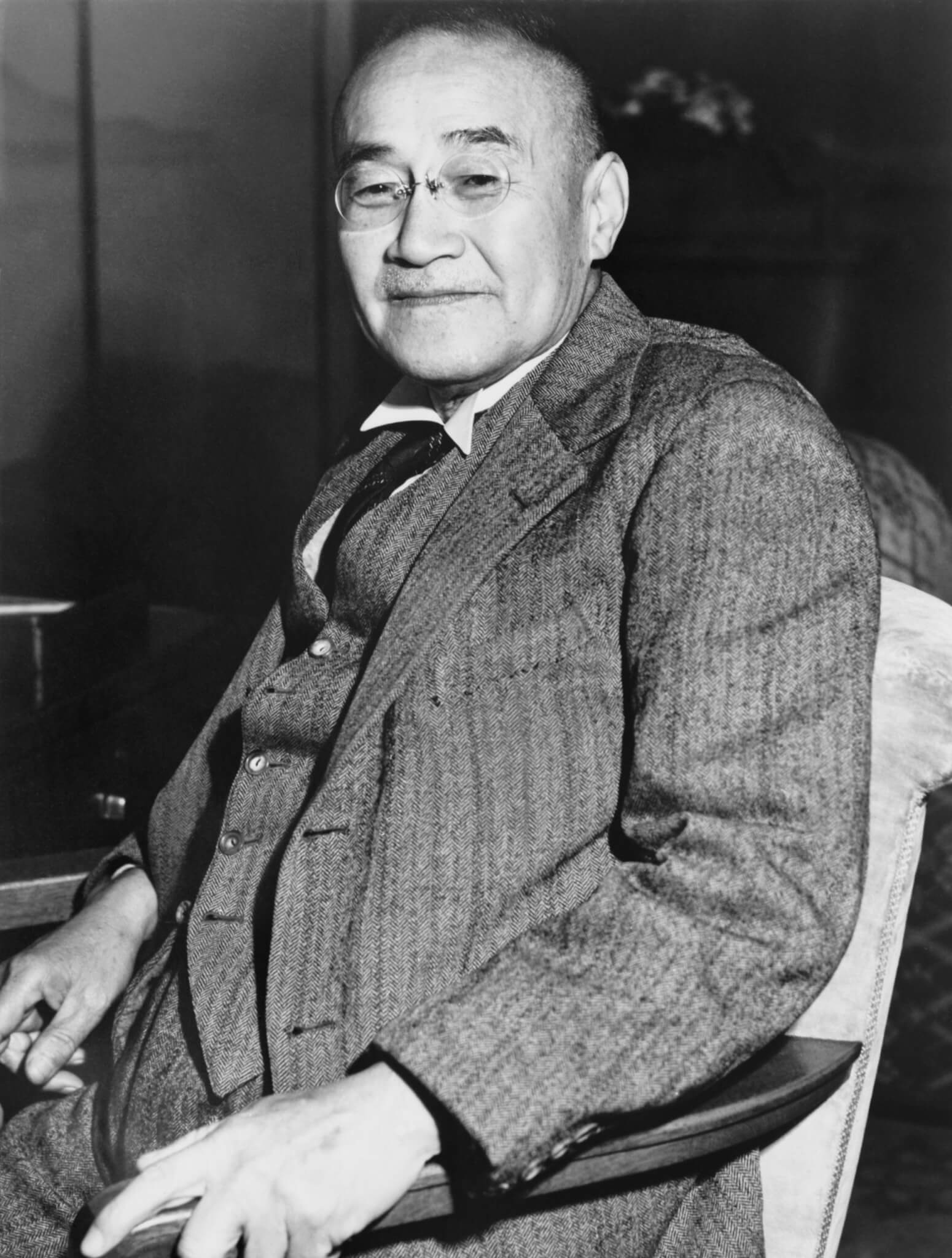
Photo: Everett Collection/Afro Shigeru Yoshida was Prime Minister of Japan from 1946 to 1947 and from 1948 to 1954. During the Post-war occupation, he said During the Post-war occupation, he said that by being ‘good losers’, the Japanese might regain in peace much of what they had lost in the war.
Let History Guide Your Own ActionsThe courage to fight through or the courage to choose to lose, which weapon will you pull out?
History is not a story of the past. The moment we replace it with our own, it becomes a guide for our actions. Whether it is the strength to push through and pave the way without giving in, like Nobusuke Kishi, or the strength to swallow unreason and humiliation and pave the way, like Shigeru Yoshida, both are important. The important thing is to choose which weapon to pull out in each situation. In life, there will be many moments when we face the clash between righteousness and reality. A decision to push out anger and emotion is sometimes necessary to preserve autonomy and dignity. On the other hand, the decision to endure and swallow can be established as an act of prioritizing future outcomes and what needs to be protected. Both are strengths, not weaknesses. Which strength prevails in you now? Conversely, which is lacking? When the moment comes for you to choose which strength to take, I hope you will make your choice with an eye on what you need to protect and the future.
![Learning Dress Style from Gianni Agnelli [Analyzing the Style of One of the 20th Century’s Greatest Italian Dandies]](https://otokomaeken.com/wp-content/uploads/2026/02/1d63f533448a263e07b7c2dfa4729a58-630x331.jpg)
![Learning Suit Style from Taro Aso: [The Dressing Philosophy of a Man Who Continues to Reign as a Political Heavyweight]](https://otokomaeken.com/wp-content/uploads/2025/11/ca8750a6e0137febdfef417f584f4ee9-630x331.jpg)









![Jackie Chan: The Man Who Turned His Back on the Path to Becoming Bruce Lee’s Successor and Changed the World with Comedy and Action [Men’s Biographies]](https://otokomaeken.com/wp-content/uploads/2026/10/7966bae78213db11914ad7af893f8431-750x396.png)

![Steve McQueen: A Man Who Lived Freely and Never Compromised on Duty or Principle [Men's Biographies]](https://otokomaeken.com/wp-content/uploads/2026/09/7966bae78213db11914ad7af893f8431-4-750x396.png)


![What are the specific 5 changes that muscle training can bring to a man? ["The truth as experienced by practitioners."]](https://otokomaeken.com/wp-content/uploads/2023/12/3ecb709c1f1613850249ba743b4b1457-750x396.jpg)
![Paul Newman: The Man Who Turned Fame into Money and Donated All His Profits to Charity [Men's Biographies]](https://otokomaeken.com/wp-content/uploads/2026/08/2071d8b3d6b46d67221ad9d050c85da8-750x396.png)