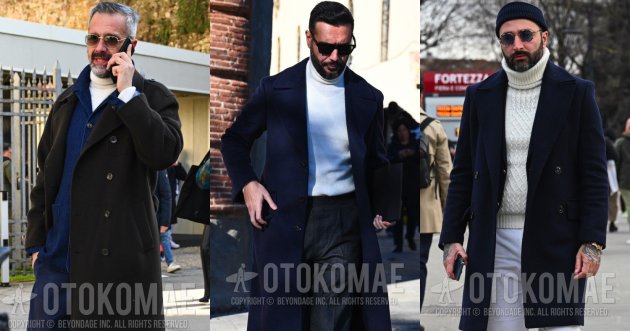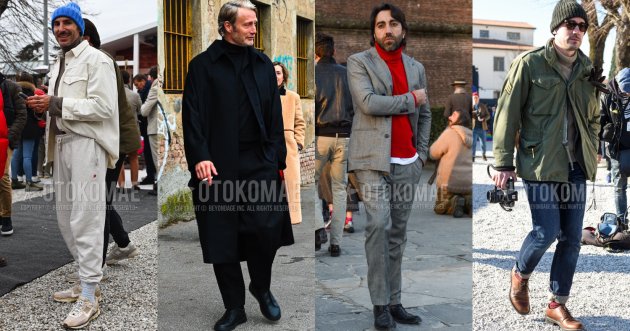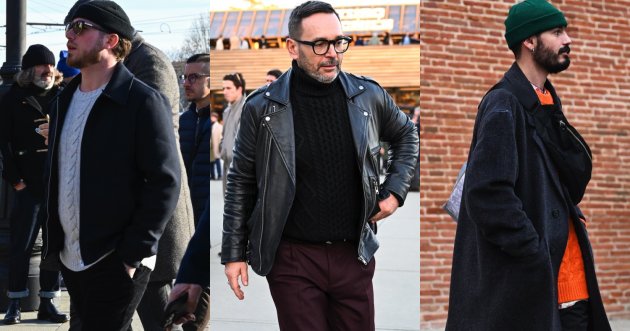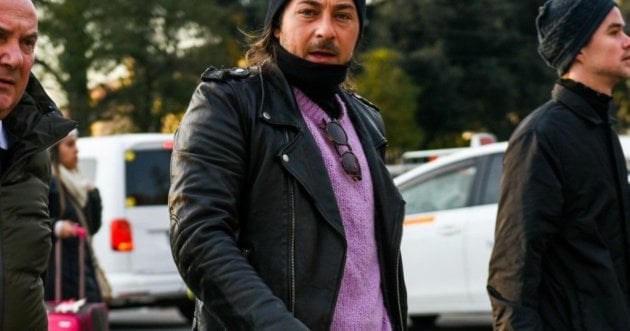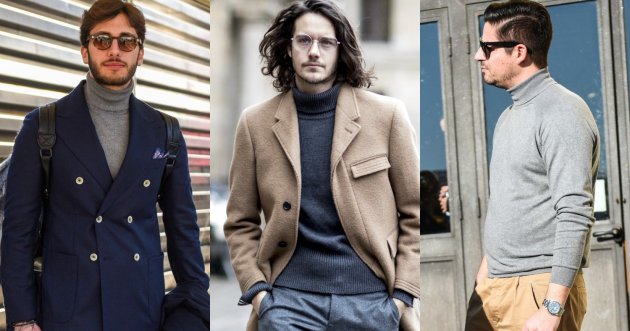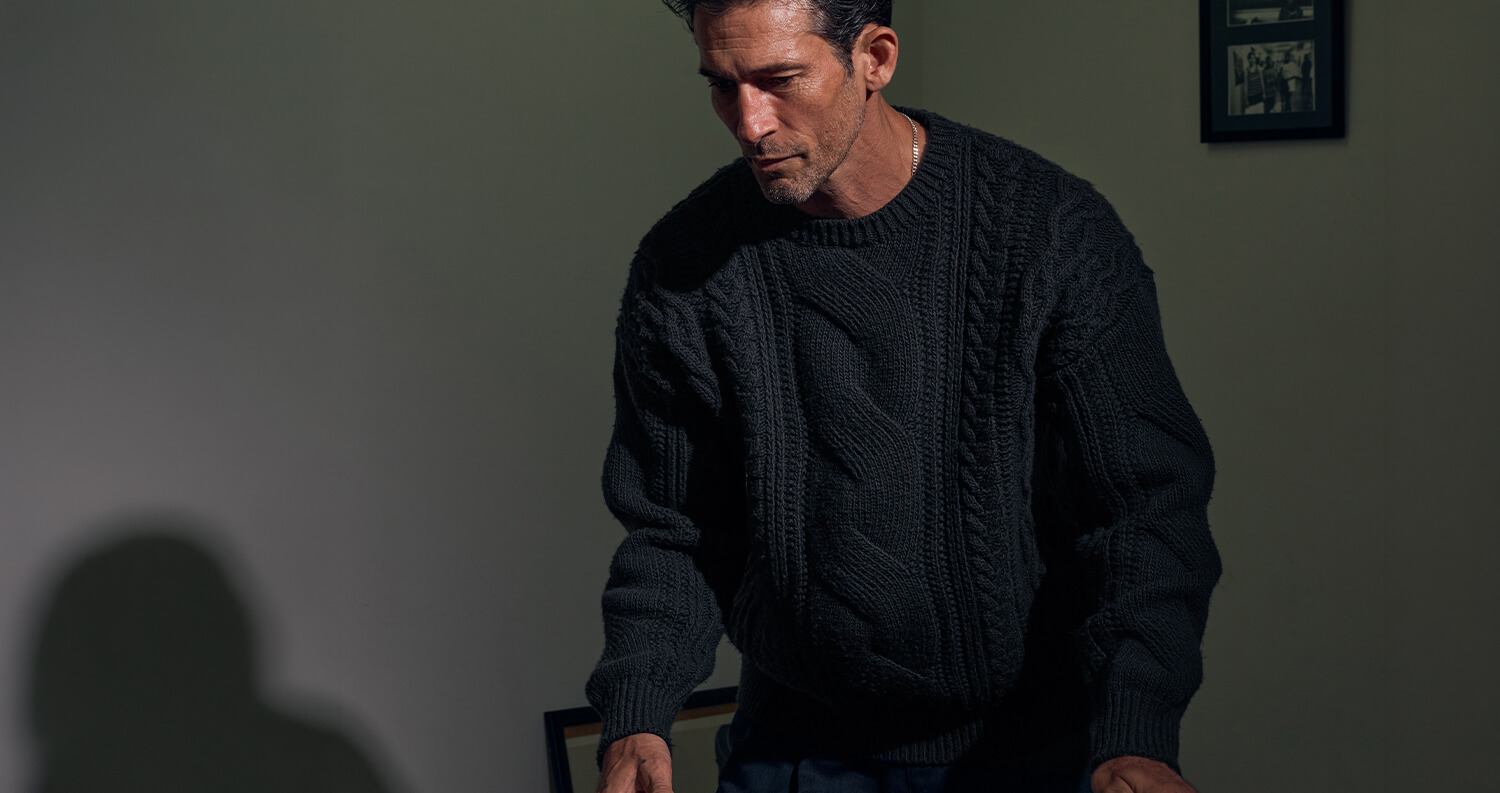
Each cable knit pattern has its own name: rope, field, and honeycomb. These patterns, which reflect familiar landscapes, have been passed down through generations with various meanings attached to them. However, there are reasons behind their three-dimensional shapes that go beyond mere decoration.In this article, we’ll explore the stories behind these knitting patterns and the functionality they provide, while introducing the appeal of notable cable-knit designs created from a unique perspective.
What Is Cable Knit?Rope, Field, Beehive: The Meanings Behind Knitting Patterns and the Functional Beauty Behind Them
When discussing cable knit, one cannot overlook the fisherman’s sweater, which originated on the Aran Islands off the west coast of Ireland.The cable pattern, which resembles twisted ropes, represents fishermen’s ropes and has long been considered a pattern symbolizing safety at sea and a bountiful catch. The diamond pattern, with its row of rhombuses, represents the island’s fields surrounded by stone walls and serves as a symbol of abundance.The “honeycomb” pattern, with its rows of hexagons, is likened to a beehive and is said to represent diligence and its rewards. All of these patterns reflect scenes from island life.
That said, many of these meanings are interpretations that spread in later generations and may not have been traditionally passed down on the islands.On the other hand, cable knitting offers practical benefits beyond mere appearance. The thickness and three-dimensionality created by the interlacing stitches form layers that trap air, contributing to thermal insulation. That distinctive texture also embodies the functional beauty cultivated by knitwear as cold-weather clothing.
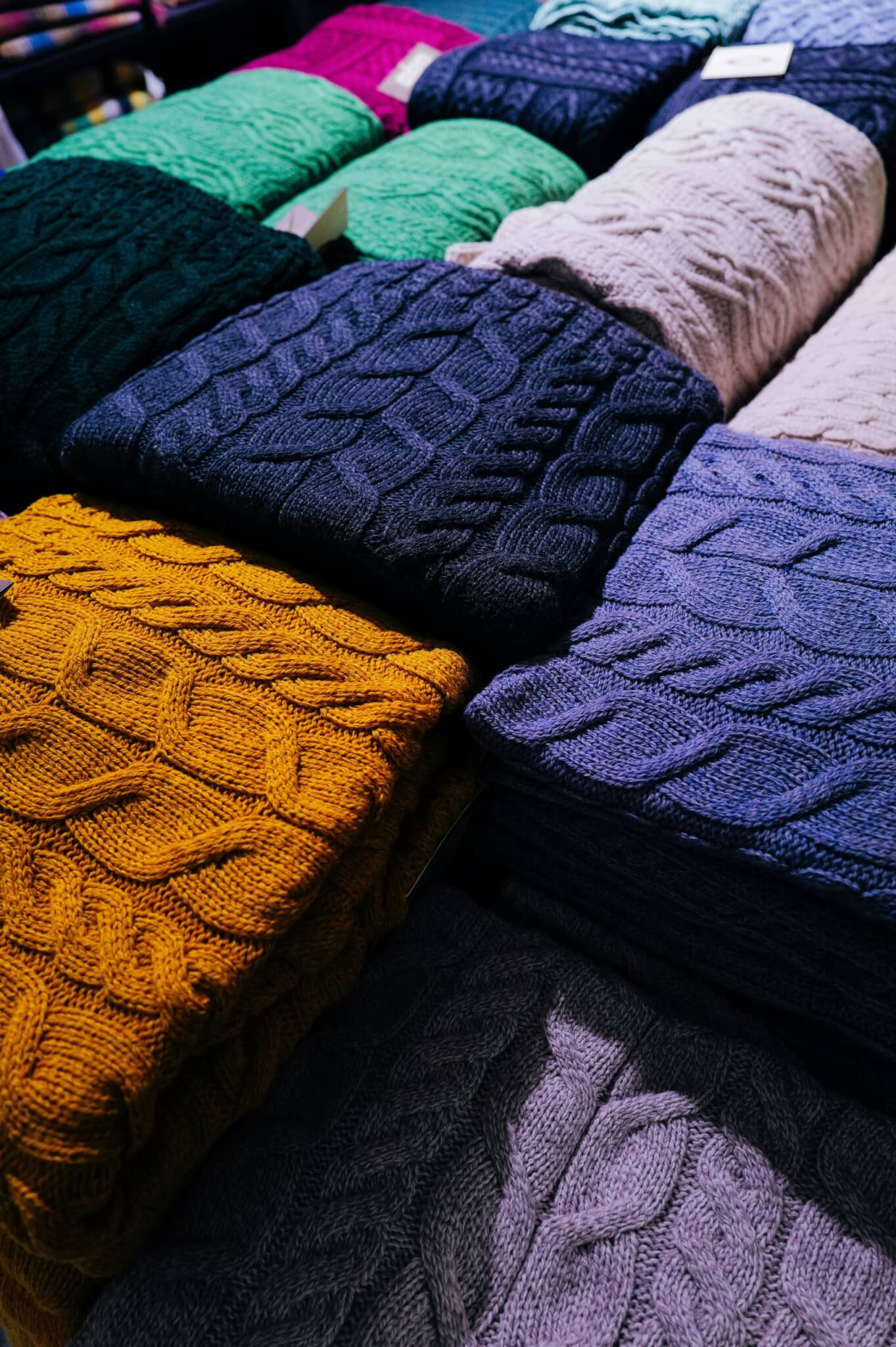
There are examples in Japan as well where the functionality and decorative nature of clothing are intertwined.“Kogin-zashi,” a traditional embroidery technique from the Tsugaru region of Aomori Prefecture, has historically served to insulate and reinforce hemp fabric by layering stitches. Its patterns are based on a basic unit called “modoko,” and approximately 40 varieties—including “cat’s paw,” “flower bud,” and “cow’s hoof”—have been passed down.Although the materials and techniques differ, the fact that these patterns—born from handicrafts rooted in daily life—have been given names derived from familiar landscapes is a point in common with Aran. Furthermore, both create the overall character of a single piece by combining multiple patterns. Where to place which pattern? This choice can be seen as a reflection of the maker’s sensibility and aesthetic sensibility.
If you’re going to choose one, pick a piece with a pattern that speaks to you!‘CROWN’: A Modern Cable-Knit Sweater Woven with Japanese Sensibility
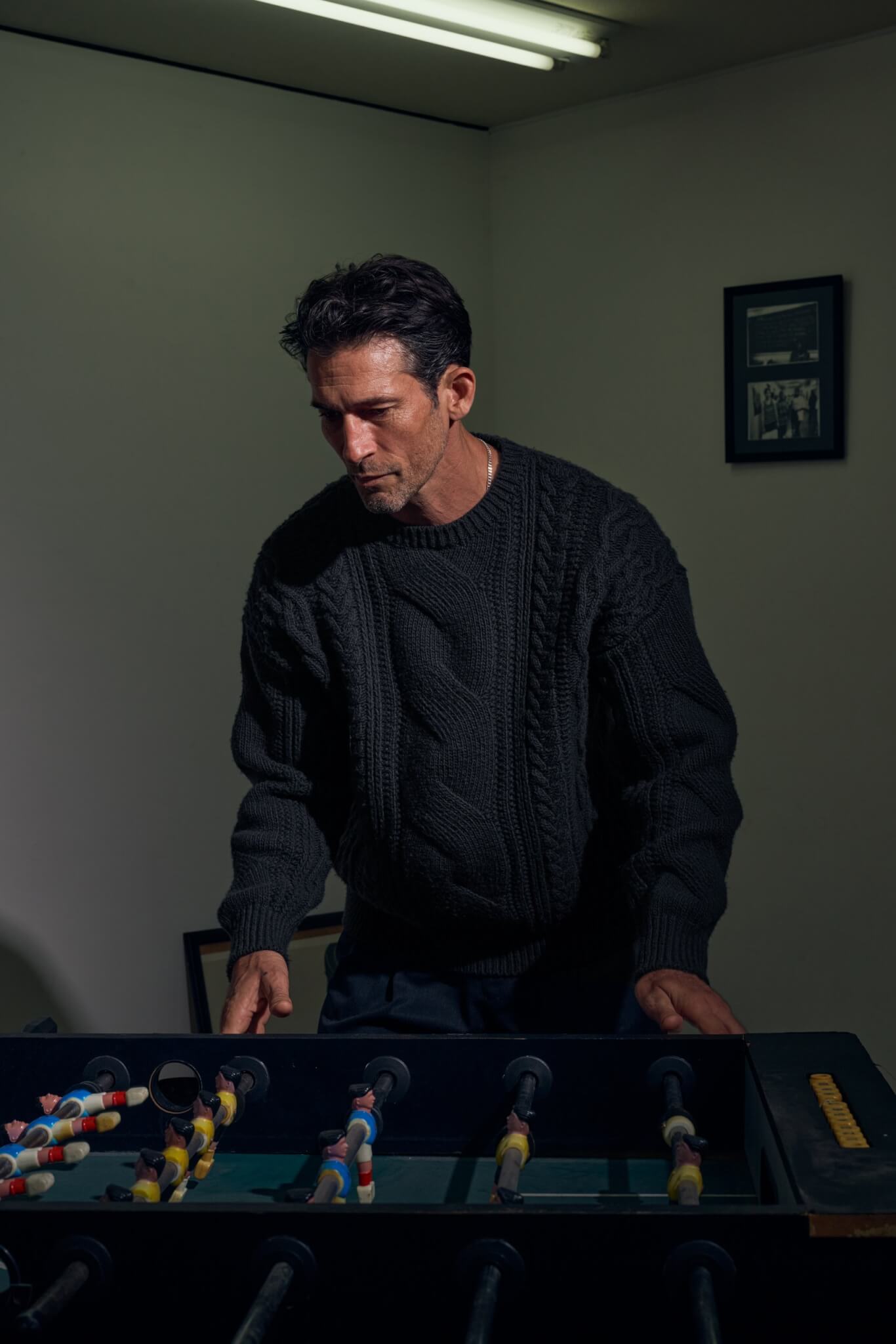
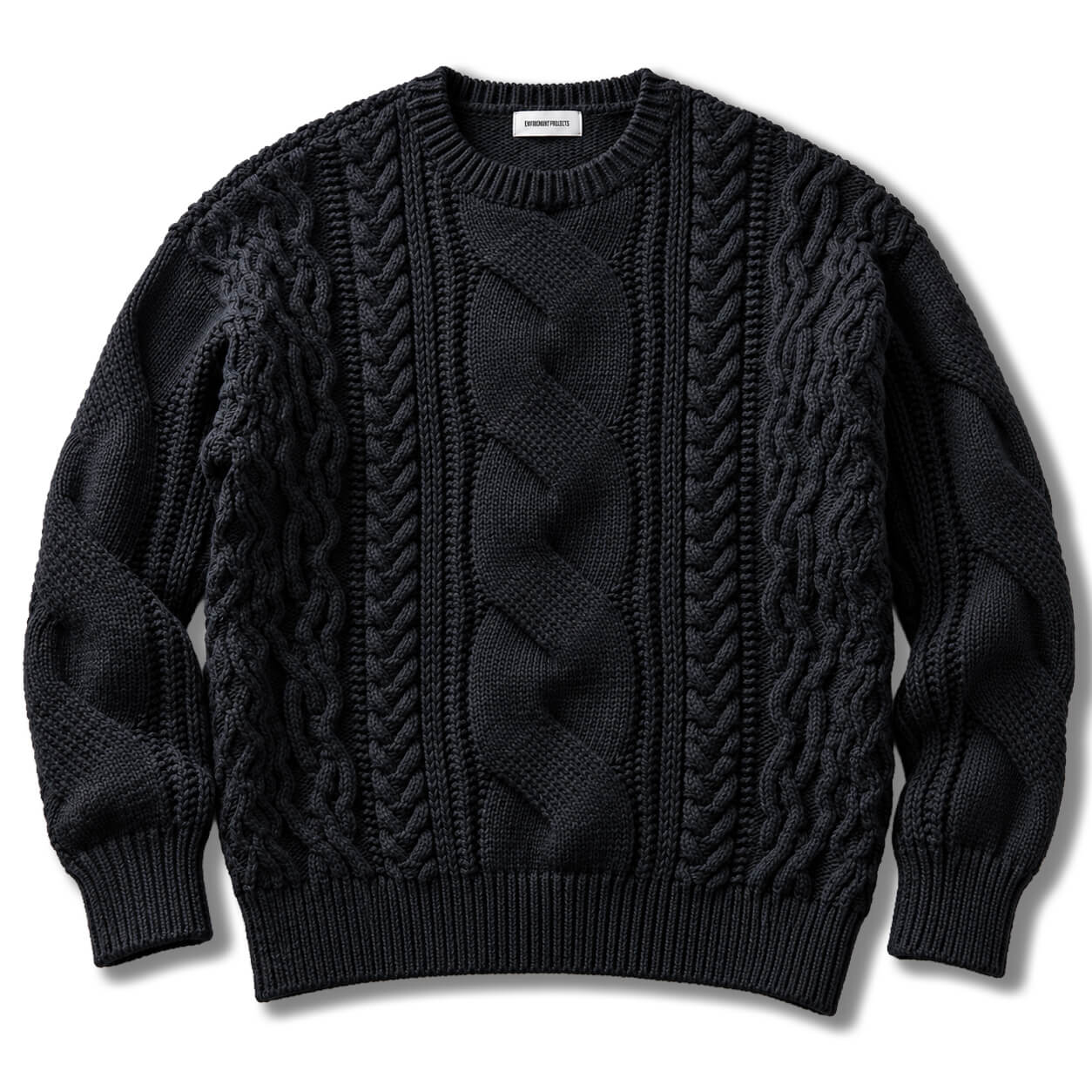
GENTLEMAN PROJECTS’ modern cable-knit sweater “CROWN” reinterprets this pattern culture from a uniquely Japanese perspective and incorporates it into its design. The first thing that catches the eye is the extra-thick cable knit boldly placed at the center of the front.It has a unique character distinct from traditional cable patterns, and is surrounded by a combination of patterns of various sizes. This design embodies a unique attention to detail inspired by traditional Japanese motifs.

Click here for more details on knitwear
Thick Ropes and Armor.Knit Patterns Evoking Japan’s Strength
If you look closely, you’ll see that both sides of the extra-thick cable are combined with kanoko stitch and cables of varying sizes, creating a knitted fabric with a three-dimensional texture.If we were to compare this to a suit of armor, the kanoko stitch—with its rows of fine dots—evokes the small plates (“kozane”) that make up the armor, while the braided cables running between them resemble the “mimi-ito” (ear threads) that pass through the ends of the kozane plates.Along the sides is an irregular wave pattern that resembles both a honeycomb and a cable. Much like “kebiki-odoshi”—a technique where binding threads are arranged without gaps to connect the small armor plates—the flow of the yarn undulates as it wraps around the body.
Click here for more details on the knitwear
Even the helmet—a piece of practical armor—saw the emergence of “variation helmets” (kawari-kabuto) in the late Sengoku period, where designers competed in creativity, and during the Edo period, decorative elements came to be valued even more highly. Meanwhile, Aran sweaters have also fostered a unique decorative culture through the ingenuity of knitters, giving rise to a diverse array of pattern combinations.“CROWN” is a reinterpretation of the cable knit pattern that pays homage to the histories of both traditions. Rather than prominently featuring a design that is unmistakably Japanese, the focus is on the balance achieved by seamlessly blending Japanese sensibilities into a design that is, first and foremost, Western-style clothing.
Produced at a Long-Established Knitwear Factory in YamagataSkilled Craftsmanship Bringing Complex Knitted Patterns to Life
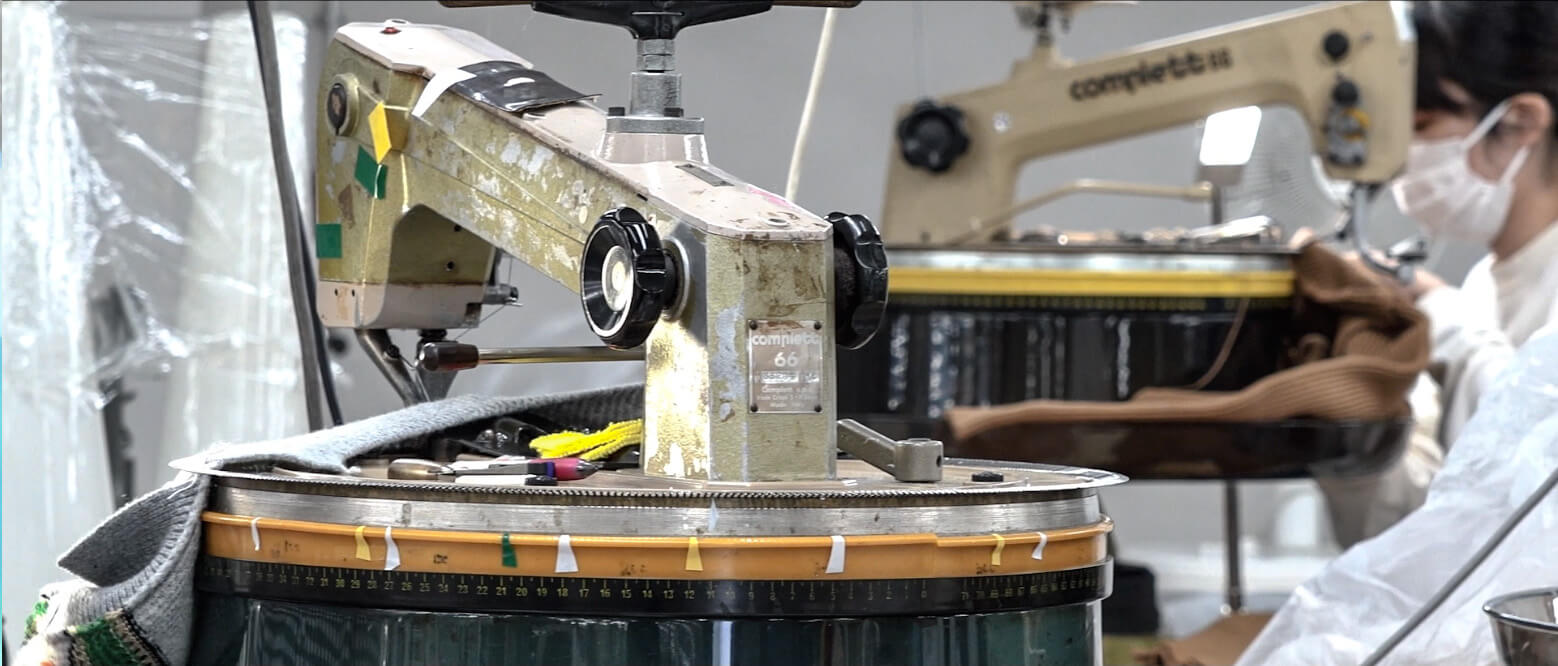
A long-established knitwear factory in Yamagata brought these intricately combined knitted patterns to life.Specializing in three-dimensional, loose-gauge knitting, the factory has a history of approximately 70 years as a dedicated knitwear manufacturer. The design of the knitting pattern plays a major role in determining the final finish of the garment.The appropriate knitting method varies depending on the yarn’s thickness, shape, and elasticity after knitting. In particular, for designs featuring an intricate interplay of large and small patterns, the skill to accurately assess the balance between the fabric’s thickness and elasticity is indispensable. The artisans’ skills—which enable such meticulous design and knitting—are what give the Crown its complex, nuanced appearance.
Click here for more details on knitwear
Classic Charm and the Functionality Unique to Natural Materials100% French Merino Wool for a Soft Texture
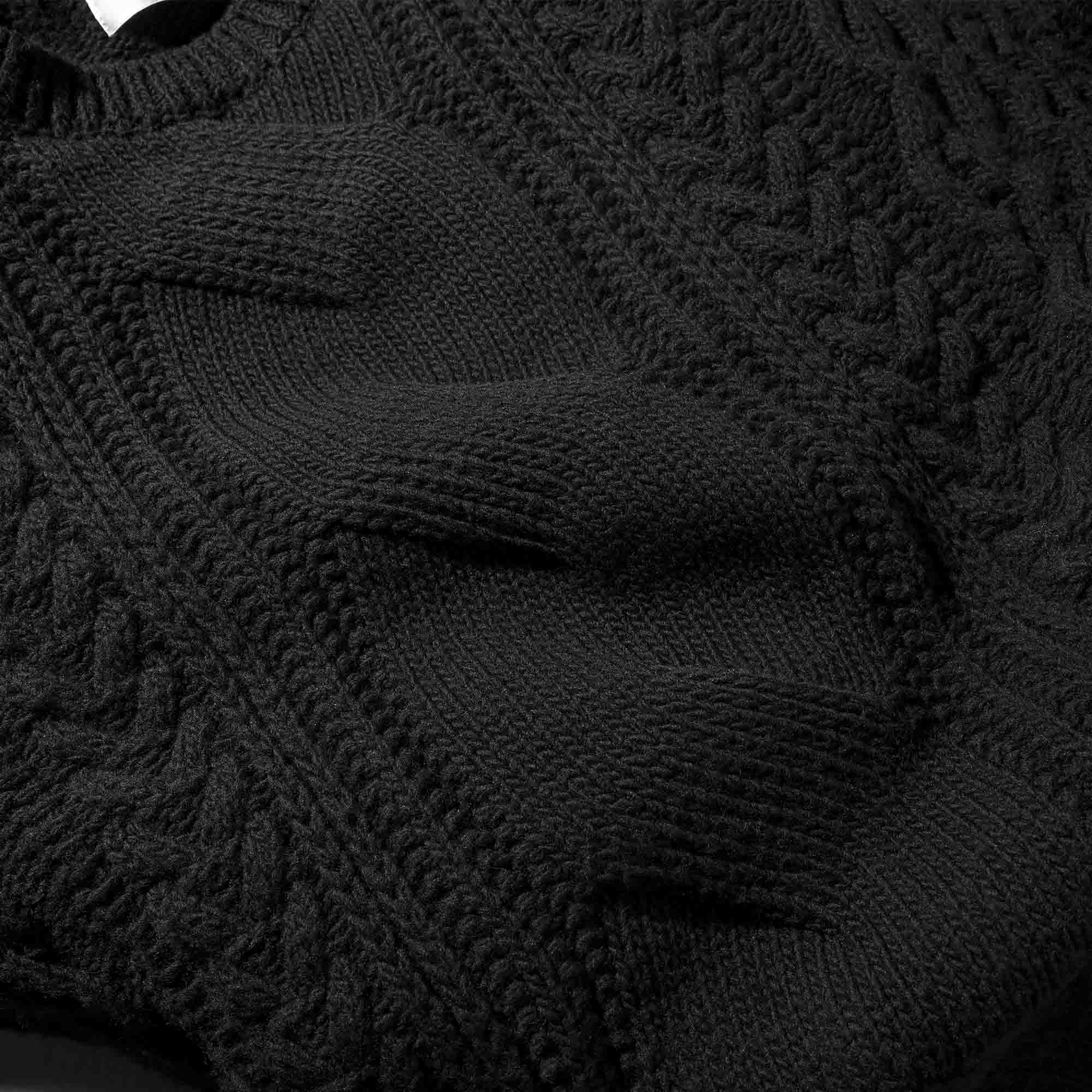
The yarn used to create the knit fabric is 100% French Merino wool. Merino wool is known as a natural material with excellent moisture absorption and release properties.At Crown, we’ve chosen French Merino wool for its soft texture, which lends an elegant play of light and shadow to the three-dimensional knit pattern. The appeal lies in its plush knit fabric combined with a texture that exudes a classic charm. The result is a garment that combines a striking design with a natural feel that’s easy to incorporate into your everyday life.
Click here for more details on knitwear
Nostalgic Yet NewA Modern Box Silhouette Rooted in Traditional Sweater Construction
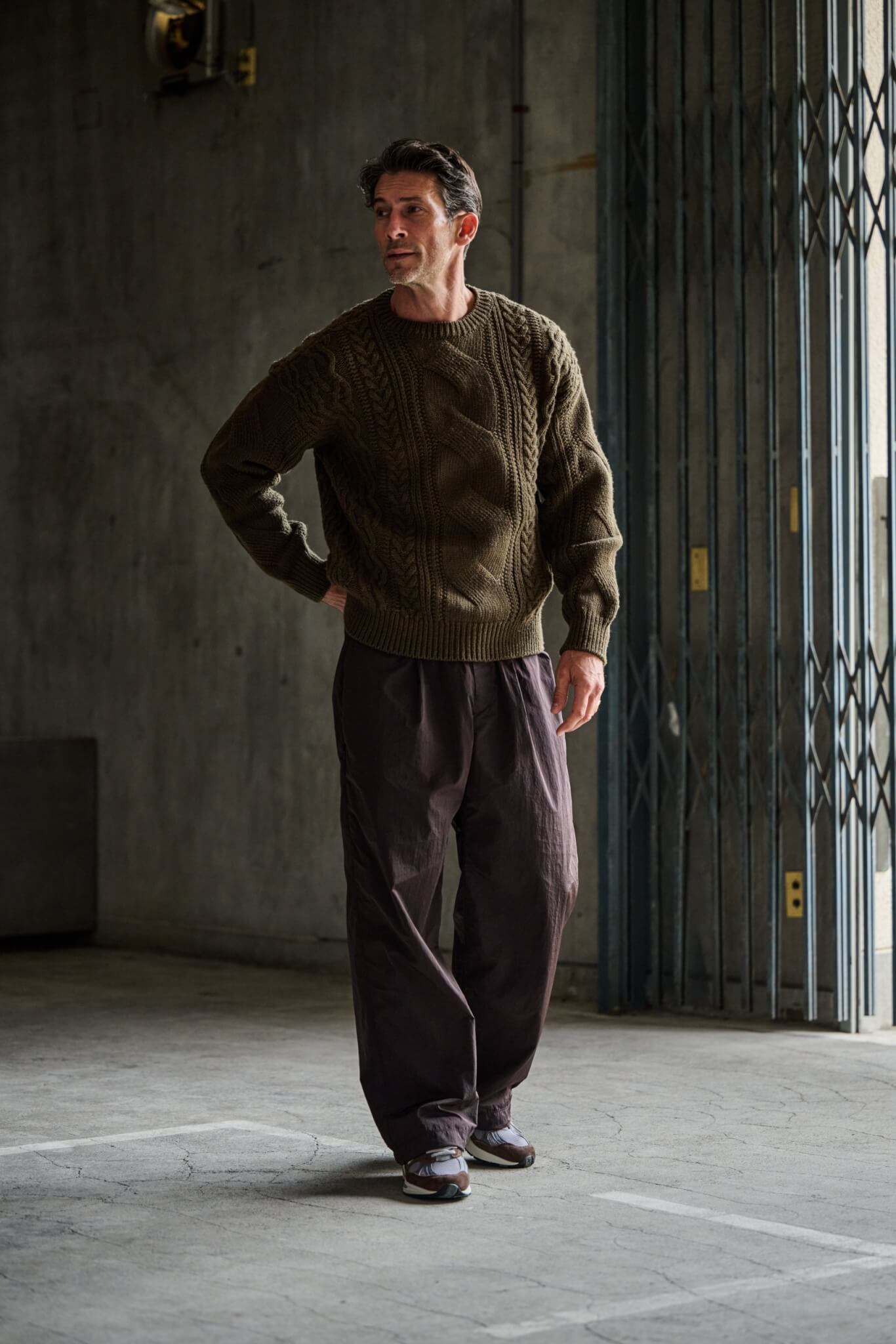
The loose fit and linear construction found in traditional Aran sweaters.While retaining that classic aesthetic, “CROWN” reimagines the balance between length and width to create a modern boxy silhouette—a hallmark of the brand. The length is set relatively short at 66 cm for size L. Even when paired with slacks, it avoids bulk around the waist and allows the pants’ silhouette to show off beautifully.
| Sweater | Click here for more details |
| Nylon Pants | Click here for more details |