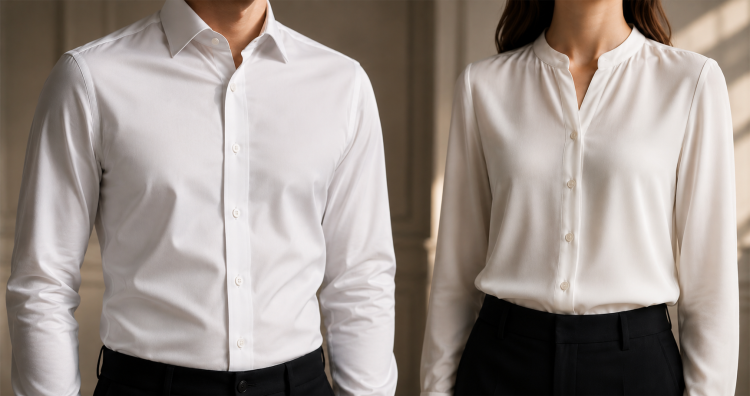
Jackets and shirts we usually wear as a matter of course. Have you ever wondered why men’s and women’s shirts have buttons facing the opposite way? There is a theory that the direction of the buttons we casually fasten reflects the lifestyle and clothing culture of several hundred years ago. In this article, we will focus on the most widely known and popular theory, and explain why the buttoning was reversed for men and women.
Sponsored by
The most popular theory originates from medieval EuropeMen wear their own clothes, while women's clothes were reversed so that servants could help them dress
The most widely known theory is that men’s clothes were made so that the wearer could easily fasten them, while women’s clothes were made so that servants could easily fasten them facing each other. The most widely known theory is that men’s clothes were made to be easily fastened by the wearer himself, while women’s clothes were made to be easily fastened by servants facing each other. But buttons were not always a tool for fastening clothing. In the 13th and 14th centuries in Europe, the use of buttons in combination with buttonholes became widespread, and it is believed that buttons became a part of the actual fastening of clothing. Clothes with many fine buttons are time-consuming to sew and to put on. In other words, buttoned clothing was not only a practical item, but also a detail that indicated the wealth and prestige of the upper class.
And in this period, men often dressed themselves. Considering that the majority of people were right-handed, having buttons on the right side of the garment, as seen from the wearer’s perspective, made it easier to pinch and fasten the buttons with the right hand. It is said that men’s clothing was designed to have the buttons on the right side of the front, in accordance with the movement of supporting the front placket with the left hand and moving the buttons with the right hand.
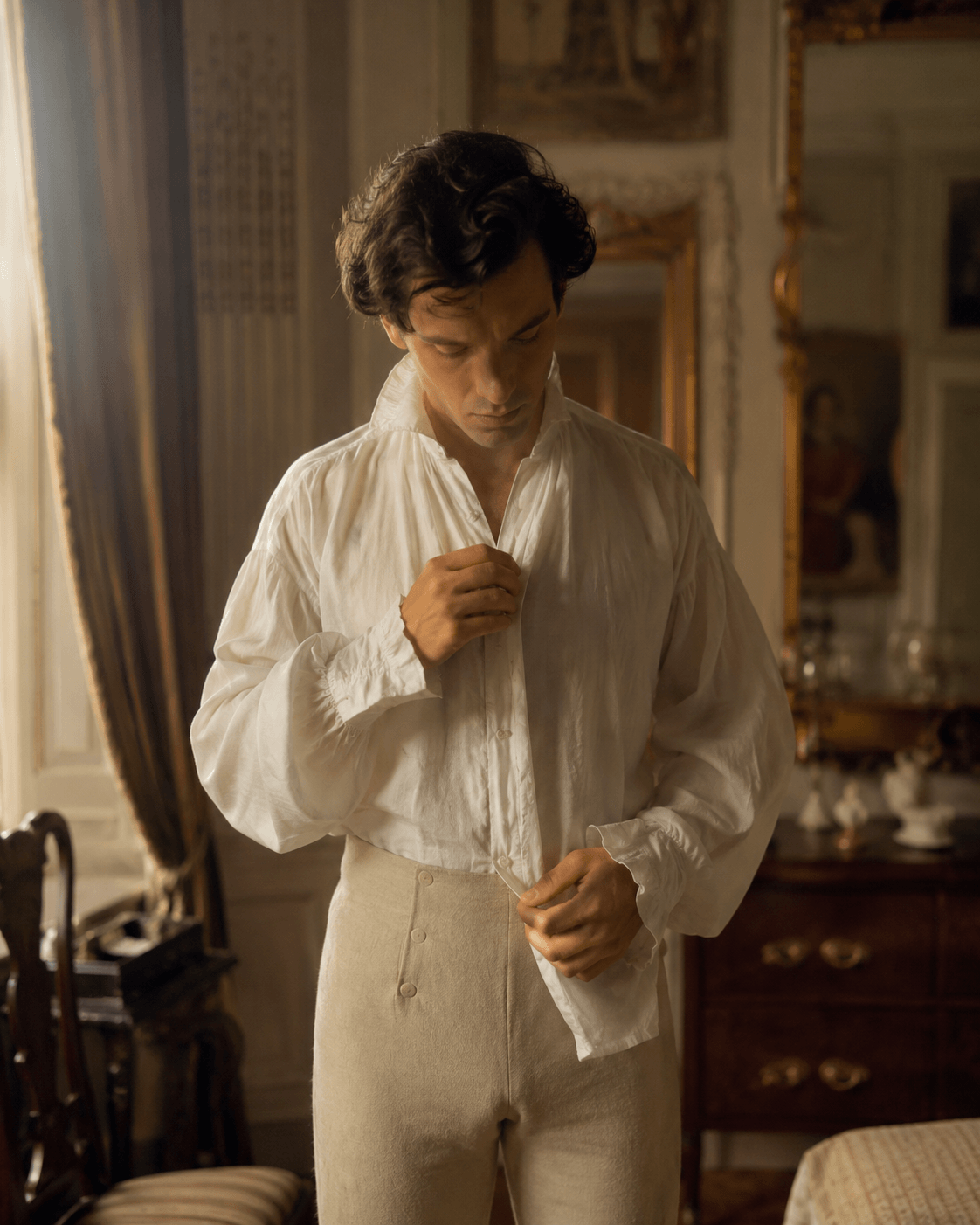
Image generated by AI.
The structure of upper-class women’s clothing was complex, and it was not uncommon for servants to help dress them. If the person facing the wearer was to fasten the buttons with her right hand, it would be easier to handle if the buttons were on the left side of the garment from the wearer’s perspective. It is believed that the reason why the buttons on women’s clothing were reversed from those on men’s clothing was because women’s clothing was made with the “wearer” in mind, not the “wearer” in mind.
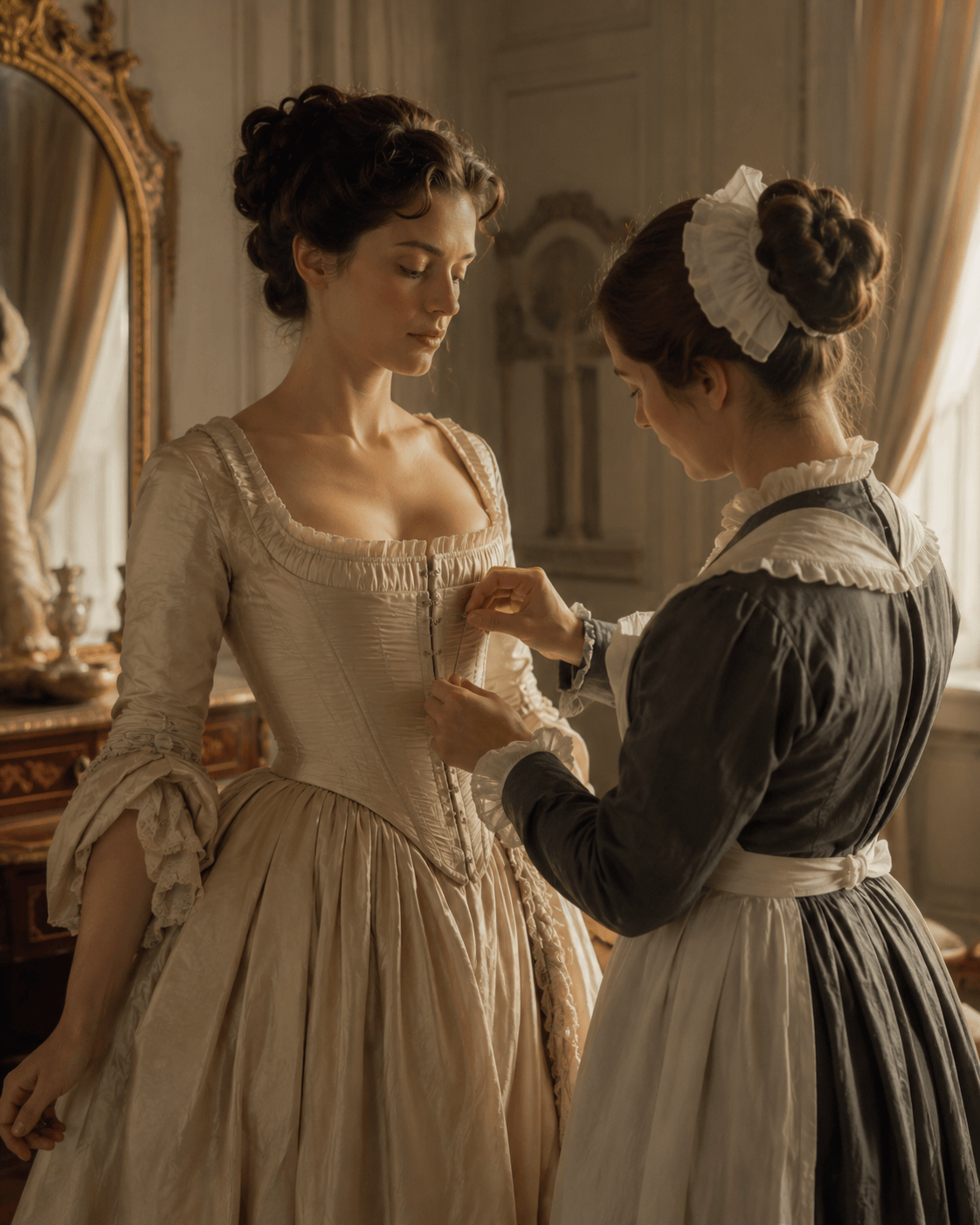
Image generated by AI.
Of course, this theory has not been proven as the only correct answer. However, when right-handed behavior, the upper-class dressing culture, and the fact that buttons were expensive decorations are taken into account, it is quite a reasonable theory as to why the buttoning was reversed for men and women. Here are some other theories!
Other Theories 1: Theories of Military Clothing OriginsWas the button position on men's clothing to make it easier to pull out the sword held at the left hip?
Some people believe that the button matching of men’s clothing originated from the handling of military uniforms and swords. In the past, most men who wore swords lowered them to their left hips and drew them with their right hand. The idea is that men’s clothing was designed with the buttons on the right side of the garment as seen by the wearer, so that the front closure would not interfere with the action. However, this theory alone does not fully explain why the buttons on women’s clothing were reversed, so it is appropriate to consider it as a theory that reinforces the specifications of men’s clothing.

Image generated by AI.
Other Theories 2: Theories of Lactation OriginsWas the button position on women's clothing to make it easier to support the infant with the left arm and open the clothing with the right hand when breastfeeding?
Some believe that the button position on women’s clothing was related to ease of breastfeeding. The idea is that if the buttons are on the left side of the garment as seen by the wearer, it is easier to hold the infant with the left arm and open the garment with the right hand. However, since the same specification can be found on jackets and coats that are not directly related to breastfeeding, it is appropriate to leave this as a subsidiary theory as to the origin of women’s clothing in general.
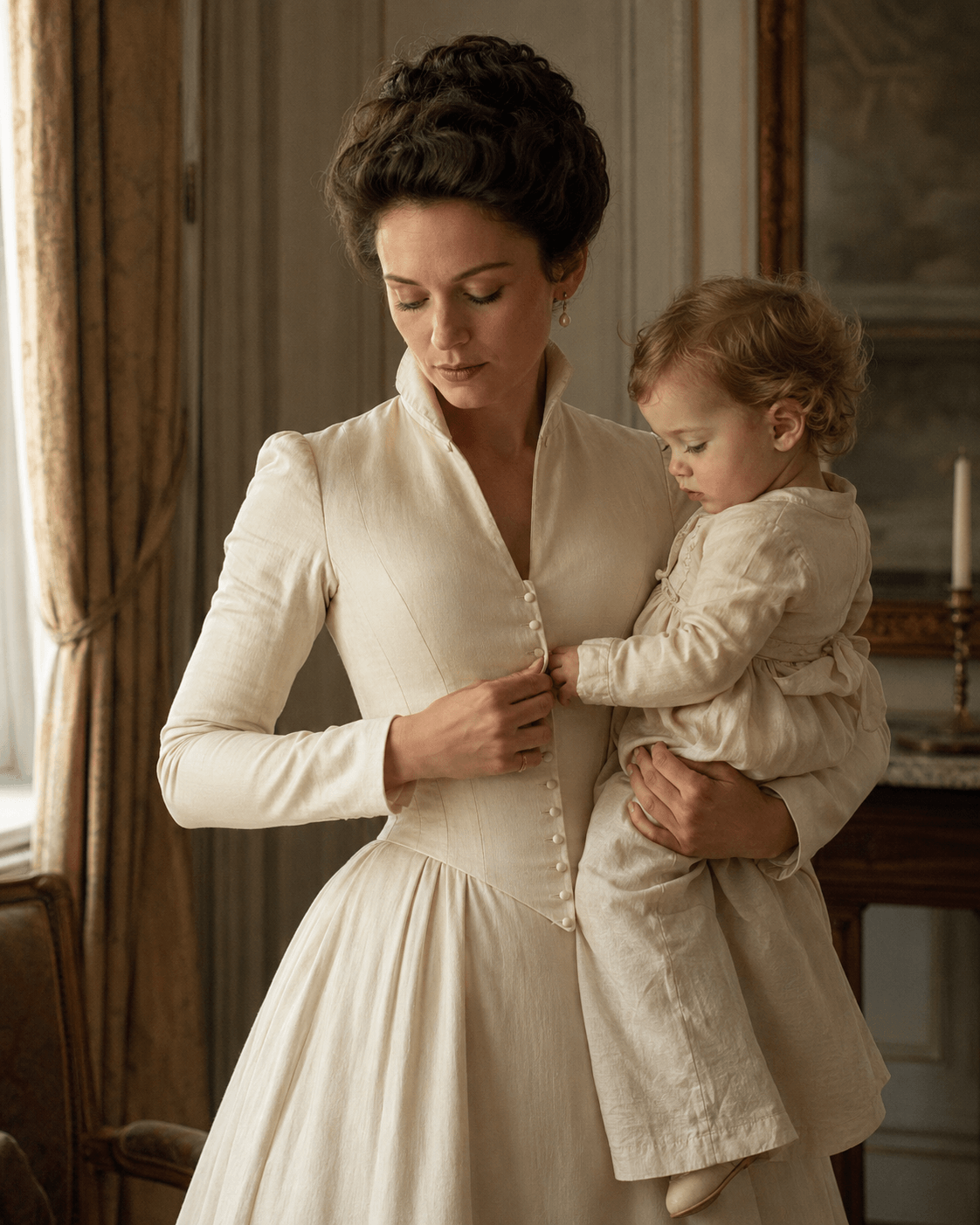
Image generated by AI.
Other Theories 3: Horseback Riding OriginsWas the button position on women's clothing to prevent wind from entering when riding sideways?
Some believe that the button position on women’s clothing was related to the custom of horseback riding. In the past, upper class women wore skirts and often rode sideways, not astride a horse, with their legs together on one side and their body turned to the left. In this posture, if the buttons were attached on the right side of the dress, as in men’s clothing, wind from the direction of travel would easily enter the gap between the buttons and the front of the dress. The women’s clothing, therefore, has the buttons reversed to prevent wind from entering. However, it is difficult to determine the origin of women’s clothing as a whole, including shirts and blouses, and it is natural to consider this as one of the theories that emerged from the lifestyle of the time.
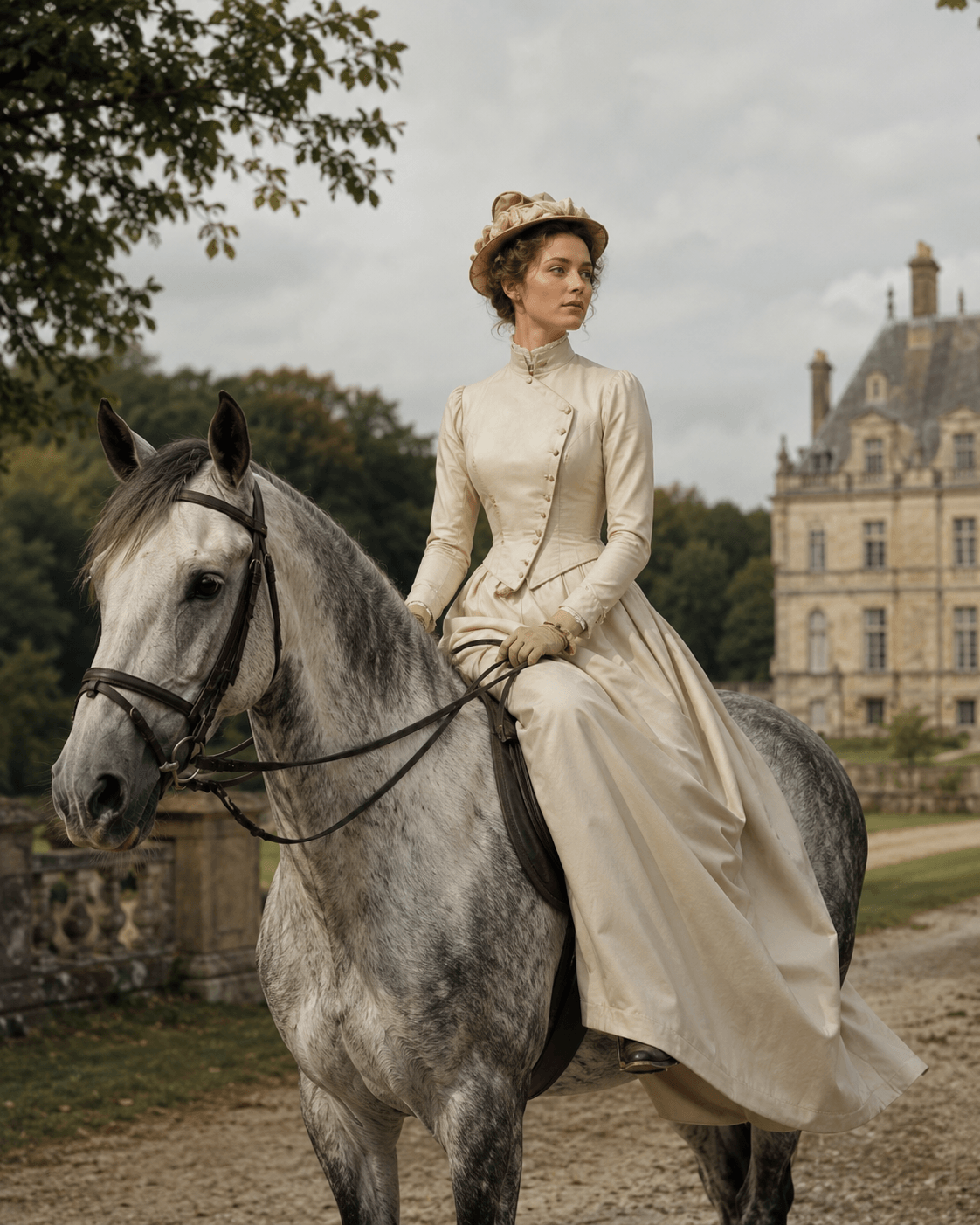
Image generated by AI.





!["Break Away from the Norm" Is the Keyword!? 3 Tips for Styling a Leather Jacket with a Modern Twist [Fall/Winter 2026 Edition]](https://otokomaeken.com/wp-content/uploads/2026/10/ef304036cec889dddaa64a607e22a781-5-750x396.png)
![What to Wear When the High Is 24 Degrees [3 Men's Outfit Ideas Based on the Temperature Difference Between the High and Low]](https://otokomaeken.com/wp-content/uploads/2026/10/123ac7d53dbc900bab7d6703661e0cd1b47414a0a1a16c6347e3d09bfa184b6c-750x396.jpg)