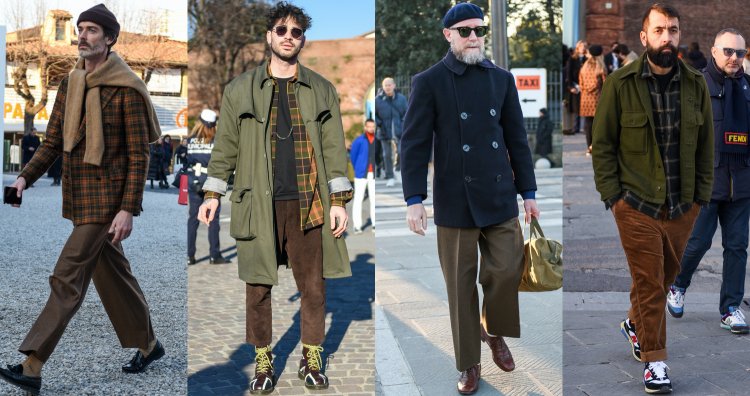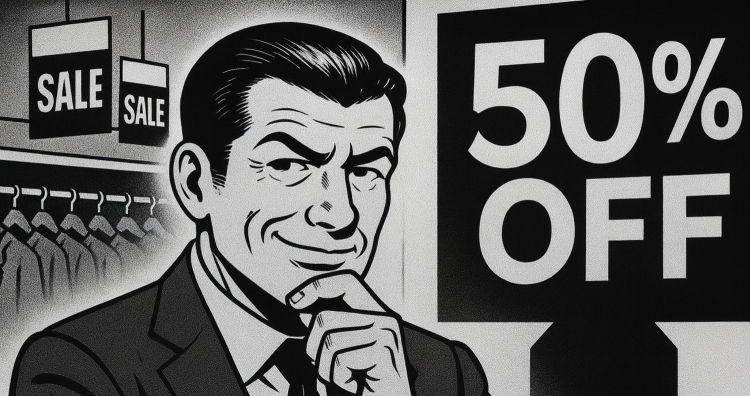
Serious people dislike wasteful spending, respect numbers and evidence, and try to act rationally. That is why they value solid choices, thinking, “I don’t want to lose money” and “I want to be properly prepared. Ironically, however, this earnestness creates a “cheap money-losing loop. What seems to be a rational decision is in fact an investment with zero utility (the degree of satisfaction gained). In this article, we will dissect the mechanism of “buying cheap and losing money” from the perspectives of behavioral economics, strategic theory, and cultural history, and even present a workaround that can be put into practice immediately.
Sponsored by
A numerical gain has zero utilityReason 1: We tend to be misled by the magic of sale discount rates and lose money
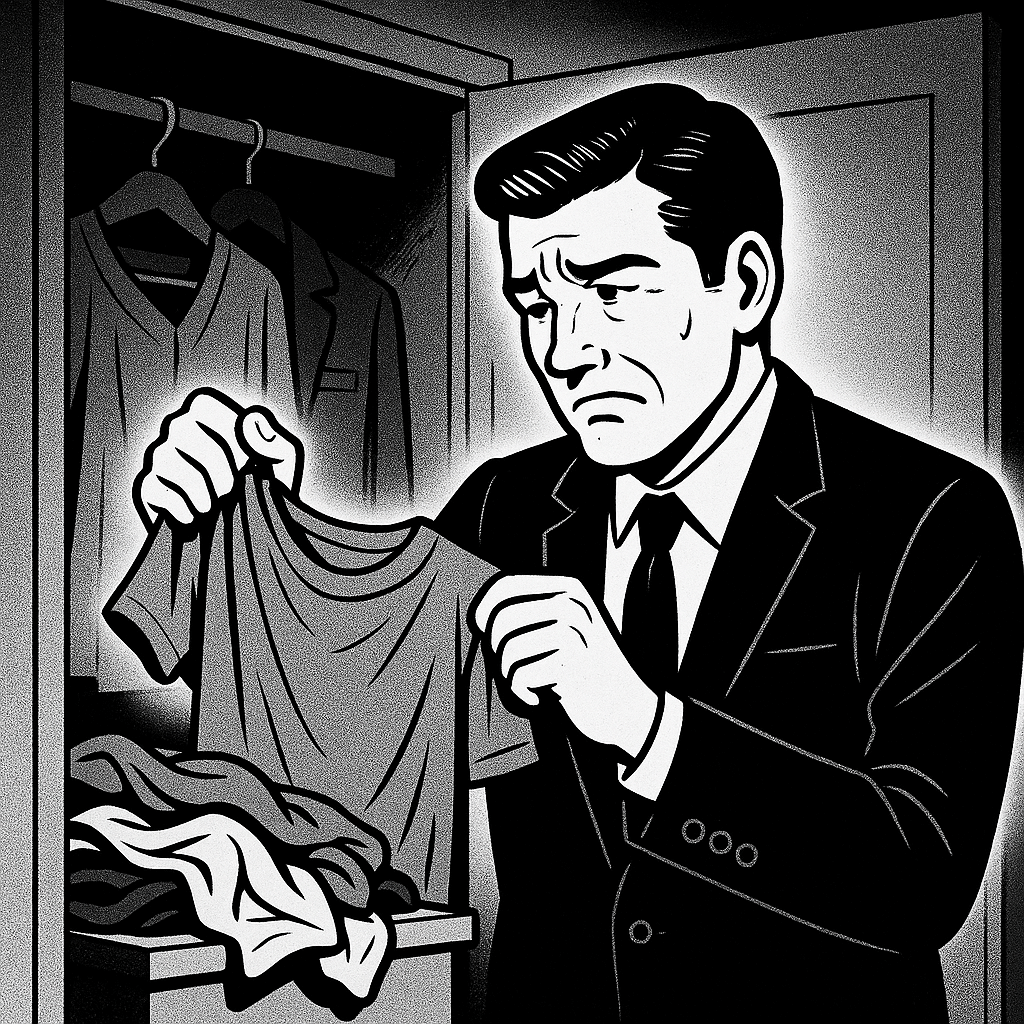
When you step into a sale venue, the words “50% off” are dancing on a red tag. The more serious people calculate in their minds that “half off the regular price of 30,000 yen = a gain of 15,000 yen,” and are reassured by the numbers. However, the actual utility is zero when you don’t want the clothes at the regular price. Hidden costs also accumulate, such as taking up space in the closet and increasing the time spent looking for the item. Rationality in numbers turns into irrationality in reality.
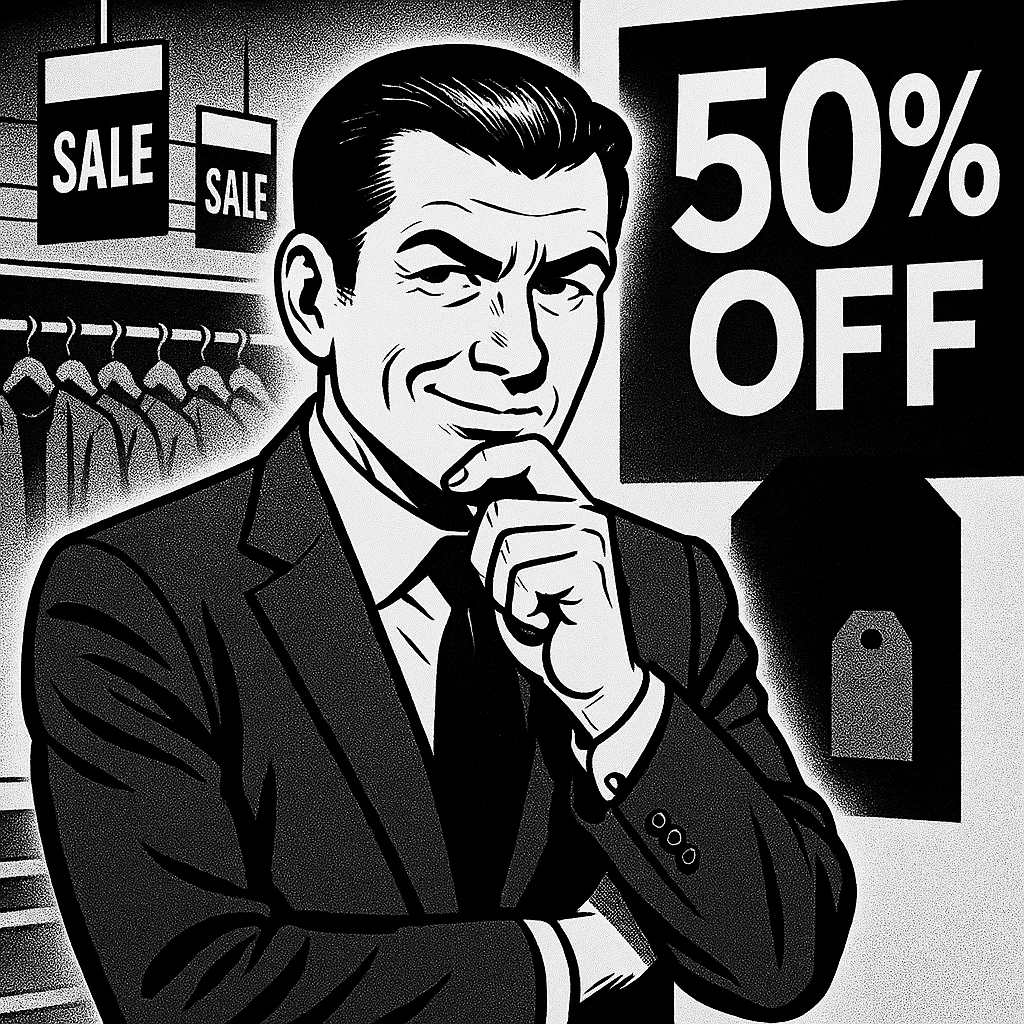
For example, there are two pieces of clothing with a list price of 30,000 yen. One of them was reduced to 15,000 yen in a sale, and you bought it thinking, “I’m getting a good deal at half price,” but you wore it only 10 times, feeling that it was “too delicate. The price was 1,500 yen per wear. On the other hand, I bought a dress for the regular price of 30,000 yen without discount. I liked it so much that I wore it 50 times, feeling uplifted, and others thought it ” looked good on me ” at 600 yen per wear. It is clear that it was the right choice to buy the latter, which costs less per wear and has higher utility.
In other words, the value of clothing should be measured as ” number of times worn x satisfaction ÷ price. Sale figures only provide short-term peace of mind, but in terms of long-term utility, they actually turn out to be a loss. The more serious a person is, the more he or she may be influenced by short-term numbers and lose the ability to make rational judgments.
Economist Daniel Kahneman said, “People are so eager to avoid losses that they lose their rationality,” and John Ruskin warned, “He who chooses cheap goods will have to buy them twice.” The words of both men illustrate how irrational shopping governed by discount rates can be.
References and citations
– Daniel Kahneman, Thinking, Fast and Slow (2011)
– John Ruskin, The Seven Lamps of Architecture (1849)
The label's guarantee is an illusionReason 2: Well-known and reasonably priced We tend to be attracted to brands that offer products
The moment a serious person picks up a paper bag from a department store, he or she is proud that he or she has made a decent purchase. However, their relief turns to disappointment when they later learn that it is a licensed brand or second line that bears no resemblance to the brand they trusted. Not only is their wallet lost, but their sense of self-assurance that ” I made the right choice” is shaken.

On the other hand, there are high-quality clothes even from unknown brands. The natural fit of the garment when you put your sleeves on it will surprise you and fill you with a sense of “I’ve found a bargain. A piece of clothing made with sincerity, even if it is an unknown brand, gives the wearer the feeling of “having discovered something good for myself” every time I wear it, raising the satisfaction of ownership and naturally encouraging the habit of wearing it. It is not a dependence on a sense of security, but an investment that fosters confidence. It is not the label name that should be invested in, but the quality of the clothing itself and the experience gained from it.
References and citations
– Robert Cialdini, ‘Influence: The Psychology of Persuasion’ (1984)
– Yves Saint Laurent, Interview in *Le Figaro* (1975)
– Giorgio Armani,* Armani: 30 Years of Fashion* (2005)
The Sunk Cost Effect of OutletsReason 3: Bound to Justify the Effort
You arrive at the Gotemba outlet through the traffic on the Tomei. After walking around for several hours since noon, I still can’t find “the one” outfit. As the sun begins to shine in the west and fatigue sets in, the more serious people think to themselves, “Well, I’ve come this far. “I’ve come this far, I can’t go home empty-handed…”
This mentality is the sunk cost effect, whereby compromises are made in order to justify the effort invested. They choose a pair of pants that don’t fit slightly or a jacket with a slightly outdated design, thinking, ” Well, that’s OK. As a result, they feel uncomfortable every time they wear it and let it sleep in the closet.
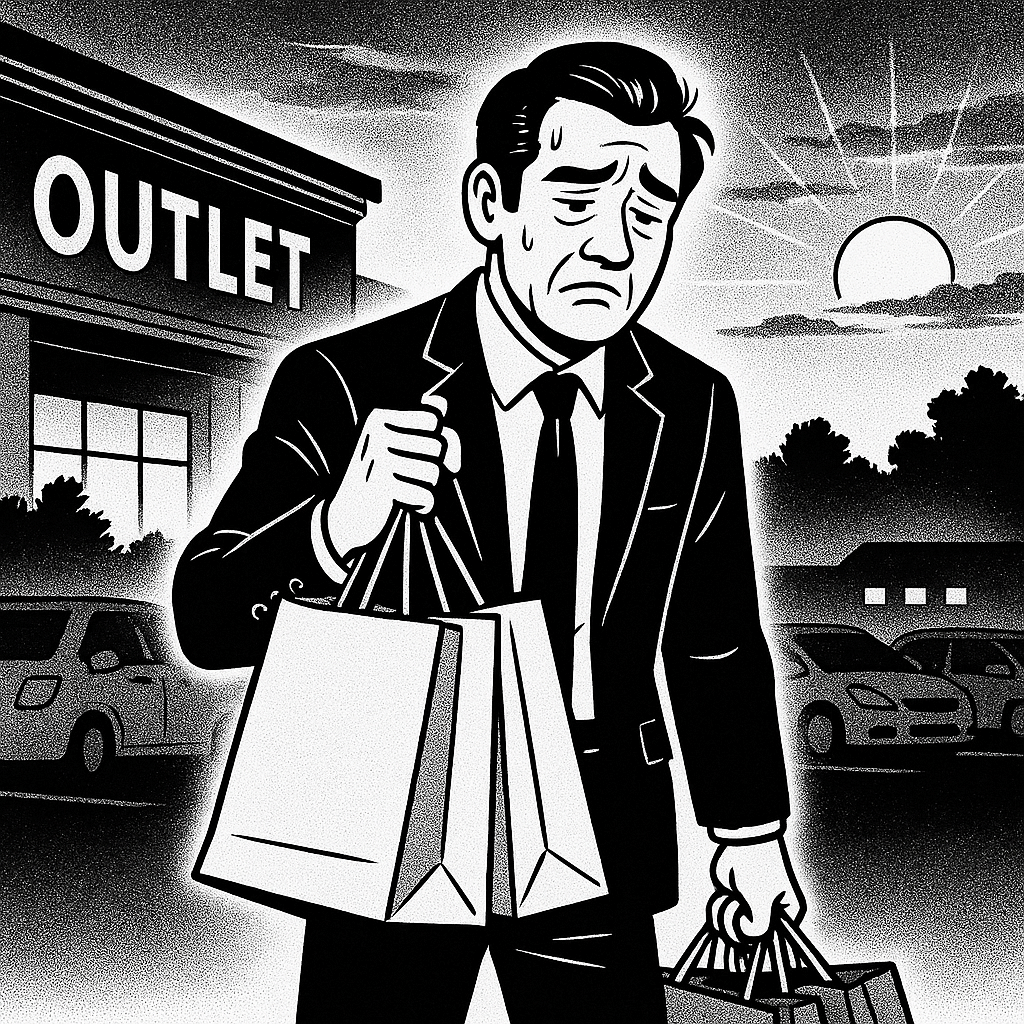
Another typical example is ” last-minute impatience. When you open your closet before an important appointment, all you see are tired shirts. They rush to the store just before it closes and buy the shirt they want. The earnestness with which he usually prioritizes time with work, family, and friends backfires on him here. The mindset of wanting to avoid losses distorts judgment and leads to the most ineffective purchases.
The way out is to set ” non-negotiable conditions ” in advance. If it does not meet your own criteria, such as shoulder width, sleeve length, and length of the garment, reject it immediately. In addition, if you have prepared a set of clothes for the competition on a daily basis, or if you have an idea of what you want by gathering information from the media and social networking sites, you will not be ruled by last-minute haste. Furthermore, if we can redefine “not buying today = success that leaves room for future success,” seriousness will no longer be a weakness that amplifies impatience, but will become a strength for making calm investment decisions.
References and citations
– Hal R. Arkes, Catherine Blumer “The Psychology of Sunk Cost” (1985)
– Daniel Kahneman & Amos Tversky, *Prospect Theory* (1979)
Reason #4: Excessive Catching Up with Trends
When we try to incorporate fast-changing trends Fast fashion brand clothing is an option when trying to keep up with fast-changing trends. Fast-fashion brand shirts purchased with the expectation of catching up with the latest fashions at a reasonable price are shabby after a few washes, and the flashy patterns look outdated by the next season. They are difficult to repair, and they are not worth the price on the resale market. There is no “wear it out,” “sell it,” or “give it away” outlet for cheap clothes, and they end up becoming a liability that puts pressure on the closet. In contrast, good quality clothes, despite their high price, have a long life span. The materials are durable and the stitching can withstand repairs. They can even regain value on the second-hand market.
Looking at cultural history, the wealthy of ancient Rome repaired high-quality clothing and passed it down from generation to generation. In contrast, inexpensive everyday items were quickly discarded, leading to a waste of resources. Today’s relationship between fast fashion and quality clothing is structured exactly the same way. Mark Twain said, “I can’t afford to buy cheap.” His words confront the paradox that shopping that justifies immediate savings will eventually turn into the greatest waste, both financially and spiritually.
The solution is to choose “clothes that don’t end up being expendable.” Clothes with classic designs that never go out of style, durable materials, and repairable sewing will continue to work through the years. Even if it does not become an asset, the clothing can stay with you for many years depending on how you choose to wear it, resulting in a lower cost per wear and the possibility of being passed on to the next owner when you let it go.
References and citations
– Barry Schwartz, *The Paradox of Choice* (2004)
– Jerome Carcopino, *Daily Life in Ancient Rome* (1940)
– Mark Twain, Lecture Notes (1871)
Finally, we will summarize the answers to the FAQs in a realistic shopping situation.
Questions in Realistic Shopping Scenes 1Should I buy clothes that are 50% off in a limited time sale on ZOZOTOWN?
A: Clothes that you want after seeing the discount end up being an unnecessary expense in many cases. The decision criteria comes down to “would I have wanted it even if I didn’t know about the discount?” Furthermore, by comparing the market price on flea market apps, it becomes clear whether the “gain” is reasonable or not. Only when both the prior desire and the market price are satisfied can it be said that the purchase is a reasonable one.
Realistic Shopping Scene Question 2I found a suit at an outlet that doesn't fit me but is half price. Should I buy it?
A: A one centimeter discrepancy in a suit can lead to a day of discomfort. Areas that are difficult to correct, like shoulder width and length, should not be compromised, even if they are cheap. The only thing worth considering is whether or not the sleeve length and hem length can be corrected. If you draw the line at whether or not it can be fixed, you will not be tempted by the price.
Realistic Shopping Scene Question 3White T's discounted when bought in bulk; should I buy more?
A: Buying in bulk tends to create overstock and unworn items, and if stored for a long time, the risk of yellowing is high. The rational thing to do is to replenish only what you need in accordance with the usage cycle of what you have on hand. Stocking up because of discounts is inefficient, and determining how much is needed is the key to avoiding waste.
Questions in a Real Shopping Situation 4
A: Second lines are often different from the main line in terms of materials, sewing standards, and design policies because of their lower prices. It is a good idea to check the quality of the tailoring, the finish of the sewing, the fit of the shoulder line, the design, etc. before making a decision.

![What to Wear When the High Is 24 Degrees [3 Men’s Outfit Ideas Based on the Temperature Difference Between the High and Low]](https://otokomaeken.com/wp-content/uploads/2026/10/123ac7d53dbc900bab7d6703661e0cd1b47414a0a1a16c6347e3d09bfa184b6c-630x331.jpg)
!["Break Away from the Norm" Is the Keyword!? 3 Tips for Styling a Leather Jacket with a Modern Twist [Fall/Winter 2026 Edition]](https://otokomaeken.com/wp-content/uploads/2026/10/ef304036cec889dddaa64a607e22a781-5-750x396.png)
![What to Wear When the High Is 24 Degrees [3 Men's Outfit Ideas Based on the Temperature Difference Between the High and Low]](https://otokomaeken.com/wp-content/uploads/2026/10/123ac7d53dbc900bab7d6703661e0cd1b47414a0a1a16c6347e3d09bfa184b6c-750x396.jpg)