CONTENTS
- A six-pack is a state in which the rectus abdominis muscle appears on the surface of the body!
- What are the benefits of training the rectus abdominis?
- It is effective to train the "upper" and "lower" rectus abdominis muscles with awareness of each!
- Four effective muscle training menus for strengthening the upper rectus abdominis
- 4 Effective Strength Training Menus to Strengthen the Lower Rectus Abdominis
- I also recommend using an abdominal roller to strengthen your rectus abdominis muscles!
- What are the tricks to get a good workout for the rectus abdominis muscles?
- There is more to creating a good-looking six-pack than just training the rectus abdominis muscles!
Page 3 and beyond are shown.
Back to Page 1Sponsored by
4 Effective Strength Training Menus to Strengthen the Lower Rectus Abdominis
Next, we introduce muscle training exercises that work the lower part of the rectus abdominis. These are also introduced here, ranging from low-impact to high-impact exercises, so please try them according to your own level.
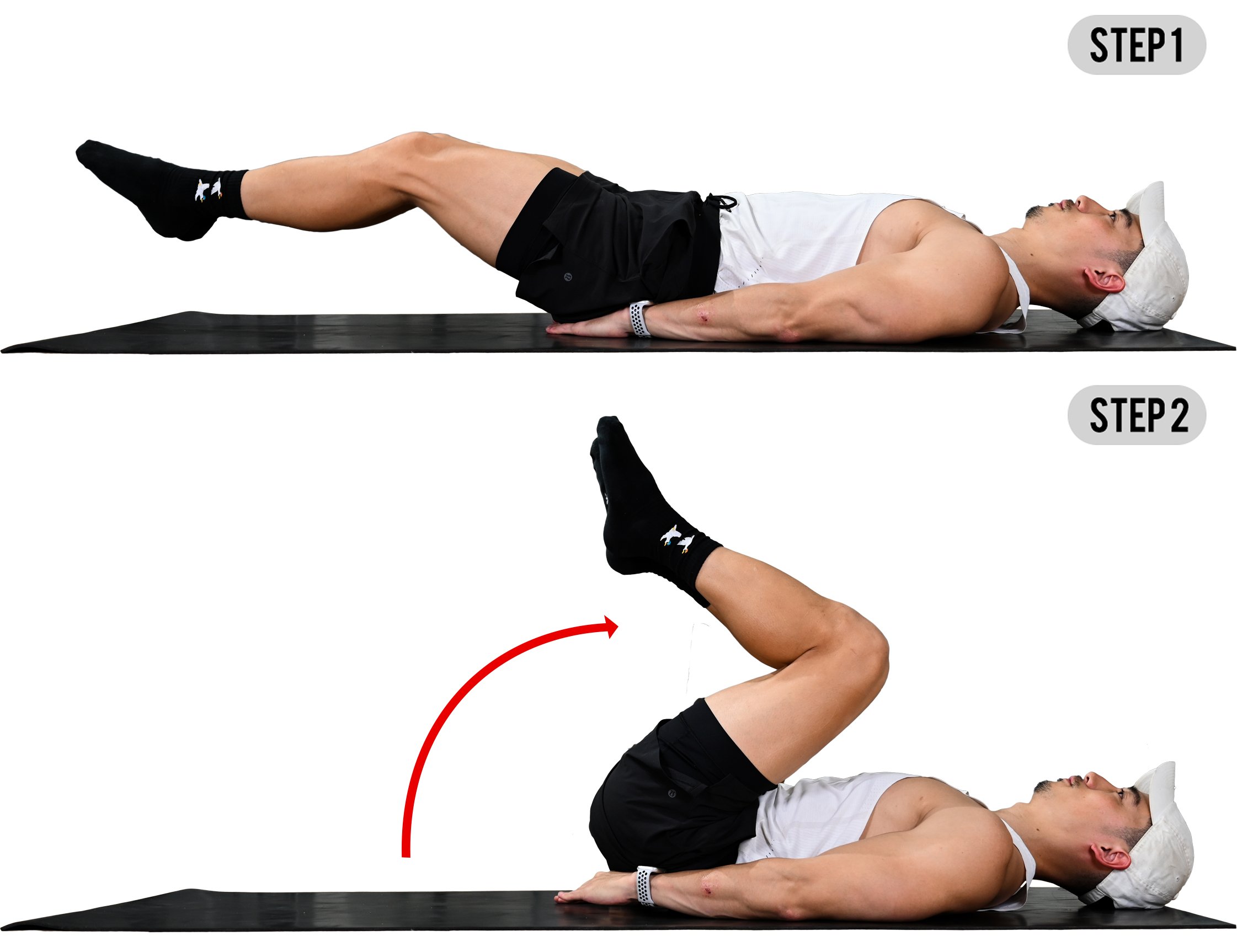
Training for the lower part of the rectus abdominis muscle (1) “Knee Raise
Knee Raise, as the name suggests, is a muscle training exercise to raise the knees. Since it is one of the easiest lower abdominal training exercises, beginners should be able to try it easily. Basically, all lower abdominal training exercises involve raising the legs, so if you get a feel for knee raises, you will be able to smoothly perform the exercises introduced later.
Lie on your back with your hands under your hips and pelvis tilted backward, knees lightly bent and legs slightly raised off the floor. Keep your abdominal muscles engaged, but relax your shoulders and neck. From there, bend your knees and raise your legs until your hips are slightly off the floor. The key is to keep your feet off the floor when returning to the floor. As you get used to the exercise, increase the number of seconds and the number of sets.
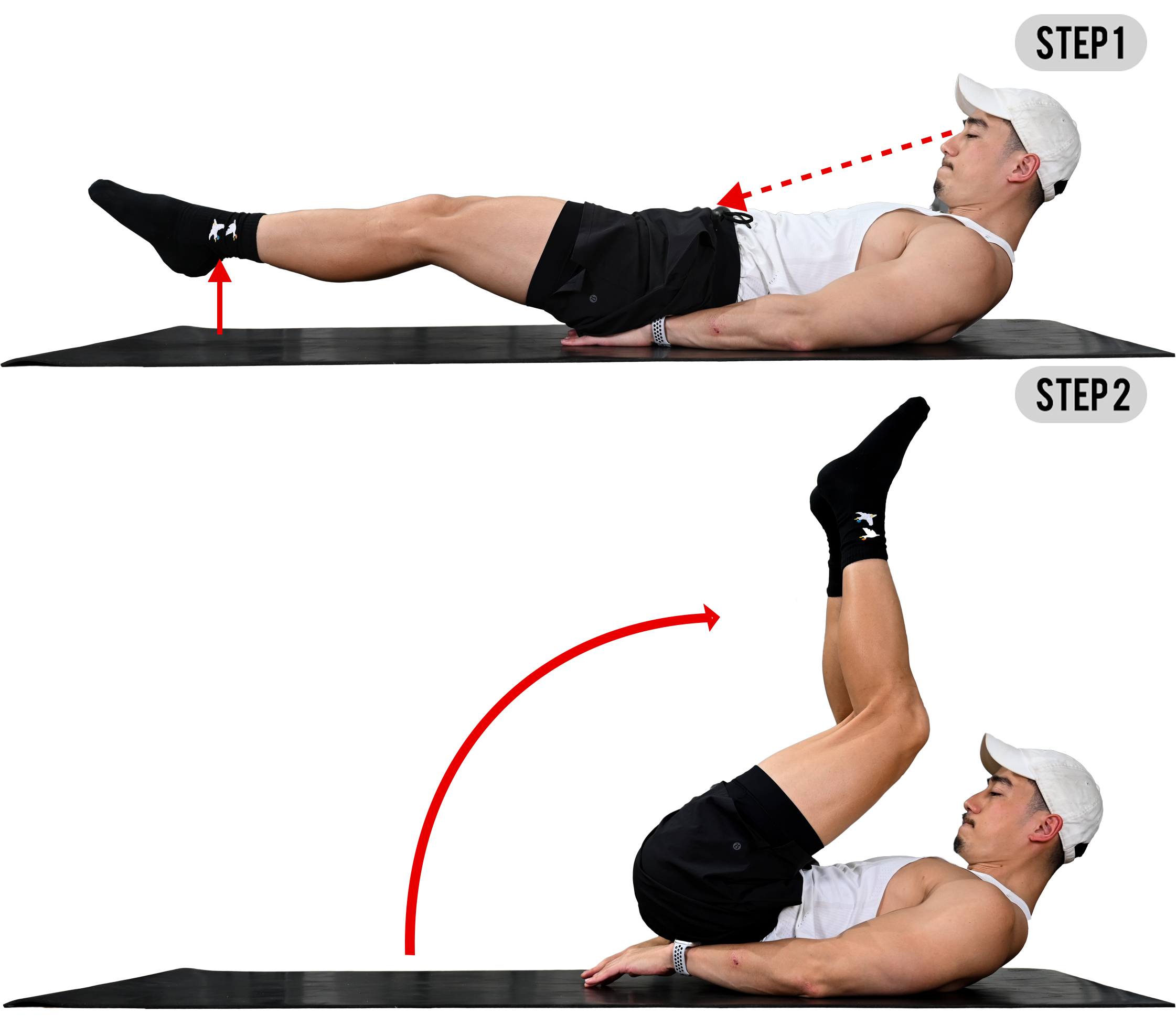
Rectus Abdominis Lower Part Training (2) “Leg Raise”
Leg raises are the most orthodox of the lower part of the abdominal muscles training exercises. It is similar to the knee raise described above, but the degree of knee bend and the position of the leg raise vary greatly, and the difficulty level is higher because it is performed while keeping the eyes on the belly button. This exercise is used by many people, from beginners to experts, and should be mastered by all.
Lie on your back with your hands under your hips and legs extended and slightly raised off the floor. At this point, raise your upper body slightly so that you can look down at your navel. Keeping this upper body posture, raise your legs as high as possible toward the ceiling. The rule of thumb is to raise the legs until the hips are firmly in the air, and to return them in a controlled manner. 30 seconds is a good time to increase the number of repetitions while maintaining good form, and as you become more comfortable, increase the number of seconds and sets.
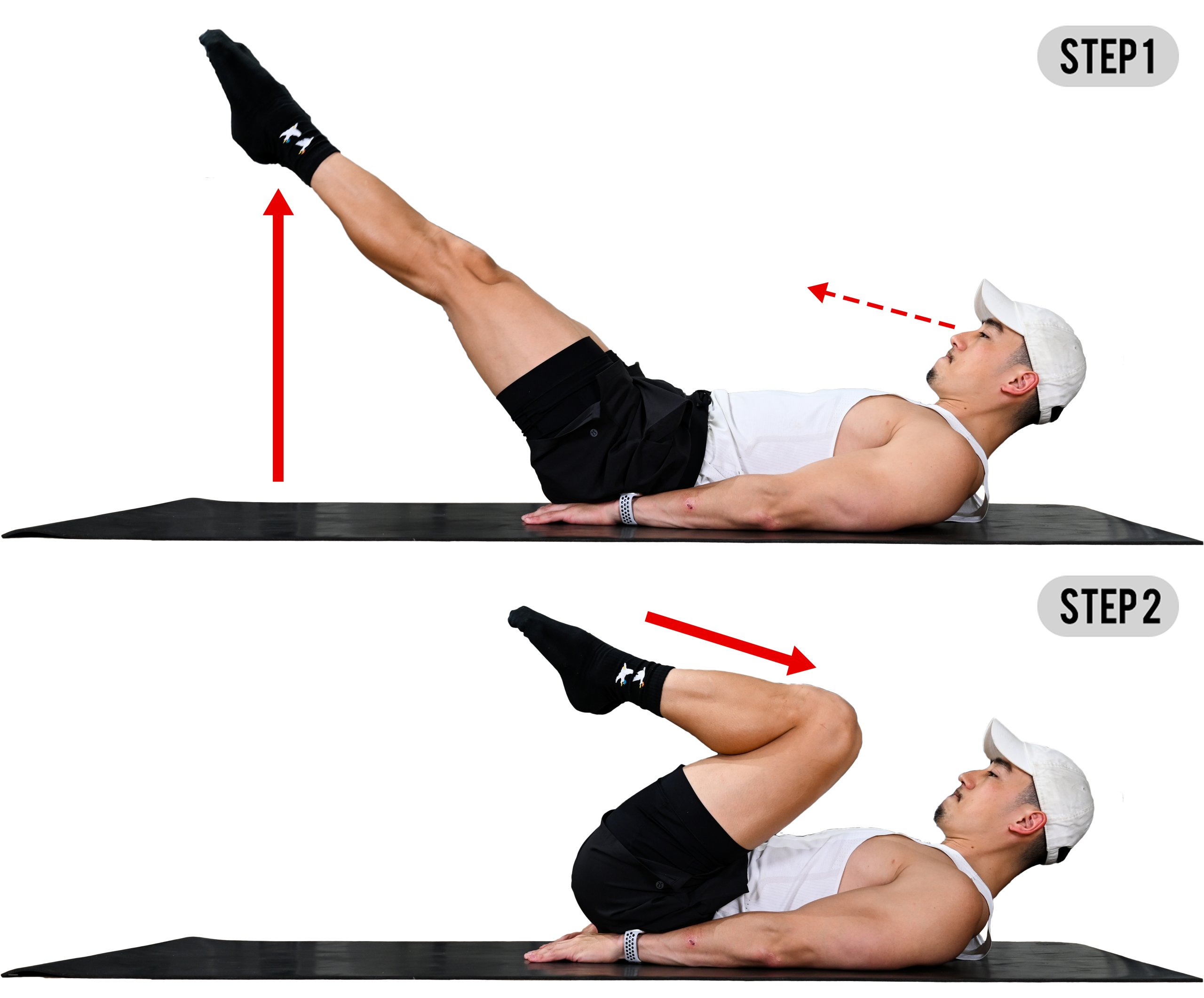
Rectus Abdominis Lower Part Training 3: “Kick Crunches”
The kick crunch is a muscle training exercise in which the legs are bent and extended as if kicking. Although it is a minor exercise, it effectively trains the lower part of the rectus abdominis muscle and the form is not too difficult. Incidentally, it works much the same way as leg raises, so if you are bored with leg raises, you may want to give it a try.
Lie on your back with your hands under your hips, legs together and straight, and lift them off the floor at a 40-50° angle. Then, raise your face slightly and send your eyes toward your toes. Keeping your upper body in the same position, bend your knees so that they are pulled toward your chest. At this point, it is best if the hips are slightly raised off the floor. Repeat for 30 seconds with good form, increasing the number of seconds and sets as you become more comfortable with the exercise.
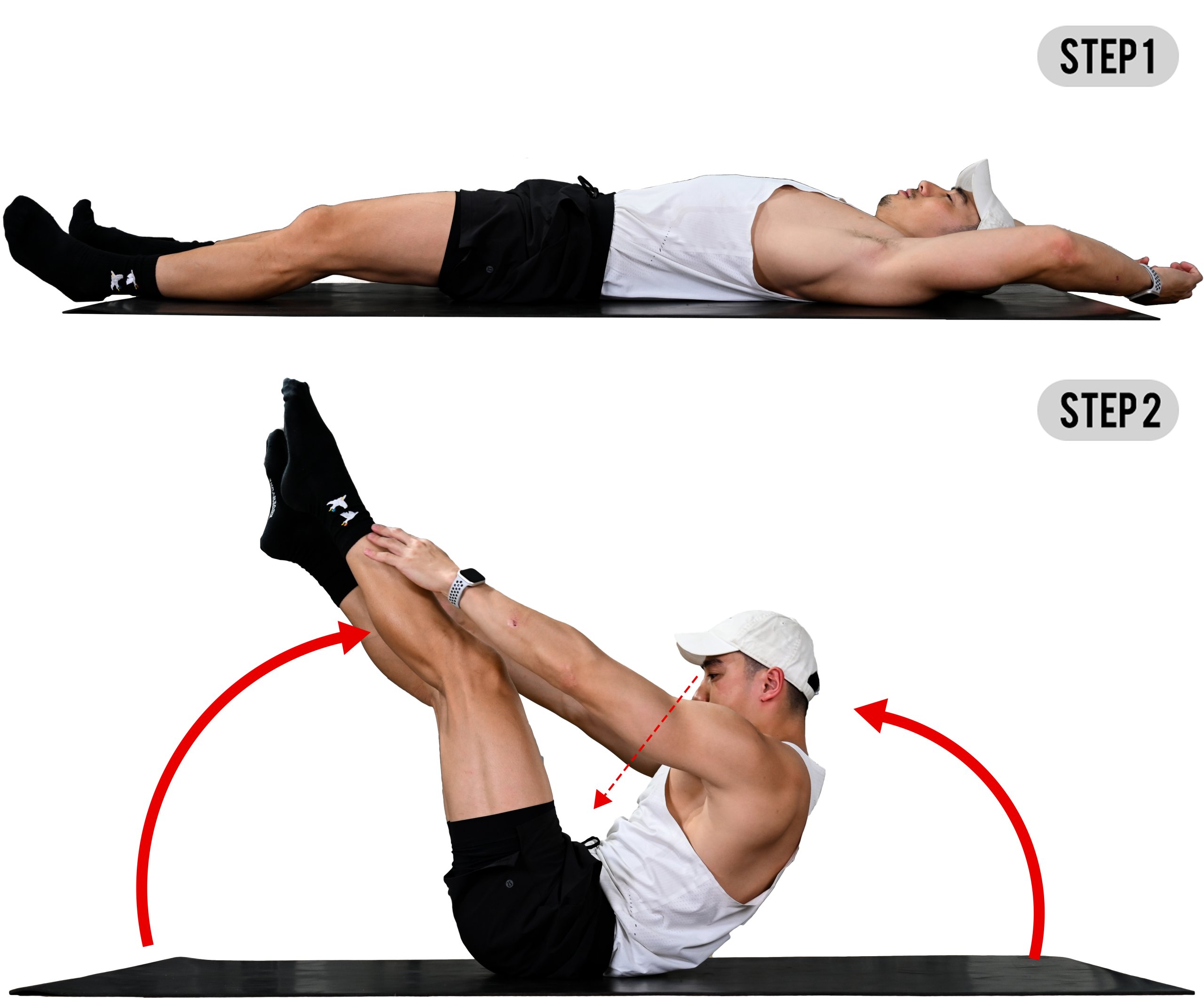
Rectus Abdominis Lower Part Training (4) “V-Crunch”
The V-crunch is considered to be one of the most advanced abdominal muscle training exercises. The V-crunch is an exercise that requires strong abdominal muscles to perform, and even if you have good muscle strength, it is difficult to perform cleanly in the beginning. However, you will improve your form as you repeat it over and over again, so don’t give up too quickly just because you can’t do it.
Lie on your back on the floor with your hands above your head and legs stretched out. Then, while raising your upper body, raise your legs upward and fold your body into a V-shape. The key to this is to imagine touching your ankles with your hands and looking at your navel. It takes time to master the correct form for this exercise, so it is recommended to perform each exercise carefully first, and when you have a firm form, set the number of seconds and perform 3 to 5 sets.


![What are the specific 5 changes that muscle training can bring to a man? [“The truth as experienced by practitioners.”]](https://otokomaeken.com/wp-content/uploads/2023/12/3ecb709c1f1613850249ba743b4b1457-630x331.jpg)